
Overview
How Atomgigs works: sources, catalysts and buyers
Atomgigs does not build machines. It helps makers go to market, advises buyers and delivers work done and data.
- Go-to-market: where, how and to whom
- Gigs: jobs for their machines and talent
Paid by Makers: GTM fees; buyers: per gig
- Advice and investor diligence
- Project bidding and execution
Paid by Catalysts: advice, projects
- Hyperscalers
- Colocation providers
- Neoclouds
- AI labs
- Enterprise and edge
- Automakers
- Other manufacturers
- 3PLs (logistics firms)
- Carriers
- Warehouse operators
- Builders and owners
- Program managers
- Energy and power
- Mining, oil and gas
- Transit and telecom
- Public works
- Police, fire and rescue
- EMS
- Security operators
- Corrections and border
- Military installations
- Defense primes
- Healthcare
- Hospitality
- Real estate, facilities
- Food service
- Retail and agriculture
- Waste and recycling
- Data to train robots
- Real-site task data
- Video and sensor data
- Labs pay for the data
- Buyers get a discount
We offer Advice and work done for buyers; data for physical AI labs. Paid by Buyers: advice, capacity; labs: data
Numbers 01 to 12 are primer numbers: each box has its own detailed primer.
Ten facts that frame the physical AI stack.
The essentials a client, partner or investor needs before reading on.
Seven layers
Body, sensing, compute, control, models, simulation and data, then fleet operations. Every robot is a stack of these.
Three speeds of control
An AI brain at about 10 to 30 Hz, whole-body control at tens to hundreds of Hz, motor loops at thousands of Hz.
Plumbing is shared
ROS 2 and EtherCAT are common standards. Makers compete on mechanics, data and the trained model.
Trained in simulation, finished on site
Simulation does the bulk. A staged live period with human rescues fixes what it missed.
VLA models are the new brain
Camera images plus a spoken instruction in, joint actions out. Open and closed families both exist.
Contact is the hard part
Gravity is easy to simulate. Friction, soft objects and clutter drive the sim-to-real gap.
Real data is scarce
NVIDIA suggests about 100 to 500 good demonstrations to fine-tune a VLA on a new fine task.
Data ownership shapes design
Large customers want training to run in their own cloud account, with a thin local fine-tune.
Safety rules are moving
ISO 10218 was reissued in 2025, ISO 25785-1 is in draft, EU Machinery Regulation applies 20 Jan 2027.
The business is service
RaaS, uptime and remote operators decide returns. GXO said in Aug 2026 that 45 humanoid pilots had not yet paid back.
The stack at a glance
What physical AI is, the seven layers, the tool map, maturity by layer.
Physical AI: software that has to move things.
AI that senses and acts in the physical world, with physics and safety in the loop
Sense, decide, act
- AI that perceives and acts on the physical world: robots, drones, vehicles and smart machines.
- A closed loop: sensors feed a model, the model drives actuators, the world changes, sensors see it again.
- Humanoids, arms, wheeled robots and quadrupeds all share this loop.
Why it is harder than chatbots
- A wrong answer costs damaged goods or injury, not a retry.
- There is no internet of robot actions to learn from, so data is scarce.
- Latency, battery, heat and safety rules limit what can run onboard.
Four things came together
- Edge GPUs such as Jetson Thor (kit launched August 2025).
- Vision-language-action models that turn images and words into motion.
- GPU simulation that trains thousands of robot copies at once.
- Synthetic data from world models to stretch scarce real data.
Physical AI is the same AI idea as before, applied where mistakes break things. That is why the stack matters.
The seven layers of a physical AI stack.
Each layer has its own tools, suppliers and failure modes. This deck follows them bottom to top.
| 7 | Fleet, safety and operations | Fleet software, remote operators, OTA updates, standards, insurance, service | Chapters 8, 9 |
|---|---|---|---|
| 6 | Simulation and data | Isaac Sim and Lab, MuJoCo, teleoperation, synthetic data, data pipelines | Chapters 6, 7 |
| 5 | Models | Vision-language-action models, world models, LLM planners and skills | Chapter 5 |
| 4 | Middleware and control | ROS 2, EtherCAT, whole-body control, motion planning, safety controllers | Chapter 4 |
| 3 | Compute | Edge GPU (Jetson Thor), real-time controllers, cloud for training | Chapter 3 |
| 2 | Sensing | Cameras, depth, LiDAR, IMU, joint torque, force and touch | Chapter 3 |
| 1 | Body | Frame, actuators and gearing, hands, battery and thermal design | Chapter 2 |
A robot company rarely owns all seven. Knowing which layers it owns is the first diligence question.
One instruction, end to end.
What happens between "restock the soup" and a moving arm
Hear and see
- Cameras and depth sensors stream images.
- The instruction arrives as text or speech.
Understand
- A VLA model on the onboard GPU reads images plus the words.
- About 10 to 30 times a second.
Plan
- Output is a short action sequence.
- Planners check reach and collisions.
Balance and move
- Whole-body control turns targets into joint commands.
- Tens to hundreds of times a second.
Drive motors
- Servo drives close torque and position loops.
- Thousands of times a second over EtherCAT.
Learn
- Failures and rescues are logged.
- Fine-tuned weights return overnight.
Slow reasoning sits on top and fast reflexes at the bottom. A robot is three programs, not one.
The learning loop closes the circuit: what the robot gets wrong today is training data for tomorrow.
The tool map: what each tool does.
NVIDIA supplies most of the simulation-to-brain chain. CAD, ROS 2 and the motor bus are separate, mostly open standards.
| Layer | Tool | What it does | Plain-English analogy |
|---|---|---|---|
| Design | CAD (Autodesk, PTC Onshape, SolidWorks) | Defines parts, joints and mass. Exported as STEP, URDF or USD | The blueprint |
| Simulator | Isaac Sim | Loads the robot into a physics world with sensors. Imports URDF, MJCF and CAD via OpenUSD | The game engine |
| Trainer | Isaac Lab | Runs thousands of parallel simulated copies to teach by reward (reinforcement learning) | The training gym |
| World models | Cosmos | Generates and augments synthetic video and scenarios; Cosmos 3 (June 2026) adds reasoning and action generation | The imagination department |
| Robot foundation model | Isaac GR00T | Open vision-language-action model: camera plus instruction in, joint actions out | A pretrained apprentice you fine-tune |
| Onboard computer | Jetson Thor | Runs the trained models on the robot itself | The brain in the chest |
| Middleware | ROS 2 | Open messaging framework connecting sensors, planning and drivers. Not a true operating system | Android for robots |
| Motor bus | EtherCAT | Real-time wiring standard linking the computer to servo drives | The nervous system |
| Cloud and fleet | AWS Physical AI Toolchain (Oct 2026) | Open reference architecture for data, training, simulation and deployment on AWS with NVIDIA tools | The factory around the factory |
Most of this chain is shared. What differs between makers is the body, the data and the trained model.
Maturity by layer: where the stack is strong and where it is thin.
Atomgigs view, based on public sources. It will be refined with each engagement.
degrees of freedom in the 2026 production Atlas
humanoid pilots at GXO, not yet paid back (Aug 2026)
| Layer | Maturity | What is solid | What is still hard |
|---|---|---|---|
| Body | Maturing | Electric actuators, wheeled and arm platforms | Hands, cost, reliability of legged robots |
| Sensing | Mature | Cameras, depth, IMU, encoders at low cost | Touch sensing, calibration drift |
| Compute | Strong | Onboard GPU runs large models at 10 to 30 Hz | Power, heat and cost for small robots |
| Middleware and control | Mature for arms and wheels | ROS 2, EtherCAT, classical control | Legged and whole-body control under contact |
| Models | Early, fast moving | Open VLA models, strong pretraining | Reliability on unseen tasks, long horizons |
| Simulation and data | Early | GPU simulation, synthetic scenes | Contact realism, scarce real demonstrations |
| Fleet, safety, operations | Least mature | Warehouse fleets, industrial safety rules | Humanoid certification, remote-operator ratios, ROI |
Hardware and middleware are ahead of models and operations. The gap between demo and daily shift is the opportunity.
The body
Form factors, actuators and drivetrains, hands and grippers, power and thermal, from CAD to a built robot.
Five common robot forms and where each fits.
Form follows task. Humanoids are one choice, not the default.
| Form | Strength | Limit | Typical use today |
|---|---|---|---|
| Wheeled mobile robot (AMR) | Cheap, fast, stable, proven | Stairs, tight human spaces, no arms | Warehouse transport, hospitals, cleaning |
| Fixed arm cell | Precision, speed, mature safety rules | Cannot move around the site | Welding, assembly, palletizing, machine tending |
| Mobile manipulator | Arm on a wheeled base reaches across a site | Balance and reach trade-offs | Shelf picking, lab automation, inspection |
| Quadruped | Rough terrain, stairs | Little payload, short runtime | Inspection, security patrol, site survey |
| Humanoid | Works in spaces built for people | Cost, balance, energy, safety proof | Pilots in logistics, automotive, retail |
Choose the simplest form that does the job. A humanoid earns its cost only where the site cannot change.
The five forms, in pictures.
From the simplest to the most general body. Each photo shows a real, shipping machine.
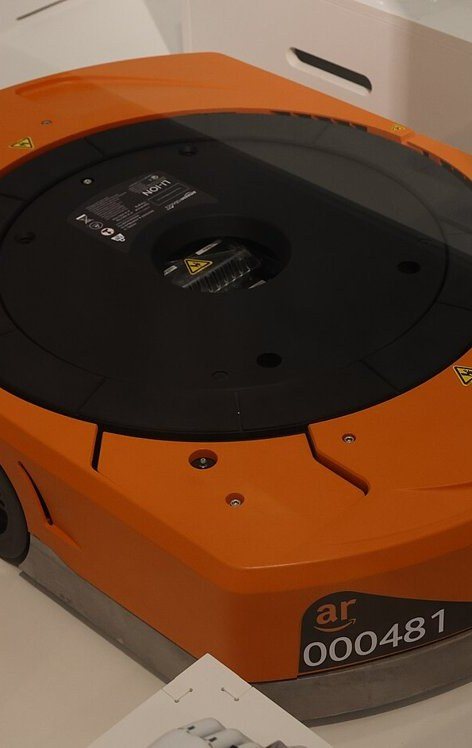
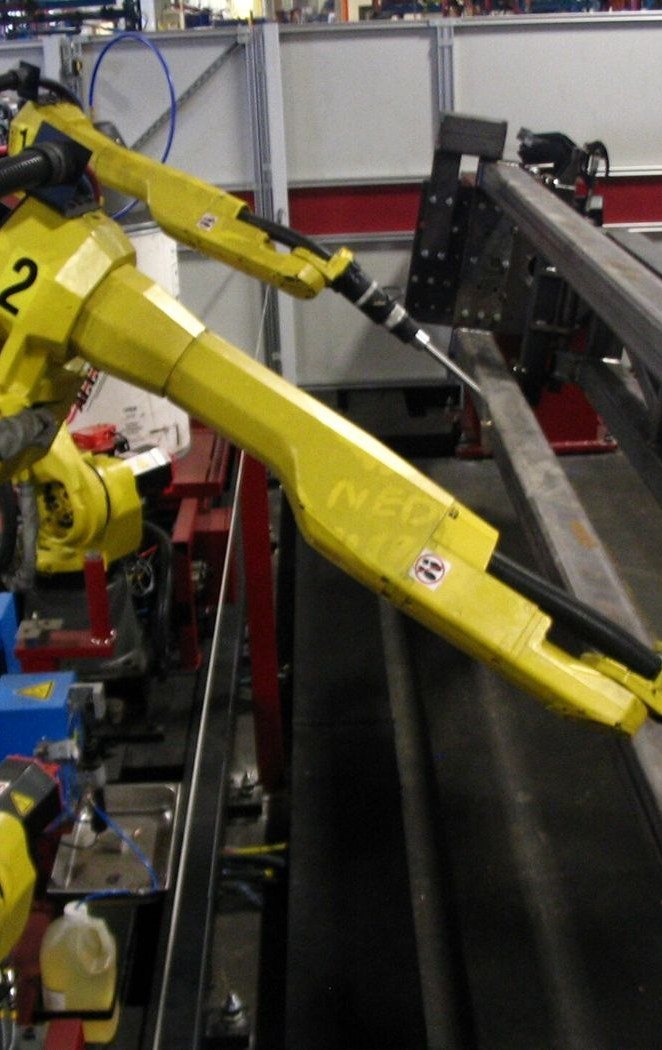
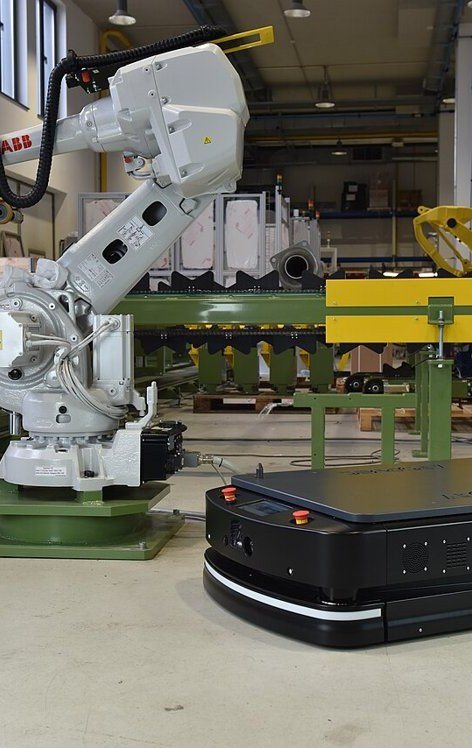
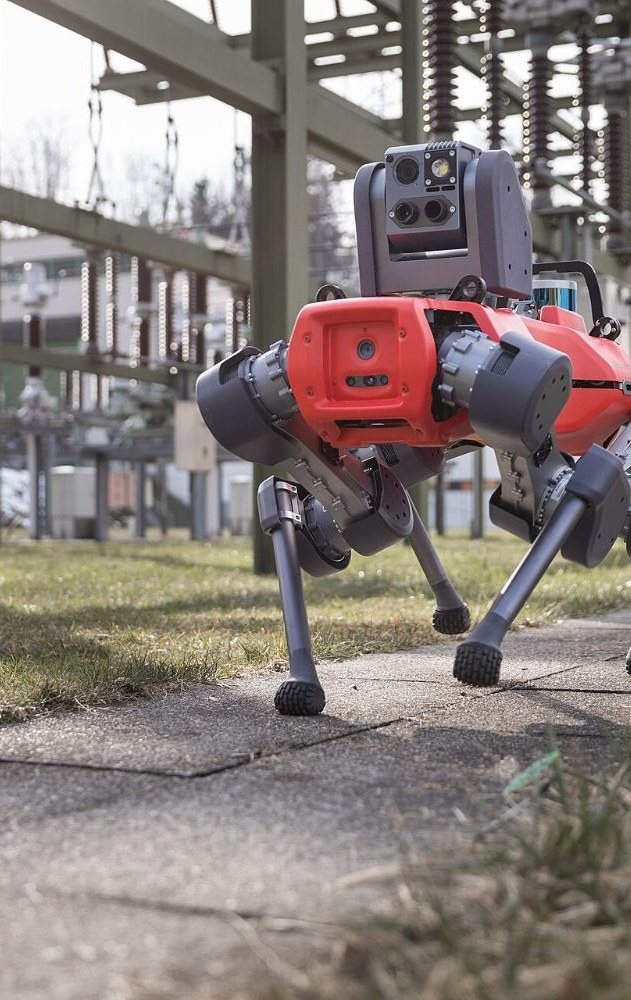
Photos, left to right: Geni, CC BY-SA 4.0; Phasmatisnox, CC BY 3.0; Marta Veverica, CC BY-SA 4.0; Cvoellmy / ANYbotics, CC BY-SA 4.0; Damian B Oh, CC BY-SA 4.0 (all via Wikimedia Commons).
Why humanoids, and why the caution.
The case for the human shape, and the price of it
Built for human spaces
- Doors, stairs, shelves and tools are made for people.
- No need to rebuild the site around the robot.
- One body for many tasks.
Learning from people
- Human video and teleoperation map more directly to a human-shaped body.
- Demonstrations by workers become training data.
- Operators can steer the robot intuitively.
What it costs
- Balance on two legs adds control, power and fall risk.
- Many joints mean more parts that can fail.
- Safety certification for dynamically stable robots is still being written.
- Wheels on a torso often do a task more cheaply.
Atomgigs treats the form factor as a business choice, not a fashion. Task, site and safety come first.
Actuators: the muscle of every joint.
A joint is a motor, a gear reduction, a sensor and a drive working as one unit
Motor plus gearing
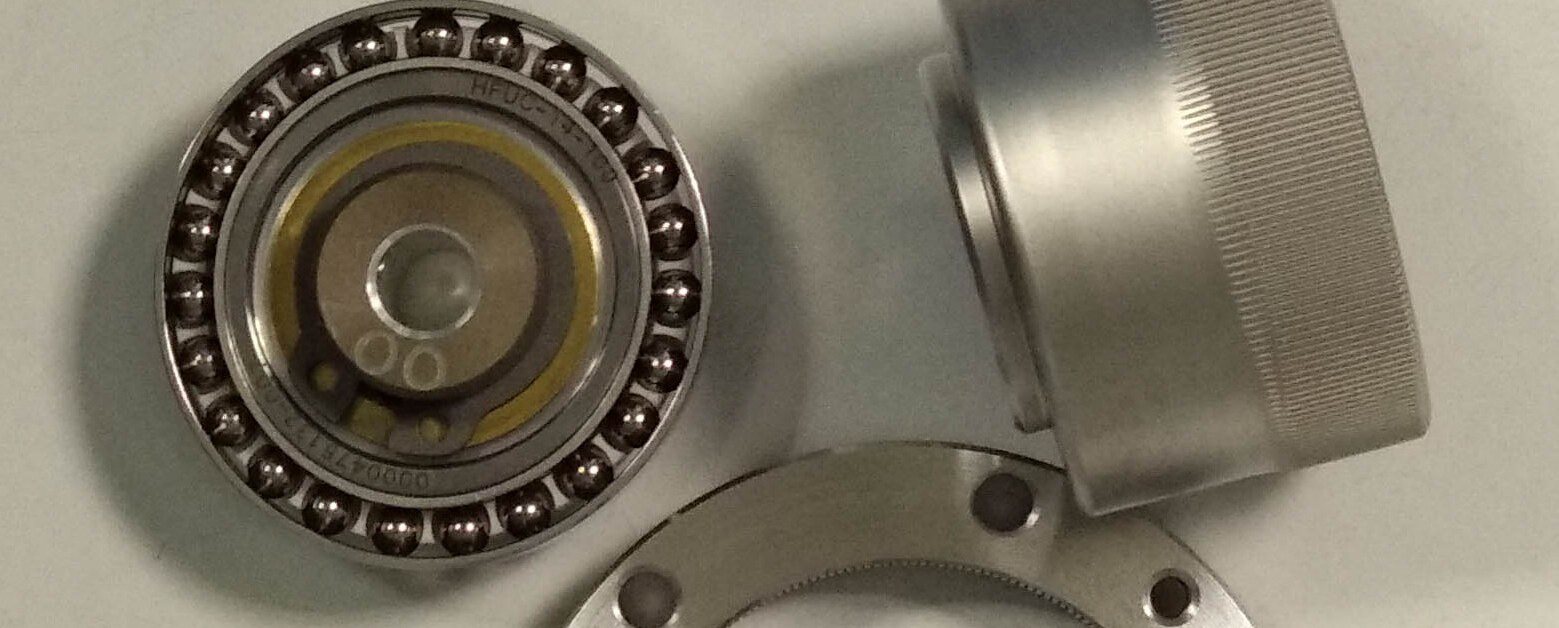
- Brushless motors with harmonic drives, planetary or cycloidal gearboxes.
- Quasi-direct drives keep gearing low for good torque feel and shock tolerance.
- Encoders and torque sensors give the controller its sense of position and load.
Strain-wave (harmonic) gear set
Photo: Pieceofmetalwork, CC BY-SA 4.0
Screws and rods
- Roller-screw linear actuators push and pull for legs and arms.
- Strong and compact at the cost of added mass in the limb.
- Common in several humanoid designs.
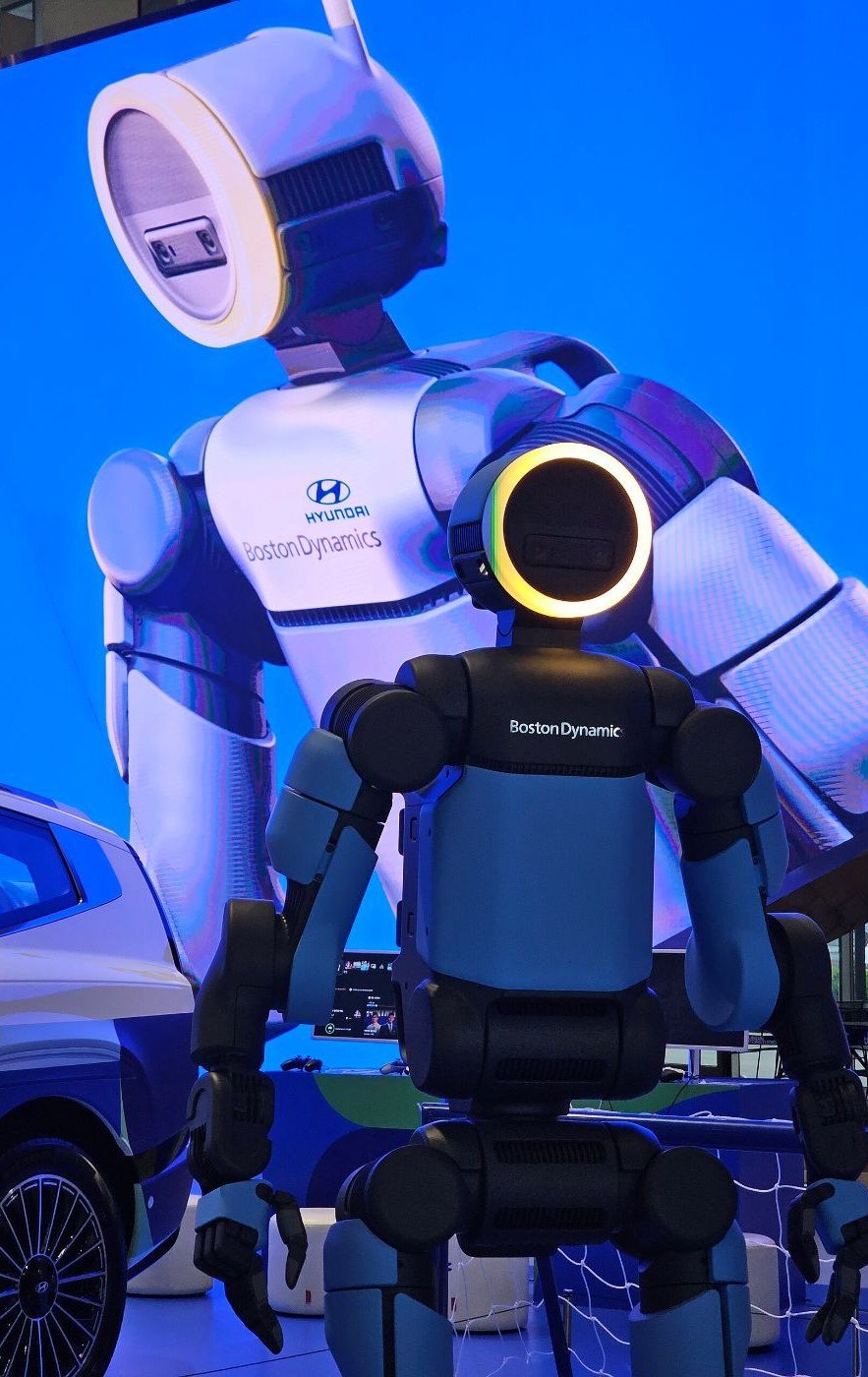
2026 production Atlas
- 56 degrees of freedom, most joints rotate 360 degrees.
- The design removes fragile wiring from moving joints.
- Hyundai Mobis supplies the actuators.
- Atlas moved from hydraulic to electric drive.
Actuators are bought-in parts for most makers. Supply chain and quality here decide cost and reliability.
Actuator types compared.
Trade-offs a maker faces when choosing the joint
| Type | Strength | Weakness | Seen in |
|---|---|---|---|
| Geared electric (harmonic, planetary) | High torque in a small size, precise | Gear wear, backlash, less back-drivable | Industrial arms, humanoid joints |
| Quasi-direct drive | Back-drivable, tolerates impacts, good force control | Needs bigger motors for the same torque | Quadruped legs, research humanoids |
| Series elastic actuator | Built-in spring gives safe force sensing | Lower bandwidth, added complexity | Collaborative robots, some legged robots |
| Linear (roller screw) | Strong, compact for pushing loads | Heavy in the limb, cost | Humanoid legs and arms |
| Hydraulic | Very high power density | Leaks, noise, upkeep, pump power | Earlier heavy legged robots, heavy equipment |
No type wins. The mix reflects the payload, speed, cost and safety target of the machine.
Hands: the hardest part of a humanoid.
Dexterity is where most robot demos stop and most real work begins
Many joints in a small space
- A human hand has about 27 degrees of freedom.
- Robot hands with 20 or more actuated joints pack motors, tendons and wiring into a palm.
- More joints mean more cost, heat and wear.
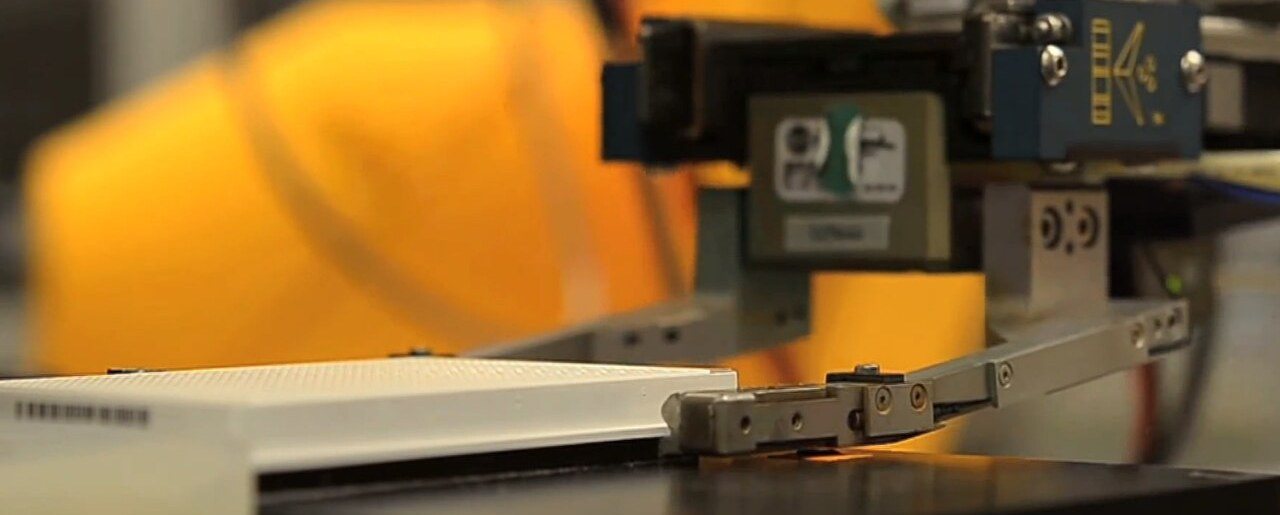
Grippers do most paid work
- Two-finger and suction grippers handle most logistics picking today.
- Three-finger and dexterous hands are for tool use and fine assembly.
- Tool changers swap end effectors when a task needs one.
Touch closes the loop
- Vision cannot see grip force or slip.
- Tactile skins and camera-based gel sensors report contact.
- Touch data is scarce, which limits what models learn about it.
When a company says "humanoid", ask what the hand can do and how many hours it has run in a real shift.
Power and thermal: the limits nobody demos.
Battery, heat and payload decide the shift, not the model
Runtime and charging
- Lithium-ion packs are the norm. Runtime of a few hours per charge is typical for humanoids.
- Swappable packs or automatic docking turn a demo into a shift.
- Battery safety needs its own review.
Motors get hot
- Peak torque is short. Continuous torque is set by how well the motor sheds heat.
- Hot joints derate, slow down or shut off.
- Enclosures and cooling add weight and noise.
Weight changes everything
- Doubling payload (say 10 kg to 20 kg) changes motors, gearing and structure.
- Simulation can test feasibility.
- It cannot test sourcing, safety certification or reliability.
Ask for payload at full reach, continuous runtime with load and minutes to recharge or swap.
From CAD to a built robot.
The chain you can run in software, and the steps that still need a factory
Design in CAD
Autodesk, PTC Onshape or SolidWorks define parts, joints and mass.
Export
STEP for geometry, URDF or MJCF for joints, USD for full scenes.
Simulate
Load into Isaac Sim or MuJoCo. Test reach, balance and payload.
Prototype
3D print light parts. Buy actuators, drives, sensors and batteries.
Certify
Safety testing and standards before any customer site.
Pilot
Staged live trial. Rescues feed the next design.
The chain echoes the CAD-to-CNC shift of the 1990s, with a simulation step added in the middle.
Build to order is real for prototypes and light parts. Production humanoids still depend on bought-in actuators and sensors.
Senses and compute
Sensors, onboard compute, from pixels to a world state.
The sensor set on a modern robot.
Most robots fuse several sensor types. No single sensor is enough.
| Sensor | What it gives | Strength | Watch out for |
|---|---|---|---|
| RGB camera | Color images | Cheap, rich, what VLA models read | Lighting, motion blur, no direct depth |
| Depth (stereo, time of flight) | Distance per pixel | Direct 3D for grasping and obstacles | Shiny and transparent objects, sunlight |
| LiDAR | Precise 3D point cloud | Long range, mapping, navigation | Cost, glass, rain, dust |
| IMU | Rotation and acceleration | Fast, key for balance | Drift over time |
| Joint encoders and torque sensors | Joint position and load | Core of motor control | Calibration, temperature |
| Force-torque sensor | Forces at wrist or foot | Contact-aware assembly and walking | Noise, cost |
| Tactile skin | Touch and slip | Grip control for soft or slippery objects | Immature, fragile, little data |
Cameras and joint sensors carry most of the load today. Touch is the missing sense.
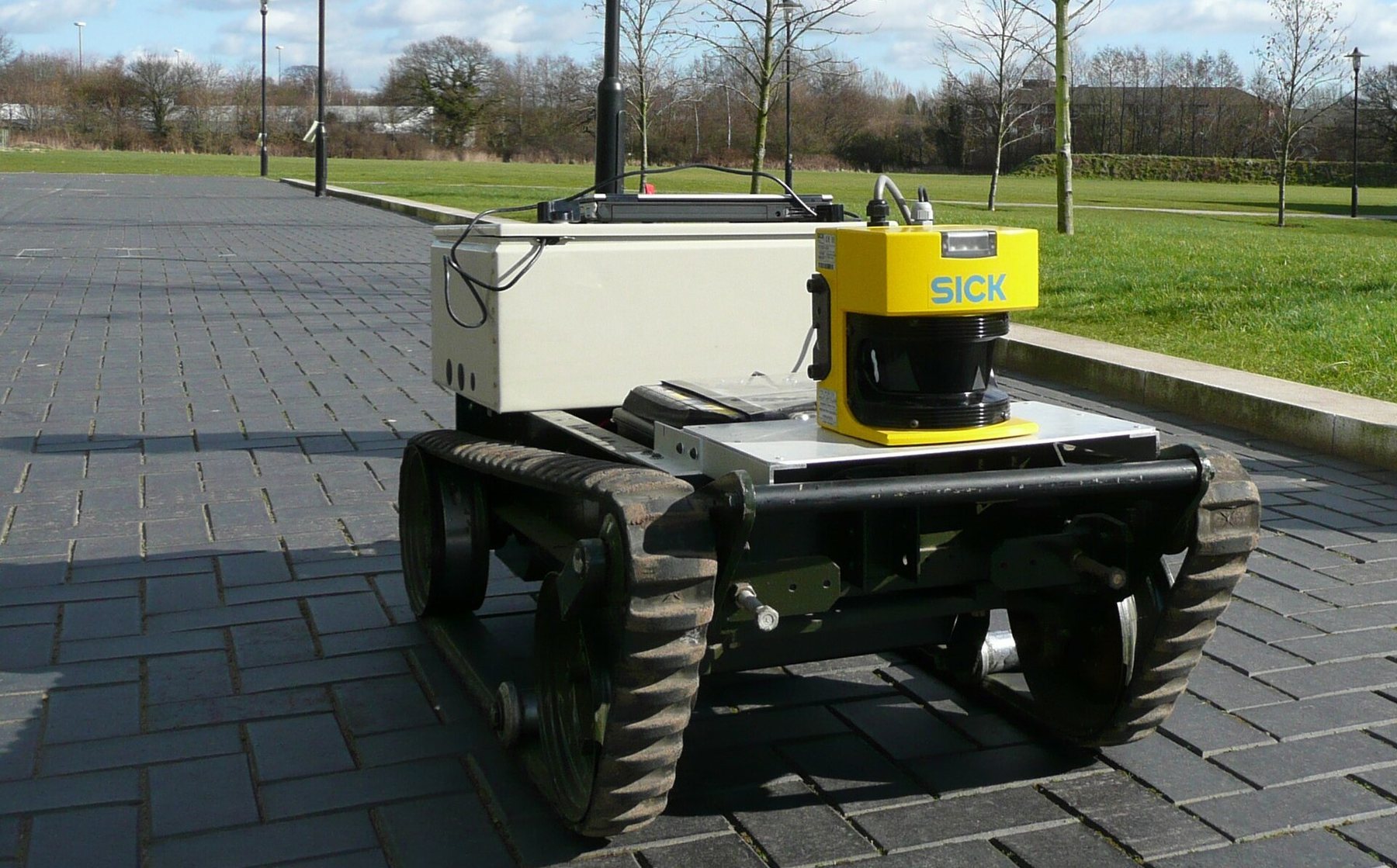
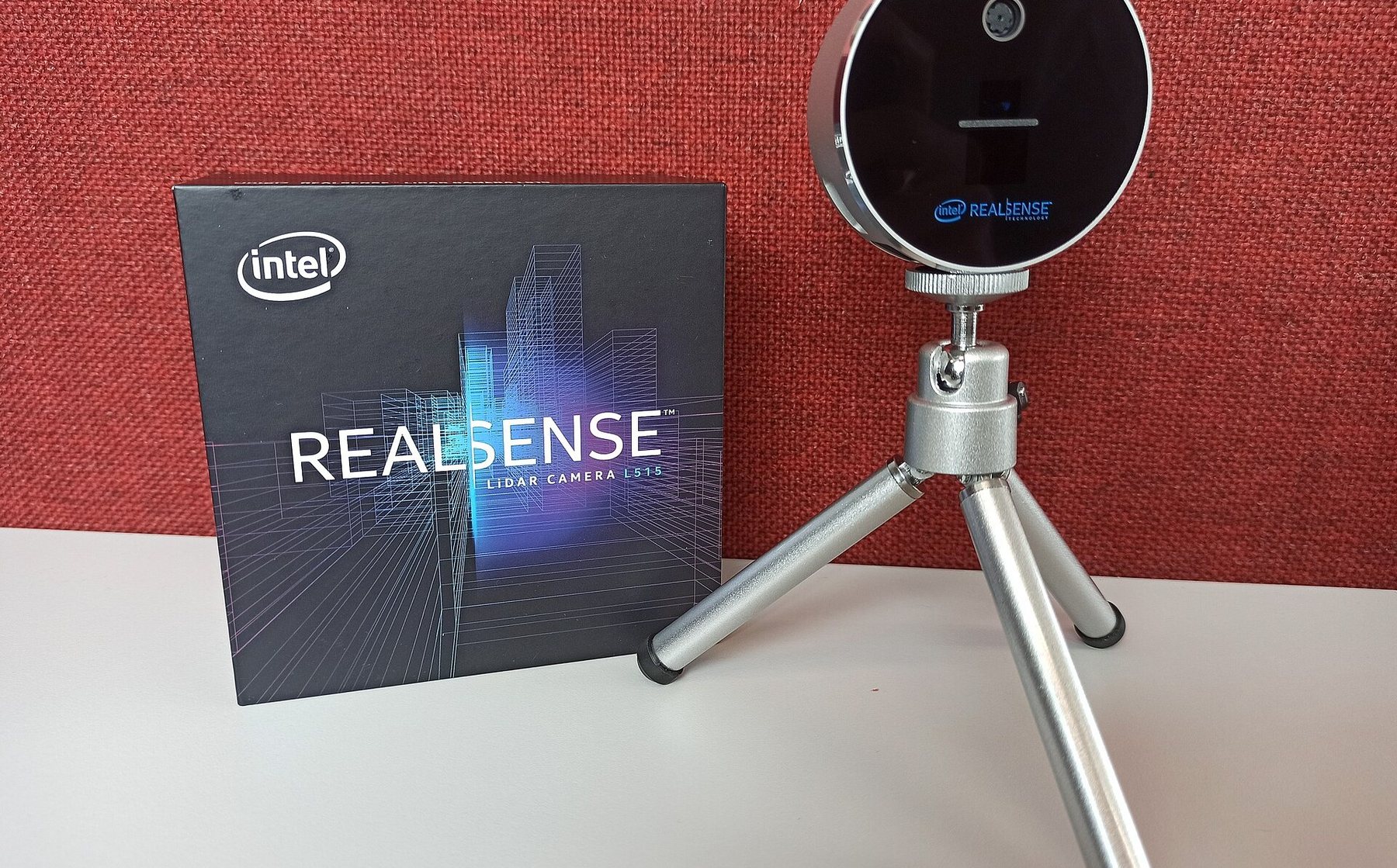
Lidar and depth cameras, in pictures.
The two sensors that give a robot direct 3D: one scans the room, the other sees depth per pixel.
The computer on board.
Three kinds of processor, each with its own job. Prices are typical ballpark values from public sources, not quotes.
Runs the AI models
- Edge GPUs such as NVIDIA Jetson Thor run vision and VLA models on the robot itself.
- The Thor developer kit launched in August 2025 at $3,499; NVIDIA raised its list price to $5,499 in July 2026 as memory costs rose.
- Smaller Thor and Orin modules suit lighter robots.
Runs the software
- ROS 2 nodes, planning, state estimation and logging.
- Real-time Linux or a real-time core keeps timing predictable.
- Isaac ROS packages are tuned for NVIDIA hardware.
Runs the motors
- Microcontrollers and drives close the fast loops.
- They must answer on time every time, so they stay simple.
- Safety functions often live on their own certified controller.
Edge versus cloud: control and inference stay on the robot for speed and uptime. Training and fleet analytics live in the cloud.
An edge AI computer, out of the box.
The brain in the chest: a GPU module that runs vision and VLA models on the robot.
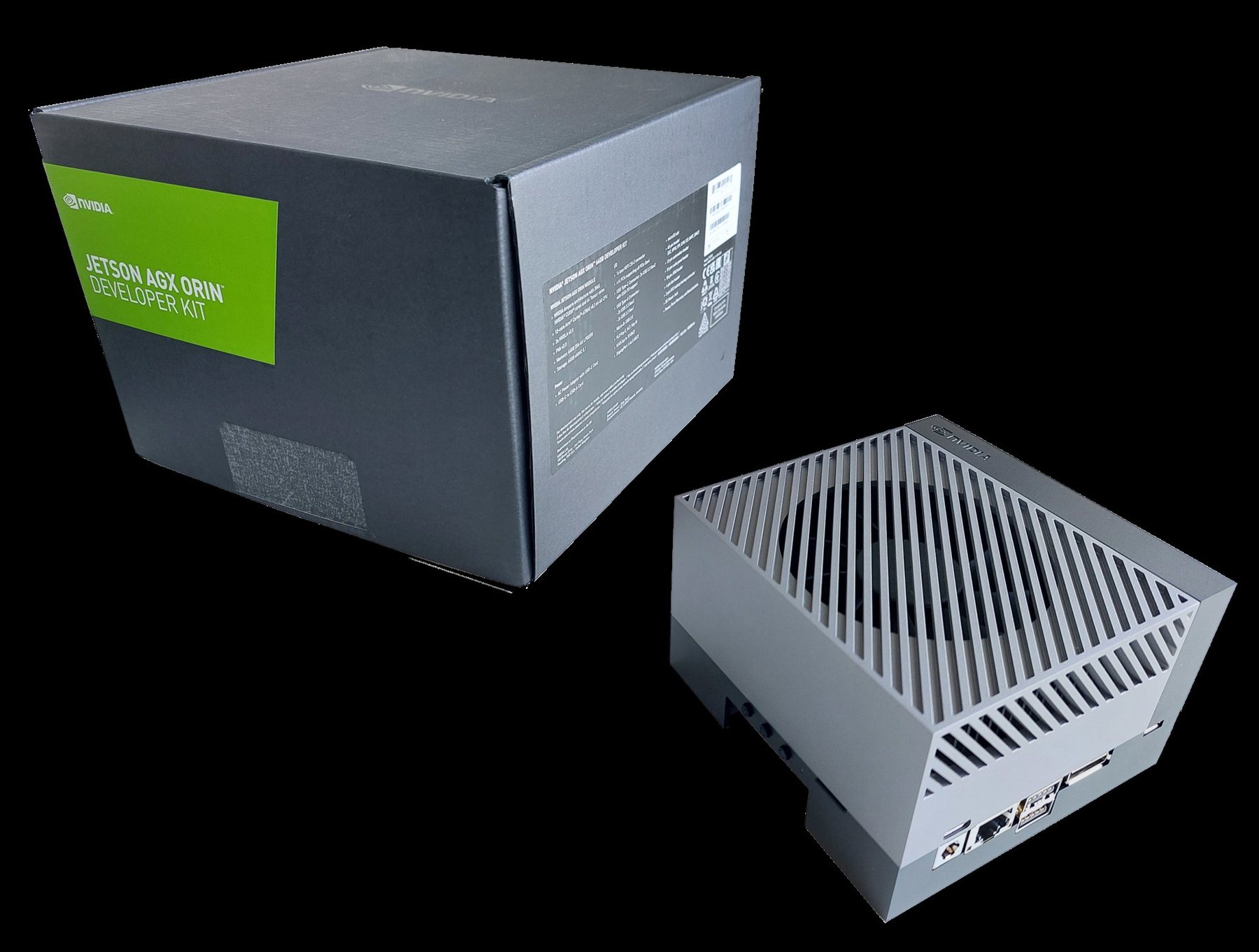
- NVIDIA Jetson AGX Orin developer kit (right) and its box (left).
- Orin is the generation before Thor; both put a GPU and CPU in a module small enough for a robot's torso.
- The same module, without the case, is built into production robots.
- Thor is the 2025 successor, aimed at humanoids and VLA models.
Photo: Auledas, CC BY 4.0
From pixels to a world state.
Raw sensor data is cleaned, aligned and turned into what the planner needs
Capture
Cameras, depth, LiDAR, IMU and joints stream data.
Calibrate and sync
- Fix sensor positions and align timestamps.
- A one-frame error breaks grasps.
Perceive
Detect, segment and estimate pose of objects and people.
Localize and map
Where am I, what is around me. SLAM or a prebuilt site map.
World state
A live model of objects, free space and risks handed to planning.
Calibration and time sync are unglamorous and cause many field failures. They belong on every pilot checklist.
Middleware and control
ROS 2 and real-time buses, three control loops, whole-body control and planning, safety inside the control stack.
ROS 2 and EtherCAT: the shared plumbing.
Why robots look alike inside
ROS 2
- Open-source messaging framework that links sensors, planning and drivers. Middleware, not an operating system.
- Began at Stanford and Willow Garage in 2007; now stewarded by the Open Source Robotics Foundation.
- ROS 2 left beta in December 2017. ROS 1 reached end of life in May 2025.
EtherCAT
- Open real-time standard from Beckhoff, managed by the EtherCAT Technology Group.
- Servo drives stay synchronized to under a microsecond.
- Very common in industrial arms and humanoid joints.
Isaac ROS and others
- NVIDIA ships Isaac ROS, ROS 2 packages tuned for its hardware.
- The GPU does not drive motors directly. Commands pass through ROS 2 and the drive network.
- Alternatives such as CAN buses appear in smaller robots.
Standard software and wiring mean makers compete on mechanics, data and the trained model, not on plumbing.
Three control loops at three speeds.
A robot is not one program. Slow reasoning sits on top, fast reflexes sit at the bottom.
~10–30 Hz
AI brain
A VLA model reads camera images and an instruction such as "restock the soup" and outputs short action sequences. NVIDIA reports GR00T N1.7 at about 25 Hz on Jetson AGX Thor with optimized inference.
Edge GPU
10 to 500 Hz
Whole-body control and planning
Balance, walking, arm paths and obstacle avoidance. Often a reinforcement-learning policy trained in Isaac Lab, or model-predictive control, running as ROS 2 nodes.
CPU or GPU, ROS 2
1 to 10 kHz
Motor loops
Servo drives close the torque, speed and position loops. EtherCAT links them, synchronized to under a microsecond.
Drives and real-time controller
The AI proposes. The lower loops dispose. Safety limits must live in the lowest loops, not in the model.
Whole-body control and motion planning.
Classical methods and learned policies now work side by side
Optimization-based control
- Model-predictive control and whole-body optimization plan balance and contact forces.
- Explainable, predictable, tunable by engineers.
- Needs accurate models and compute.
RL locomotion policies
- Trained in Isaac Lab with thousands of parallel copies and randomized conditions.
- Handle rough ground and pushes that are hard to hand-code.
- Quality depends on how well simulation matches reality.
Arm paths and obstacles
- MoveIt 2 and GPU planners such as cuMotion compute collision-free arm paths.
- Planning runs below the AI brain and above the motors.
- Real sites add moving people and clutter.
Most shipping robots blend both: learned policies for movement, classical checks for limits and safety.
Safety inside the control stack.
Safety is designed in at the lowest loops and certified apart from the AI
Stops and limits
- Emergency stops cut power regardless of what the model wants.
- Joint, speed and force limits are enforced in firmware.
- Safety-rated controllers are separate from AI compute.
Collaborative modes
- Speed and separation monitoring slows or stops when a person is near.
- Power and force limiting caps contact force.
- These ideas come from industrial collaborative-robot rules.
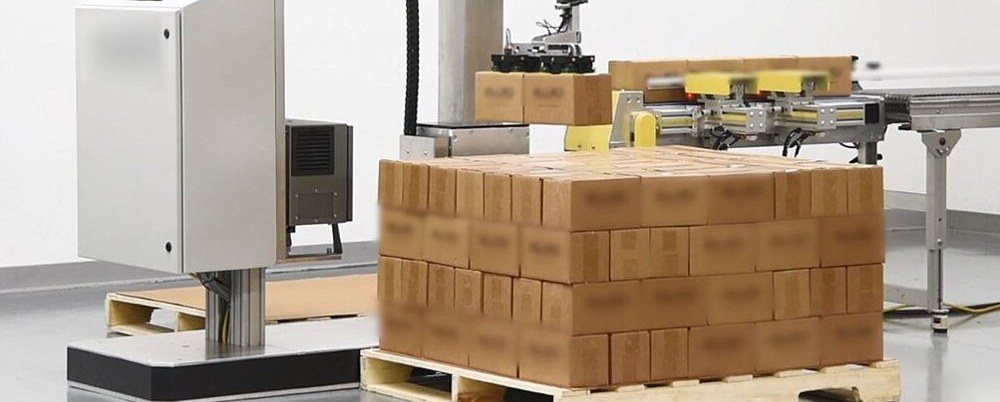
A collaborative arm palletizing without a fence
Photo: CollaborativePalletizer, CC BY-SA 4.0
Functional safety
- Safety functions carry performance-level or SIL ratings.
- A learned policy cannot be certified directly, so the guard around it is.
- Legged and humanoid robots lack settled standards today.
The practical rule: let the AI choose goals, and let certified hardware and firmware limit what any goal can do.
Models: the new brain
Vision-language-action models, how the models are trained, world models, language as the interface.
How a vision-language-action model works.
Images and an instruction in, short action sequences out
Inputs
Camera frames, joint state and a text instruction.
Backbone
A pretrained model understands scene and words.
Action head
Generates a chunk of joint targets, often by diffusion or flow matching.
Action chunk
A short sequence executed while the next one is computed.
Controllers
Lower loops turn targets into torques.
NVIDIA GR00T N1.7 has open weights and about 3 billion parameters, and runs at about 25 Hz on Jetson AGX Thor.
Demonstrations recorded on real robots are the data used to fine-tune a VLA for a new task.
The model landscape: examples, not a ranking.
Open and closed families both exist. Access terms matter as much as quality.
| Family | Developer | Access | Note |
|---|---|---|---|
| Isaac GR00T | NVIDIA | Open weights | Humanoid focus; N1.7 has about 3B parameters, commercial use allowed |
| π0 family | Physical Intelligence | Open weights for π0 and π0.5 | Generalist model trained across many robot types |
| Gemini Robotics | Google DeepMind | VLA for partners; ER model via API | Gemini Robotics 2 (Jul 2026); DeepMind works with Boston Dynamics on Atlas |
| Helix | Figure | Proprietary, in-house | Tied to Figure humanoids |
| OpenVLA | Academic group | Open | Research baseline of about 7 billion parameters |
A client buying robots is also choosing a model supplier. Ask who can fine-tune it and where the weights live.
How the models are trained.
Three ingredients, usually combined
Start from web-scale knowledge
- A vision-language model already understands objects, words and scenes.
- Robot data then teaches it to act.
- This is why a few demonstrations can go a long way.
Demonstrations and trial
- Imitation from human demonstrations gives a first policy.
- Reinforcement learning in simulation refines it.
- Staged live operation adds real-world corrections.
Make it yours
- NVIDIA suggests about 100 to 500 good demonstrations for a fine manipulation task.
- Cross-embodiment models adapt across robot bodies.
- A body change may force retraining.
Fine-tuning is where a customer site is encoded into the model. That step is a service, and it recurs.
World models: two schools.
Both are being built. Neither has won.
NVIDIA Cosmos
- A world foundation model that makes realistic video-like scenes.
- Cosmos Transfer adds variation such as lighting and clutter to simulated scenes.
- Cosmos 3 (June 2026) unifies reasoning, world and action generation.
JEPA-style models
- Yann LeCun argues for predicting in abstract latent space, not pixels, because most pixel detail is unpredictable.
- His AMI Labs raised a $1.03 billion seed round in March 2026.
What world models do for robots
- Create synthetic training data from scarce real data.
- Test policies safely before deployment.
- Possibly plan by imagining outcomes.
- Store environments in Isaac Sim as 3D OpenUSD scenes.
Treat world models as a data and evaluation tool today. Their role inside the control loop is still research.
Language as the interface.
LLM agents can call robot skills in plain English. They cannot add skills the robot lacks.
Agent chooses skills
- An LLM agent turns "tidy the aisle" into a sequence of existing skills.
- AWS's open-source Strands Agents and Strands Robots let an agent call skills, including over ROS 2.
- The agent plans; tested skills do the moving.
A library of tested behaviors
- Pick, place, open, navigate, scan.
- Each skill is a trained policy or a scripted routine with known limits.
- The library grows with every deployment.
Keep the agent in bounds
- Permissions limit which skills can run where.
- Human approval for risky steps.
- Logs show why the robot acted.
Natural-language control is a convenience layer on top of skills. The skills, not the chat, are the asset.
Simulation and reinforcement learning
Simulators, reinforcement learning and sim-to-real, synthetic data and digital twins.
The simulators and what each is for.
Several engines coexist. Teams often use more than one.
| Tool | Steward | Strength | Typical use |
|---|---|---|---|
| Isaac Sim | NVIDIA | Photorealistic scenes, sensor simulation, OpenUSD import of URDF, MJCF and CAD | Digital twins, synthetic data, testing |
| Isaac Lab | NVIDIA | Thousands of parallel environments on GPUs | Reinforcement-learning training |
| MuJoCo | Open source (Google DeepMind) | Fast, accurate contact physics | Research, locomotion, manipulation |
| Genesis | Open source project | Fast multi-physics platform for robot learning | Research and rapid experiments |
| Newton | Open physics engine (NVIDIA, Google DeepMind, Disney Research) | GPU-accelerated, differentiable physics | Shared physics layer for robot learning |
| Gazebo | Open Robotics | Tight ROS integration | System testing of ROS robots |
Pick the simulator by the question: contact fidelity, speed or scene realism. No single tool leads on all three.
A humanoid at work, inside a simulator.
Robot, site and physics in software: where most testing now starts.
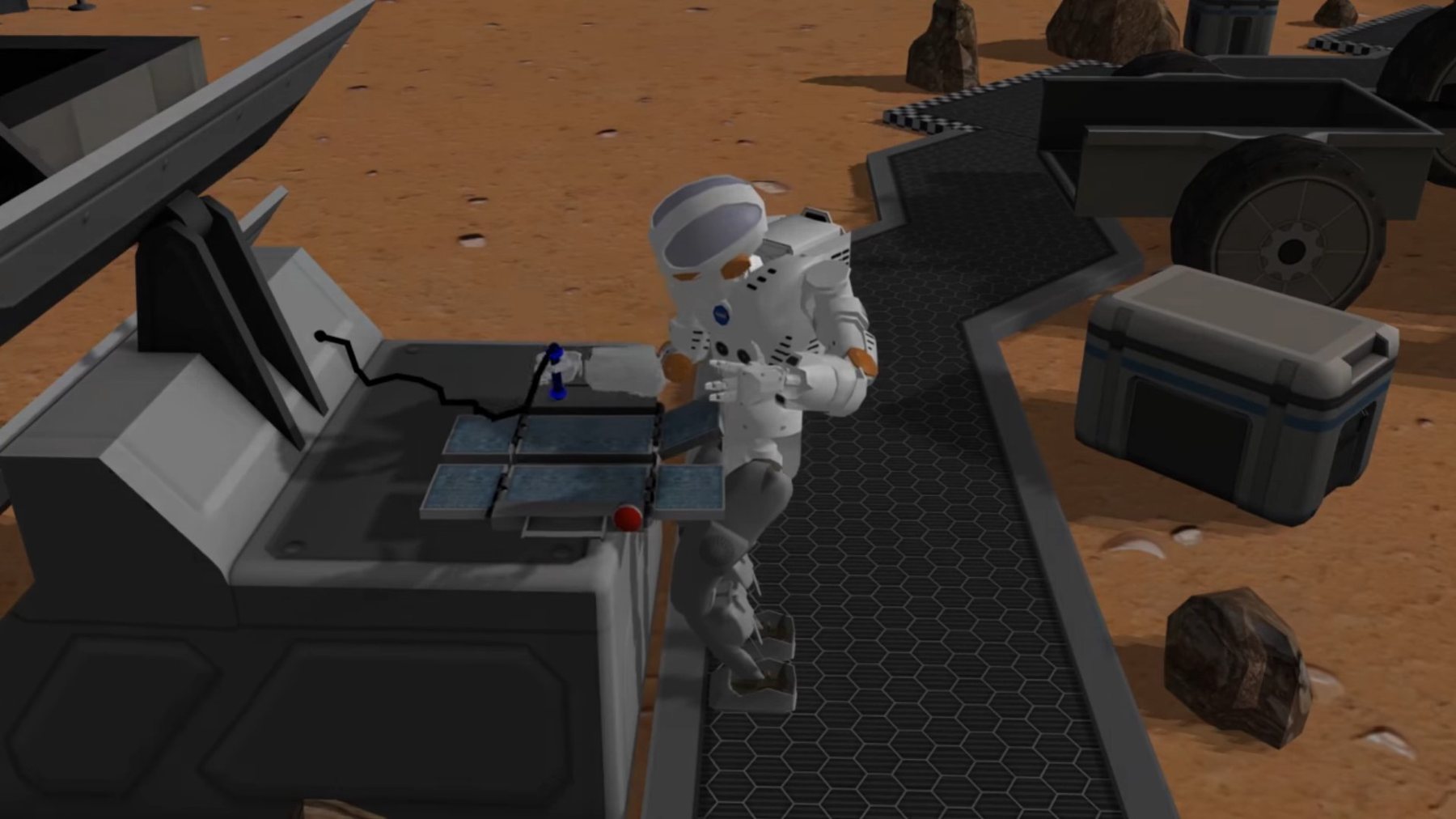
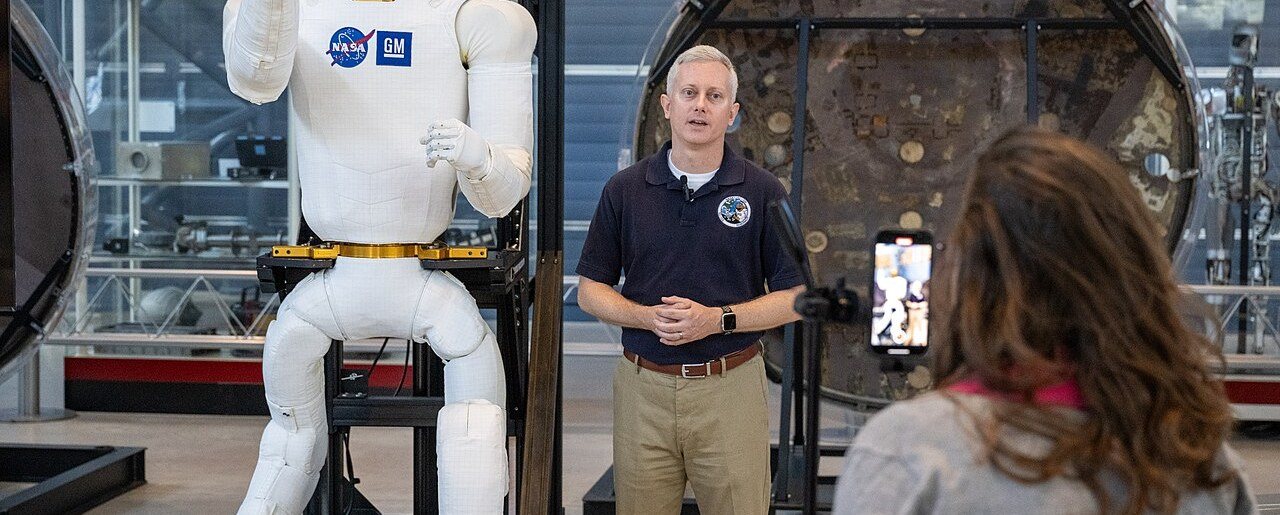
- NASA's Valkyrie humanoid fixing a solar panel in a Gazebo scene built for NASA's Space Robotics Challenge.
- Teams wrote and tested their control software against this virtual robot before any hardware run.
- The same idea scales up in Isaac Sim and Isaac Lab, with thousands of copies running at once.
Screenshot: Chapulinaaa, CC BY-SA 4.0
Reinforcement learning, step by step.
The "rules" you describe are reward functions. The result is a policy.
Describe the task
Points for stocking a shelf correctly. Penalties for dropping glass.
Load the robot
Import the model into Isaac Sim. Add the site as a 3D scene.
Run thousands of copies
Isaac Lab trains in parallel on GPUs.
Randomize
Vary lighting, friction, mass and sensor noise.
Policy
A network that maps sensor input to actions.
Test on hardware
Deploy to the robot. Measure the gap.
A policy is the learned network. Rules like "do not drop glass" are only the rewards that shaped it.
Domain randomization is the core defense: train across many versions of reality so the real one looks like one more variant.
Why simulation fails: contact is the hard part.
The sim-to-real gap and the usual ways to narrow it
Where reality differs
- Gravity and rigid-body motion are well understood.
- Friction, soft or slippery objects, sensor noise and clutter are approximated.
- Unscripted events such as spills and dropped cans are hard to script.
How teams close it
- Domain randomization and system identification of real motors.
- Teacher-student distillation and residual policies.
- Physics-informed neural networks for better friction models (active research).
Keep real data in the loop
- Fine-tune on a few hours of real demonstrations.
- Staged live operation reveals what simulation missed.
- Full sim-to-real is still an open research problem.
Plan for staged pilots on the real site, not a clean hand-off from simulation.
Synthetic data and digital twins.
Virtual copies of robots and sites that stretch scarce real data
A virtual site
- A physics-accurate virtual copy of a robot or site.
- Test layouts, routes and failures before touching the real floor.
- Built as 3D OpenUSD scenes in Isaac Sim.
Variation on demand
- Cosmos Transfer adds lighting, weather and clutter variants.
- One real clip becomes many training scenes.
- Cosmos augments data. It does not replace images of the real site.
What synthetic cannot do
- It cannot invent physics the simulator lacks.
- Quality depends on assets, called SimReady assets, that behave like real ones.
- Real data still anchors the final policy.
Digital twins make pilots cheaper and safer. They do not replace staging on the real site.
Data and teleoperation
The data pyramid, teleoperation and capture, data operations and evaluation, who owns the data.
The data pyramid: more volume below, more value above.
Robot teams blend all five tiers. Real data on the target robot is rare and decisive.
Real robot data
Real robot data on your task
Rescues and autonomous runs on the actual site. Scarce, costly, decisive.
Teleoperated demonstrations
Teleoperated demonstrations
Human-driven runs via headset, leader arms or gloves. Often 100 to 500 episodes for a new task.
Human video
Human video
Workers filmed doing the job, often from head-mounted cameras. Cheap, but it needs mapping to the robot body.
Simulation and synthetic data
Simulation and synthetic data
Isaac Lab runs and Cosmos-generated scenes. Unlimited volume, imperfect physics.
- More
- value
Internet video, images and text
Internet video, images and text
Pretraining of the vision-language backbone. Widest, least robot-specific.
Most real programs spend effort at the top two tiers, where each hour is hardest to get.
Teleoperation and demonstration capture.
Humans teach the robot by doing the task through it
How demonstrations are made
- XR headsets: NVIDIA Isaac Teleop supports Meta Quest 3, PICO 4 Ultra and Apple Vision Pro, with CloudXR streaming.
- Leader-follower arms, gloves and handheld grippers.
- NVIDIA supplies the software; the headsets are standard consumer devices.
How much is enough
- NVIDIA GR00T guidance: about 100 to 500 good episodes for a fine task.
- Harder tasks and new bodies need far more.
- Quality matters: failed or sloppy demos teach failure.
Teleoperation as a safety net
- A remote operator steps in when the robot stalls.
- Each rescue is recorded and becomes training data.
- Operators per robot is a key cost figure and should fall over time.
The same people and tools that rescue the robot also teach it. Data capture and operations are one workflow.
Data operations and measuring performance.
What to record, how to store it and what to measure
From shift to training set
- Record sensor streams, actions and outcomes.
- Keep failures and stuck moments. Not every second of video needs to flow back.
- Store in object storage such as S3, version, label and curate.
Fine-tune and redeploy
- Fine-tune on SageMaker or similar.
- Push improved weights to the robot overnight.
- Keep the raw data: a redesign can be retrained from it rather than from zero.
What to measure
- Task success rate and share finished without a human rescue.
- Interventions per hour and mean time between failures.
- Cost per robot-hour and payback against a human worker.
Report rescue rate and operators per robot from the first pilot week. They show real progress better than any demo.
Who learns from whom.
Large enterprises will not send proprietary operating data to a robot maker. The answer is base plus local models.
| Question | Emerging answer | Evidence |
|---|---|---|
| Does customer data train the maker's base model? | Not without opt-in | Amazon Bedrock states customer content is not used to train base models; fine-tuning makes a private copy |
| Where does the pipeline run? | In the customer's cloud account for large enterprises | Large retailers are expected to insist on owning their operating data |
| What does the vendor ship? | Improved base models from its own and consenting sources | Each customer re-applies a thin local fine-tune |
| Who profits from data? | Whoever holds consented data | NVIDIA and LG announced an AI factory and an LG robot data factory in June 2026. Makers with their own plants, such as Tesla, collect robot data in-house |
| What is the overhead? | The re-tuning step per site | A service opportunity for integrators |
Data is both an asset and a liability. Opt-in, discount and sharing terms must be explicit in every contract.
Deployment, fleets and safety
The deployment path, fleet operations, safety standards, security and compliance.
The deployment path: staging first.
Before a robot works live, it runs bounded and supervised
Survey and twin
Map the site. Build a digital twin. Pick one scope, one site, one metric.
Stage off-hours
Run in a bounded area while a remote operator steps in on failures.
Supervised shifts
Staff nearby. Track rescue rate and cycle time.
Add daytime hours
Expand only as confidence is earned.
Autonomous operation
Exceptions go to remote operators. Fleet monitoring on.
Improve
Fine-tune, update, repeat.
Confidence is earned shift by shift. Skipping staging is the most common reason a pilot fails.
Each rescue is recorded and used to fine-tune the model. The robot you stage is not the robot you run six months later.
Fleet operations.
Running many robots is its own discipline
Many robots, many vendors
- Open-RMF coordinates traffic and tasks across robots from different makers.
- OpenRobOps (InOrbit, released September 2026, Apache 2.0) is an open fleet manager with the first reference implementation of ISO 21423.
- Vendor consoles still dominate.
Remote operators
- An operator answers help requests from a queue.
- The ratio of operators to robots drives cost.
- Staffing and shift planning matter as much as software.
Updates and uptime
- Over-the-air updates for software and models, with rollback.
- Spare parts, battery swaps and repair turnaround.
- Monitoring flags drift before a failure.
A fleet of driverless pallet stackers
Photo: Carmenter, CC BY-SA 4.0
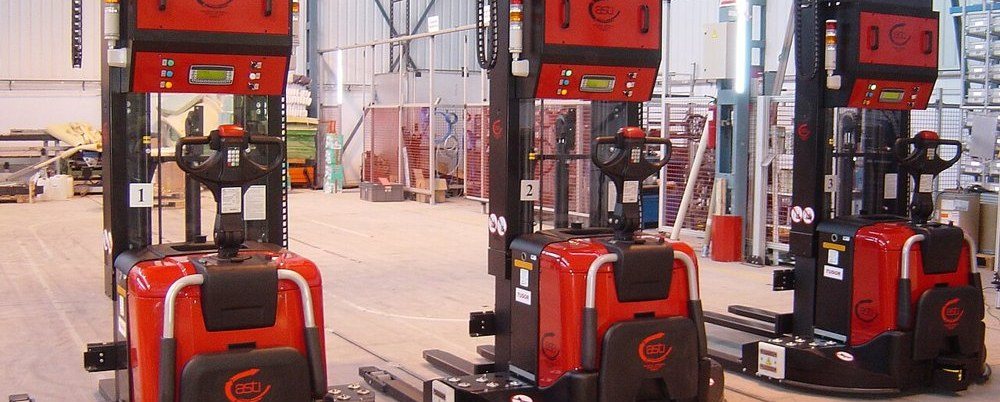
Uptime, not autonomy, is what a customer pays for. Fleet operations is where most of the cost hides.
The safety standards landscape.
Rules for industrial robots are mature. Rules for humanoids and legged machines are being written.
| Standard or rule | Covers | Status and relevance |
|---|---|---|
| ISO 10218-1 and -2 (2025 edition) | Safety of industrial robots and robot applications | Reissued in 2025; collaborative operation guidance is folded in |
| ISO 25785-1 | Industrial mobile robots with actively controlled stability, such as legged and humanoid | Committee draft; the key gap for humanoid deployment |
| ISO 13482 | Personal care robots | In force; relevant to service and consumer robots |
| ISO 3691-4 | Driverless industrial trucks | In force; relevant to autonomous mobile robots |
| ISO 21423 | Communication between industrial mobile robots and fleet managers | At the final ISO publication stage; OpenRobOps is an early reference implementation |
| EU Machinery Regulation 2023/1230 | Machinery placed on the EU market, including AI-based safety | Applies from 20 January 2027 |
| EU AI Act | AI systems by risk class | Phasing in; high-risk rules for AI in machinery apply from Aug 2028 (2026 amendment) |
Check which standard applies to the exact machine and site. For humanoids, expect risk assessments rather than a ready checklist.
Security, privacy and liability.
A robot is a networked, camera-carrying machine that moves
Software you must patch
- The EU Cyber Resilience Act phases in obligations from 2026, with main duties in 2027.
- Plan for secure boot, signed updates and vulnerability reporting.
- A hacked robot is a physical risk.
Cameras on the floor
- Robots record workers and customers.
- Consent, retention and masking rules vary by region.
- Opt-in data sharing needs clear contract language.
Insurance and responsibility
- Who is liable when a robot causes harm: maker, integrator or operator.
- Insurers ask for safety evidence and incident logs.
- The insurance position is a diligence question.
Security and liability are part of the product. Customers will ask for both in the first meeting.
Market and economics
Who is in the stack, prices and business models, why there are so many robot companies, open problems, questions that test a robot company.
Who is in the stack.
Examples by layer, from public reports. Not an endorsement or a ranking.
| Layer | Examples | Note |
|---|---|---|
| Chips and platforms | NVIDIA (Jetson, Isaac, Cosmos, GR00T), AWS | NVIDIA builds CUDA, Omniverse, Isaac and Jetson, and backs OpenUSD |
| Humanoid makers | Boston Dynamics (Hyundai), Agility Robotics, Figure, Tesla, 1X, Apptronik, Unitree | About 13,000 humanoids shipped worldwide in 2025 (Omdia) |
| Foundation models | NVIDIA GR00T, Physical Intelligence, Google DeepMind, Figure | Mix of open and closed |
| Components | Hyundai Mobis (Atlas actuators), drive and sensor makers | Bought-in parts dominate cost |
| Design and simulation partners | PTC, Cadence, Siemens, Autodesk | Plug into the NVIDIA stack rather than rebuild it |
| Customers and pilots | GXO, Toyota Canada, Hyundai | Toyota Canada leases seven Agility Digits (Feb 2026) |
Few players own more than two layers. Most companies are integrators of a shared stack.
Prices and business models.
Robots-as-a-Service is the default entry model. Typical ballpark values from public sources, not quotes.
| Offering | Reported price | Basis |
|---|---|---|
| Industrial humanoid | $3,000 to $6,000 per month | Industry benchmarks; Toyota Canada leases seven Digits |
| Humanoid, flat monthly | $2,500 to $8,000 per month | Depends on platform and term |
| Humanoid, hourly | $10 to $30 per operating hour | Cost can exceed ownership at high use |
| Warehouse mobile robot (Brightpick) | $1,900 to $2,200 per month per robot | Includes servicing |
| Consumer humanoid (1X NEO) | About $499 per month | Vendor-stated |
| Agility filing illustration | About $8,500 per month per robot | Vendor estimate, not a signed price. RaaS carries support, operators, replacement and insurance |
Large enterprises that want to own their data tend to buy and host in their own cloud account instead of subscribing.
Why so many robot companies when the stack is shared.
The infrastructure layer is commoditizing. These four things still differentiate.
1
Mechanics
- The 2026 Atlas has 56 degrees of freedom, 360-degree joints and no fragile wiring in moving joints.
- Its 2026 run is committed to Hyundai and Google DeepMind.
2
Data and the model
Tesla's fleet and LG's data factory are bets that proprietary real-world data is the moat.
3
Customer integration
Vertical ties shorten the path to revenue: Boston Dynamics with Hyundai, Agility with Toyota and GXO.
4
Service, safety, uptime
- Often the least glamorous and hardest part.
- It decides whether a pilot becomes production.
A startup with none of these four is a thin wrapper on the same stack.
Why NVIDIA leads, in one picture.
Atomgigs synopsis from public information
GPUs and Jetson
- Access to GPUs for training.
- Jetson chip runs the result on the robot.
CUDA, Omniverse, OpenUSD
- Real-time graphics and physics heritage.
- Isaac Sim, Isaac Lab, Isaac ROS, GR00T and Cosmos sit on it.
Partners plug in
- PTC, Cadence, Siemens and AWS connect to the stack rather than rebuild it.
- Newton physics is shared with Google DeepMind and Disney Research.
Beyond GPU access, NVIDIA supplies most of the chain from simulation to the chip on the robot.
Open problems that decide the next five years.
None has a settled answer. Each is a place for engineering, research and consulting effort.
Dexterous hands
Reliable, affordable hands with touch.
Reliability on the long tail
Rare events dominate real shifts.
Contact-rich sim-to-real
Friction, soft and slippery objects.
Data at scale
Real demonstrations are costly and scarce.
Safety certification
Standards for legged and humanoid robots.
Unit economics
GXO: 45 humanoid pilots, none paid back yet.
Operator ratios
Fewer humans per robot over time.
Energy and uptime
Runtime, charging and heat.
Progress on any of these changes pilot economics quickly. Watch them, not the demos.
Nine questions that test a robot company.
A short diligence list for investors and buyers
What is not the standard stack?
Actuators, hands, model or data that the company builds itself.
Rescue rate today
Share of tasks finished without a human rescue.
Real versus simulated hours
Demonstration hours held in each.
Who owns data and weights?
Can it run in the customer's own cloud account?
Operators per robot
Is the ratio falling?
Cost per robot-hour
All-in, and payback against a human worker.
Last pilot failure
Was it a sim-to-real problem?
Redesign impact
What must be retrained if hardware changes?
Safety and insurance
Certification and insurance position.
These nine questions separate companies with substance from thin wrappers on the shared stack.
Atomgigs in the physical AI stack and outlook
Where Atomgigs sits, consulting, pilot, production, outlook and watch list, takeaways and go deeper.
Where Atomgigs sits across the seven layers.
Atomgigs is a Mavengigs venture. Humans in the lead, physical AI in the loop.
| Layer | Atomgigs role | How it shows up |
|---|---|---|
| Body and sensing | Advise on fit, not build | Help makers position machines and help buyers choose the right form factor |
| Compute and control | Advise | Technical diligence on platform choices and integration risk |
| Models | Advise | Assess model supplier, fine-tune plan and data rights |
| Simulation and data | Real-site data and task capture | Site task data for physical AI labs, who pay for it. Buyers get a discount |
| Deployment and operations | Pilots and managed crews | One scope, one site, one metric, then production |
| Safety, security, compliance | Site readiness | Standards check, consent, insurance and contract terms |
Atomgigs works where the stack meets a real site: diligence before, execution during, data after.
Consulting, then pilot, then production.
The path every engagement follows, with a decision at each step
Consulting engagement
- Map the stack for the client and test it with the nine diligence questions.
- Check site readiness: power, network, safety, people.
- Review the maker, the model supplier and data rights.
- Pick one scope, one site, one metric.
Short pilot
- Usually 4 to 8 weeks: off-hours staging, then supervised shifts.
- Track rescue rate, cycle time and cost per robot-hour.
- A small senior pod runs the site, with a named human manager for every robot.
- No capital outlay for machines.
Production
- Managed crew, outcome-based or advisory terms.
- Data loop and fleet operations in place.
- Remote operators and spare parts on call.
- Scale up as results are proven.
Pay for capacity and outcomes, with no capital outlay for machines and no long-term headcount.
Outlook and watch list.
What to track over the next 12 to 24 months
Safety and law
- EU Machinery Regulation applies 20 January 2027.
- ISO 25785-1 progress for legged and humanoid robots.
- Cyber Resilience Act obligations phase in.
Models and data
- Newer VLA and world models, open and closed.
- Cheaper edge compute.
- Progress on hands and touch.
- Larger consented data sets.
Proof of ROI
- Do pilots convert to production at GXO and others?
- Does RaaS pricing hold?
- Do operator ratios fall?
- Who owns the data?
The leading indicators are rescue rate, operator ratio and cost per robot-hour.
Ten things to remember about physical AI technology.
The essentials of the primer on one page.
A robot is a stack
Seven layers from body to fleet operations. Few companies own more than two of them.
Three loops, three speeds
AI brain at about 10 to 30 Hz, whole-body control at hundreds, motor loops at thousands of Hz.
The plumbing is shared
ROS 2, EtherCAT and NVIDIA's Isaac tools are common. Makers differ on mechanics, data and model.
Hands and power limit the shift
Dexterous hands, battery runtime and heat decide real work more than any demo.
VLA models are the new brain
Images and words in, actions out. Open (GR00T, π0) and closed (Gemini Robotics, Helix) families.
Simulation trains, the site finishes
Domain randomization narrows the gap. Contact-rich tasks still need real data and staging.
Real data is the moat
Teleoperated demonstrations and rescues on the target robot are scarce and decisive.
Data rights shape the contract
A base model plus a thin local fine-tune, run in the customer's own cloud where needed.
Safety sits below the AI
Certified stops and limits guard the model. Humanoid standards such as ISO 25785-1 are still in draft.
The business is service
Uptime, rescue rate, operators per robot and cost per robot-hour decide returns.
Go deeper in the other primers.
Where each topic is covered in full. Every primer is free to read on atomgigs.com.
| Topic | Primer | Address |
|---|---|---|
| Every robot type, its makers and proof of use | Primer 01 Robotics | atomgigs.com/robots |
| Drones, VTOL, IoT, sensors and controls | Primer 02 OEMs, Drones and VTOL | atomgigs.com/oems |
| The people who run, repair and supervise machines | Primer 03 Talent | atomgigs.com/talent |
| Financing, insurance, platforms and standards | Primer 05 Enablers | atomgigs.com/enablers |
| Robots in data center construction and operations | Primer 07 Data Centers | atomgigs.com/data-center |
| Robots in factories, warehouses and logistics | Primer 08 Manufacturing and Logistics | atomgigs.com/manufacturing |
| Training data for robots, captured on real sites | Primer 12 Physical AI Labs | atomgigs.com/labs |
Each primer stands alone. Start with the one closest to your site, your machines or your role.
About us and notes
The primers, Atomgigs, Mavengigs, Monty Pandey, notes.
The primers, one address each
Every primer is readable on atomgigs.com or in presentation mode.
| # | Primer | Address | What it promises |
|---|---|---|---|
| 00 | Value Proposition | atomgigs.com | Why Atomgigs, and how it works. |
| 01 | Robotics | atomgigs.com/robots | Every robot type, for every application. |
| 02 | OEMs, Drones and VTOL | atomgigs.com/oems | Everything that helps people work in the physical world, other than robots. |
| 03 | Talent | atomgigs.com/talent | The experts who work alongside physical AI. |
| 04 | Investors | atomgigs.com/investors | Where physical AI capital is going, and how to find and track deals. |
| 05 | Enablers | atomgigs.com/enablers | The organizations that pay for, insure, run and approve machines at work. |
| 06 | Channel Partners | atomgigs.com/channel-partners | Winning and delivering projects with physical AI. |
| 07 | Data Centers | atomgigs.com/data-center | How data centers are built, run and paid for, and who buys them. |
| 08 | Manufacturing and Logistics | atomgigs.com/manufacturing | How goods are made, stored and moved. |
| 09 | Construction and Infrastructure | atomgigs.com/construction | How we build and run the physical world. |
| 10 | Public Safety and Defense | atomgigs.com/public-safety | Extending public safety and defense teams with machines. No weapons. |
| 11 | Commercial Services | atomgigs.com/commercial | Where robots, drones and automation work in service businesses. |
| 12 | Physical AI Labs | atomgigs.com/labs | Physical AI data for training robots, only with customer approval. |
| 13 | Physical AI Technology | atomgigs.com/technology | The stack behind robots, from silicon to fleet. |
Atomgigs: Physical AI Delivered as Jobs Done
Machines and people as one hybrid workforce, to scale up what you build and run. Primers hold the details.
What Atomgigs is
- Robots, drones, VTOL, IoT and automation, with people, as one hybrid workforce.
- Humans in the lead, physical AI in the loop.
- Not a machine builder: it sources from makers, then staffs, integrates, deploys and operates.
The sources
- Robots: every robot type, profiled in depth.
- Everything other than robots: drones, VTOL, IoT and automation, from many makers.
- The humans: role families across the trades, engineering and safety, every person a contractor.
Who we work with
- Investors: consulting before and after the deal.
- Enablers: financiers, insurers, platforms and regulators behind every deal.
- Channel partners: engineering, design, MEP and construction firms.
Buyer groups
- Data centers
- Manufacturing and logistics
- Construction and infrastructure
- Public safety and defense (no weapons)
- Commercial services
- Physical AI labs
How it works
- Consulting engagement, then a short pilot, then production.
- One scope, one site, one metric in the pilot.
- A small senior pod runs every site, with a named human manager for every robot.
How we are paid
- Pilot, managed crew, outcome-based or advisory.
- No capital outlay for machines and no long-term headcount.
- Pay for capacity and outcomes; scale up as results are proven.
Atomgigs is a Mavengigs venture. Atomgigs is a division of Panvisage Inc.
Mavengigs: the Scale Up Guys
Consulting, Capital and Ventures.
Mavengigs Consulting
- Strategic M&A, transformation and optimization
- Focused on the part of M&A that begins after everyone shakes hands
- Built for PE-backed and Fortune 500 teams
Mavengigs Capital
- An independent sponsor platform
- Family office strategy and management
Mavengigs Ventures
- Funding and mentorship for founders we back
- Panmedical: digital health in India, run as CEO
- Atomgigs, Mavens Life and Mavens Health
Mavengigs is a division of Panvisage Inc.
Monty Pandey: Founder and CEO
Founder, CEO and driving force behind Atomgigs

Career and experience
- 30+ years of management consulting: managed major M&A deals totaling $20 billion; scaled 50+ companies for $100 million of impact
- Deep expertise in M&A consulting, including integrations and divestitures
- 2018 to present: Mavengigs: Consulting, Capital and Ventures
- 2004 to present: Founded Panvisage, CEO for 22 years
- 2024 to present: Panmedical CEO (digital health)
- 1998 to 2004: Oracle, led 14 enterprise programs
- 1994 to 1996: Rolled out nationwide cell networks
- 1992 to 1994: Car and truck design (CAD, CAM, CIM)
- 1991: B.E. Electrical and Electronics Engineering
- 1989 to 1991: Designed robots, AGVs and manufacturing transfer lines
- Data centers: built one from scratch in 2000; data center migration in 2008; Equinix in 2020
- E&C companies: WSP, Jacobs, Worley, Halliburton, Fluor, Brown & Root
- Managed the buildout of a manufacturing plant and a distribution center
Monty Pandey
- Founder and CEO, Atomgigs
- Founder and CEO, Mavengigs
- Co-founder and CEO, Panmedical
| Selected transactions | Value | Role |
|---|---|---|
| GE Appliances / Haier | $5.6B | Readied for sale |
| Jacobs / CH2M / Worley | $3.3B | Integration, Divestiture |
| ITW Signode / Carlyle | $3.2B | Carve-out, then sale |
| AMLI / Morgan Stanley | $2.1B | Take-private |
| Fortune Brands / ACCO / GBC | $2B | Divestiture, Integration |
| Equinix / Packet | $335M | Integration |
Notes on use
Three things to keep in mind when reading this deck.
Not investment advice
Atomgigs provides consulting. We are not an investment advisor, so you make your own decisions on investments.
Products belong to their owners
Company, product and robot names, logos and photos are used as examples and belong to their owners. This deck is for information only and is not a contract or an offer.
About the numbers
Numbers come from publicly available sources and are the latest available at publication. Costs, prices and returns are typical ballpark values, not quotes; they will be updated for your specific engagement.
Glossary and sources
Glossary a–p, glossary p–w, sources.
Glossary of key terms (A–P).
Plain-English definitions of the terms used in this primer.
| Term | Meaning |
|---|---|
| Actuator / servo | Motor, gearing and drive that move one joint |
| Degrees of freedom (DoF) | Independent joint motions; the 2026 Atlas has 56 |
| Digital twin | A physics-accurate virtual copy of a robot or site, used to test before building or acting |
| Domain randomization | Varying simulated conditions so a policy survives real-world differences |
| Edge inference | Running the AI on the robot, not in the cloud |
| Embodiment | A specific robot body; models may be cross-embodiment or tied to one |
| Imitation learning | Training a policy from recorded human demonstrations |
| MPC | Model-predictive control: optimizes motion over a short future window |
| OTA update | Over-the-air update of robot software or model weights |
| Physical AI | AI that perceives and acts on the physical world: robots, drones, vehicles, smart machines |
Glossary of key terms (P–W).
Plain-English definitions of the terms used in this primer.
| Term | Meaning |
|---|---|
| Policy | The trained network that maps sensor input to actions |
| RaaS | Robots-as-a-Service: a monthly or hourly fee instead of a purchase |
| Reinforcement learning (RL) | Learning by trial and reward, usually in simulation |
| Sim-to-real gap | Lost performance when a policy trained in simulation meets the real world |
| SLAM | Simultaneous localization and mapping: where the robot is and what is around it |
| Staging / shadow period | Supervised live trial before full autonomous operation |
| Teleoperation | A human remotely controls the robot, generating demonstrations and rescues |
| URDF / USD (OpenUSD) | File formats describing a robot's links and joints (URDF) and full 3D scenes (USD) |
| VLA model | Vision-language-action model: images and an instruction in, robot actions out |
| World foundation model | A large model of how scenes evolve, used to generate data or predict outcomes (Cosmos) |
Main sources.
Figures are drawn from the public sources below, as of November 2026 unless stated.
- NVIDIA newsroom, blogs and developer docs: Jetson Thor, Isaac Sim, Isaac Lab, Isaac ROS, Isaac Teleop, GR00T N1.7, Cosmos 3 (June 2026), Newton
- NVIDIA Jetson price changes, July 2026 (NVIDIA developer FAQ, as reported by CNX Software)
- AWS: Physical AI Toolchain (Oct 2026), Amazon Bedrock data privacy, Strands Agents and Strands Robots
- Boston Dynamics and Hyundai: production Atlas (CES 2026)
- Physical Intelligence (openpi), Google DeepMind (Gemini Robotics 2), Figure (Helix), OpenVLA
- Open Robotics: ROS 2, Gazebo and Open-RMF documentation; Google DeepMind: MuJoCo
- GXO Logistics, Q2 2026 earnings call (Aug 2026); Agility Robotics and Toyota Motor Manufacturing Canada (Feb 2026); Agility merger filing (2026)
- InOrbit: OpenRobOps release (Sept 2026)
- ISO 10218-1 and -2:2025, ISO/CD 25785-1, ISO 13482, ISO 3691-4, ISO 21423; Regulation (EU) 2023/1230; EU AI Act and its 2026 amendment; EU Cyber Resilience Act
- Omdia humanoid shipments, 2025 (Jan 2026)
- AMI Labs funding (Mar 2026); NVIDIA and LG Group AI factory (June 2026)
- Robots-as-a-Service pricing: vendor pages (Brightpick, 1X) and industry benchmarks
Have a project that needs hands and machines?
Tell us about the site, the scope and the schedule. We will come back with a pilot proposal.