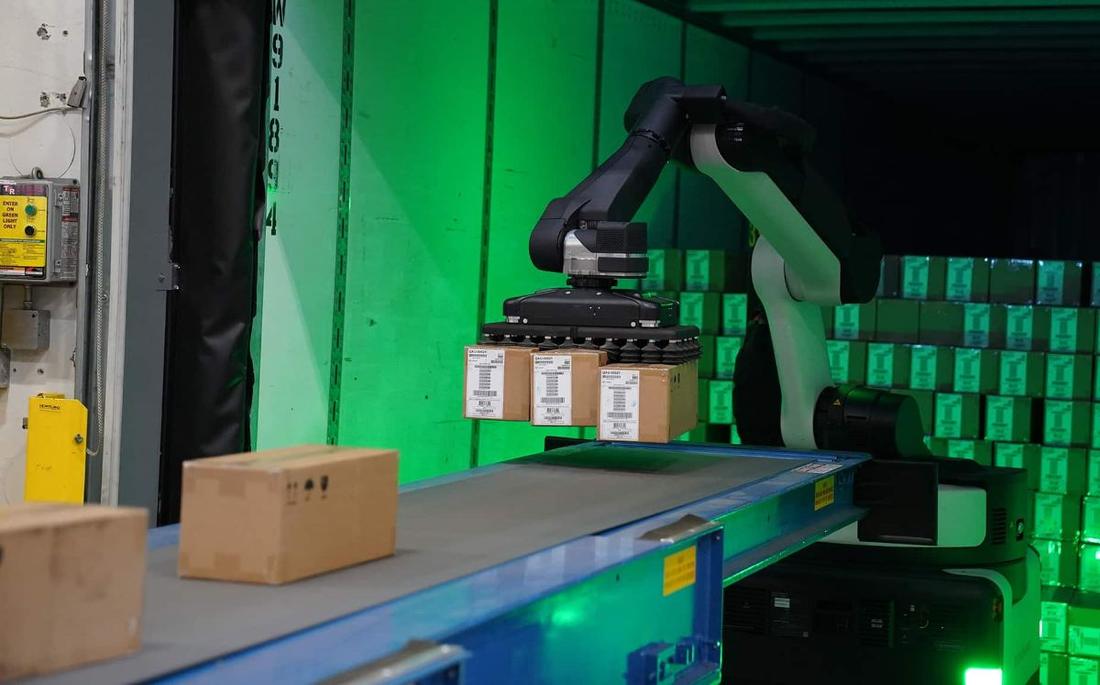
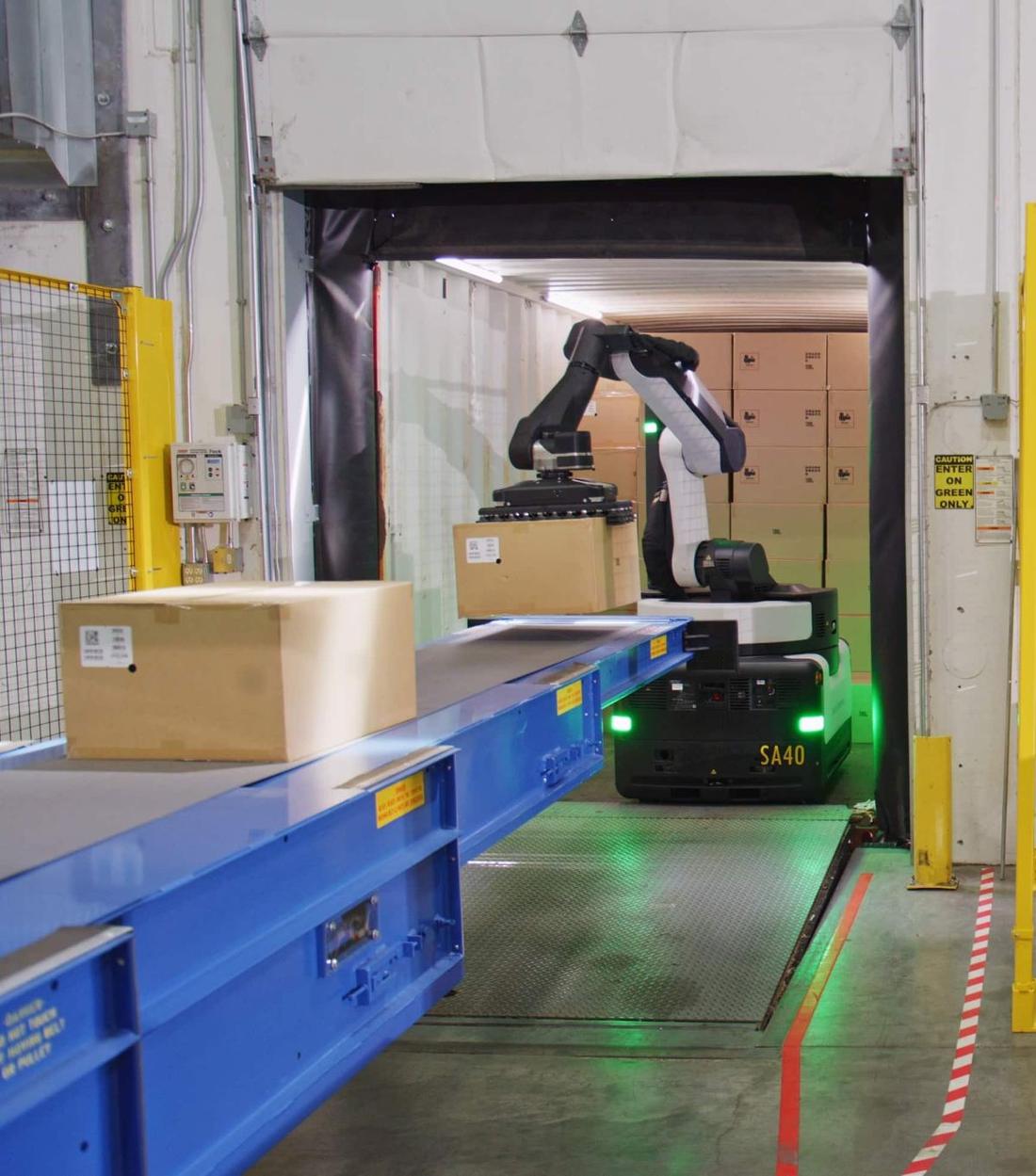
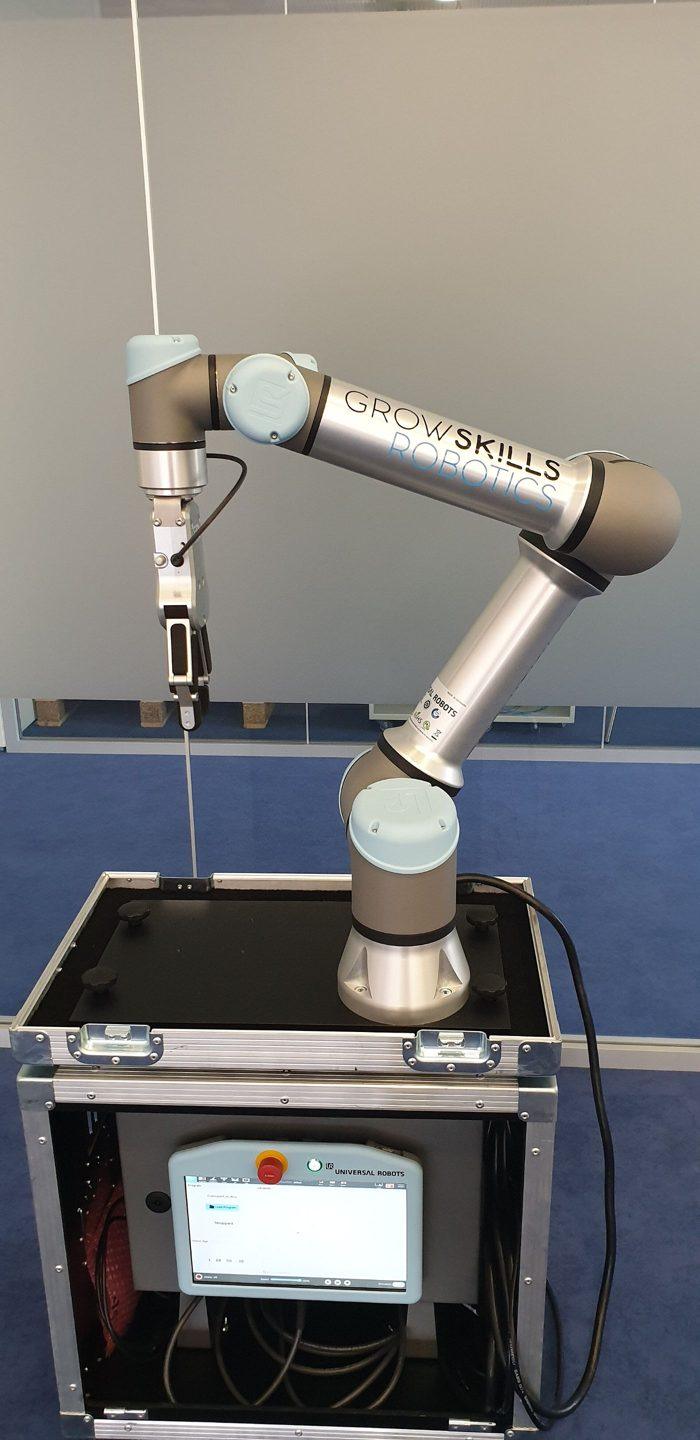
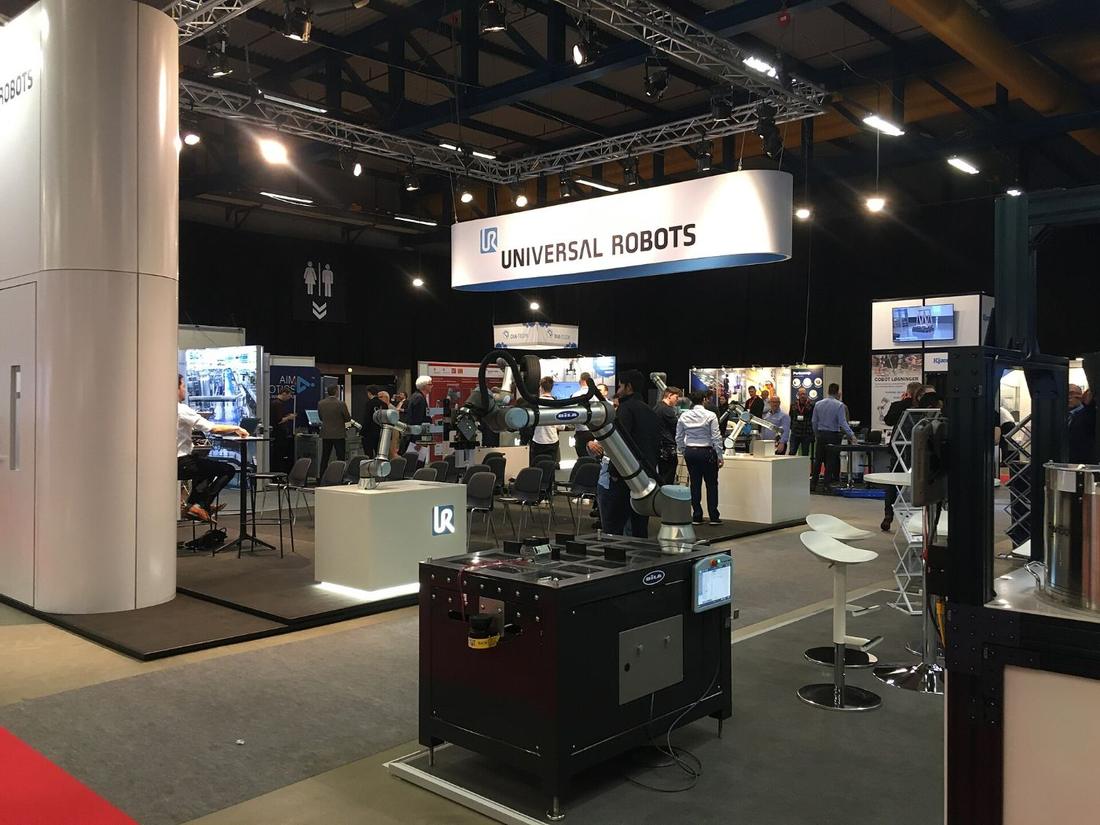
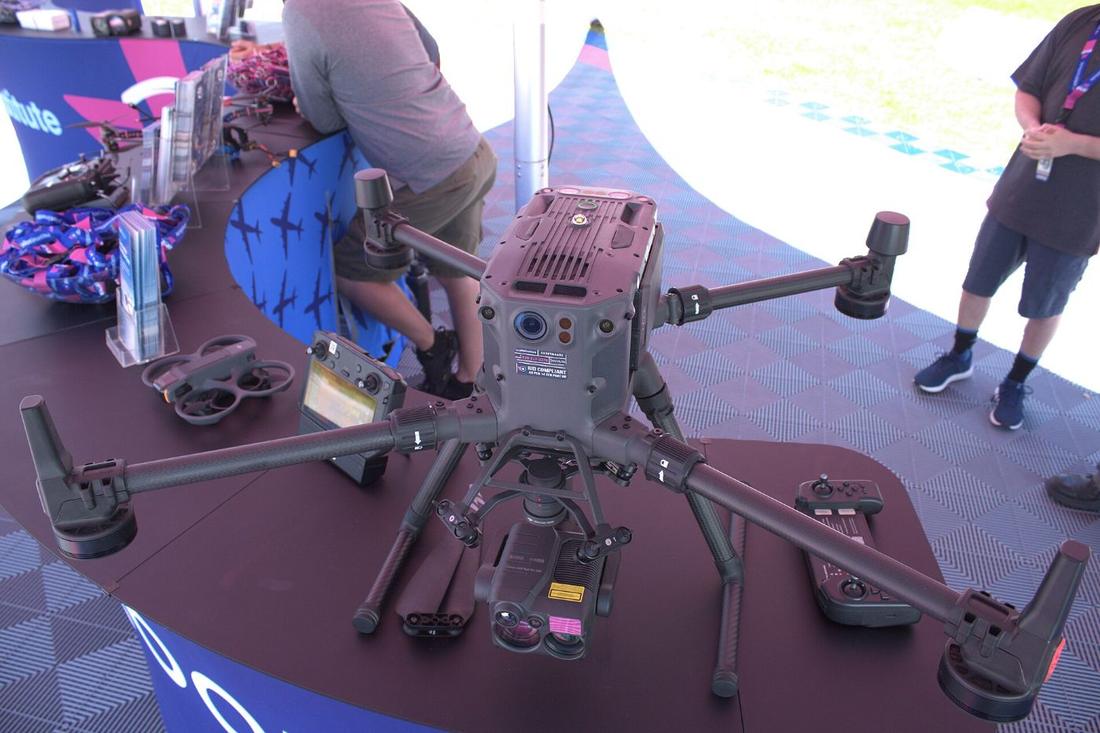
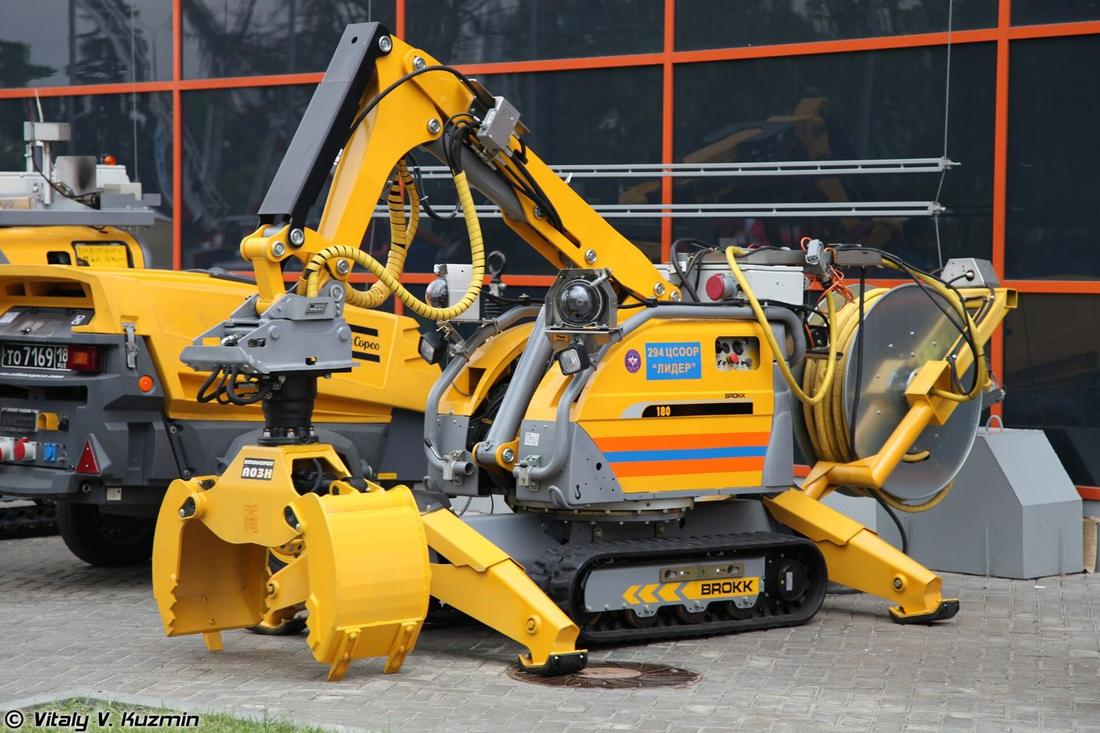
Robots, people and the hybrid workforce for large-scale construction and critical projects. What robots exist today, where they work, what they cost and how humans lead them.
People lead the work; robots handle defined tasks.
"Human in the lead, robots in the loop" is the operating model used throughout this primer.
87%of AGC firms have hourly craft openings (2026)
51%of AGC firms expect AI and robotics to help within five years
41US robot-related fatalities found by NIOSH, 1992-2017
Noneindependent worker-plus-robot multiplier found on live sites
Definition
Human in the lead, robots in the loop means people hold authority over the work. They plan it, assign it, supervise it and own safety and quality decisions. Robots execute defined, repeatable tasks inside that plan, and hand unusual cases back to a trained person.
It is a division of labor, not a claim that robots replace a trade. Autonomy levels range from teleoperated to fully autonomous in defined tasks.
Who does what
Authority
People set scope, sequence and the quality bar.
Execution
Robots perform defined tasks such as layout, drilling and inspection.
Exceptions
Robots hand off unusual cases to a trained person.
Safety
People control access and hold stop-work authority.
Sign-off
Licensed trades and managers approve code-governed work.
AGC (2026): "Technology is unlikely to eliminate the industry's need for people." A Meta spokesperson, as reported in Aug 2026: "We need more workers, not fewer." OSHA notes many robot accidents occur in non-routine work such as setup and maintenance.
A1.2HOW PEOPLE AND ROBOTS SHARE WORK
Eight ways people and robots share work.
A working taxonomy by who holds authority and where the person stands. Construction today sits in the middle rows.
Mode
Human role
Robot role
Field example
Caged
Stays outside the cell; enters under lockout
Full-speed repetitive work behind guarding
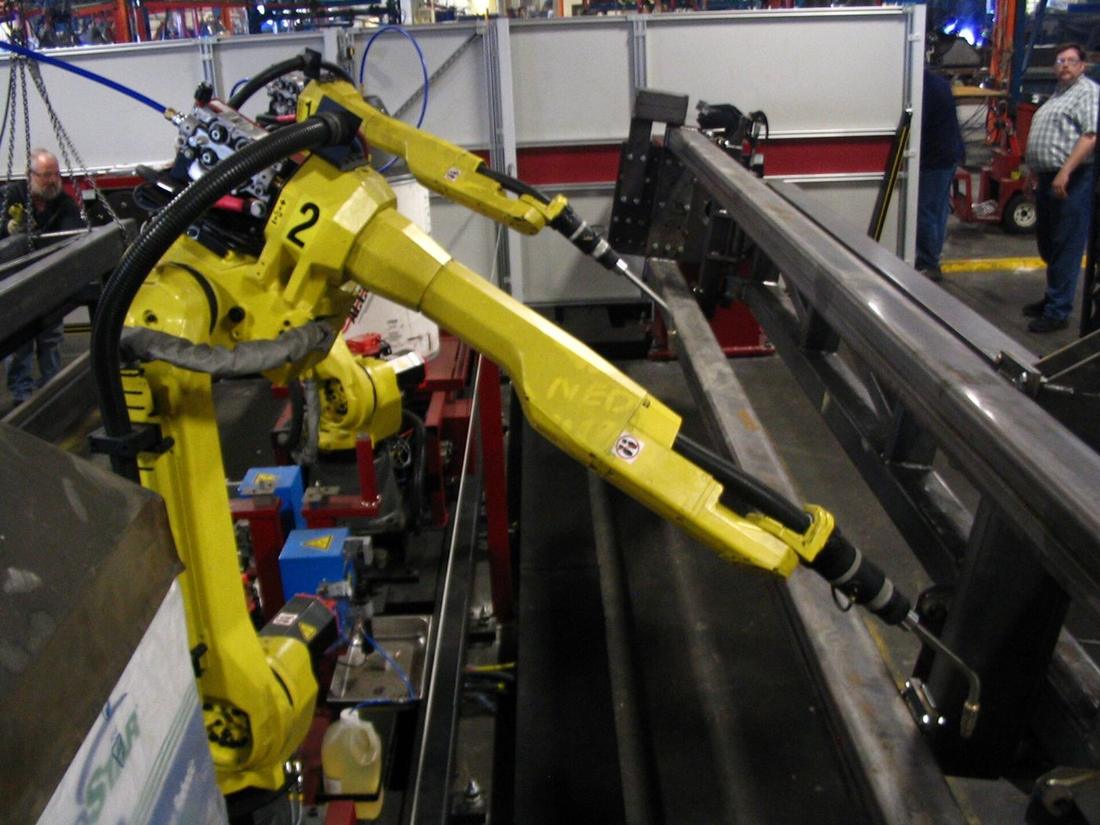
Classic factory cells
Coexistence
Shares the building, not the task
Autonomous, zoned or time-separated
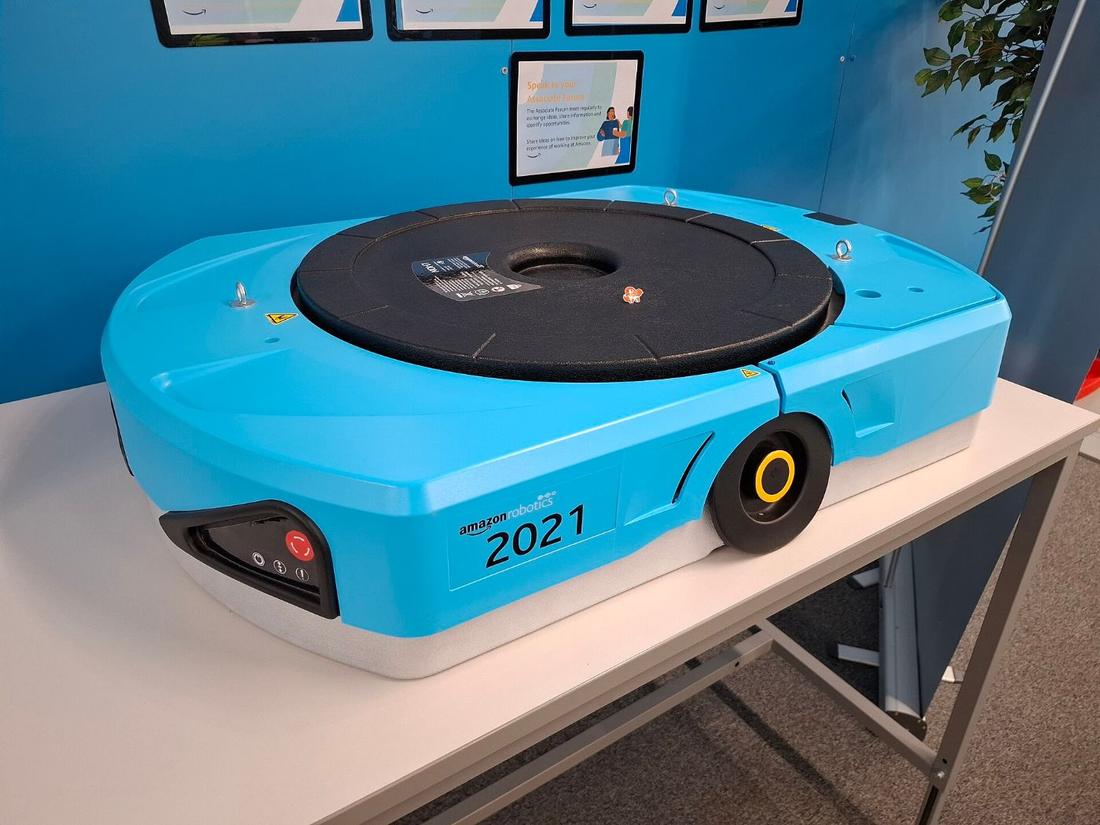
Amazon drive units move shelves to edge stations
Cooperation
Same area, sequential tasks
Does the step before or after the person
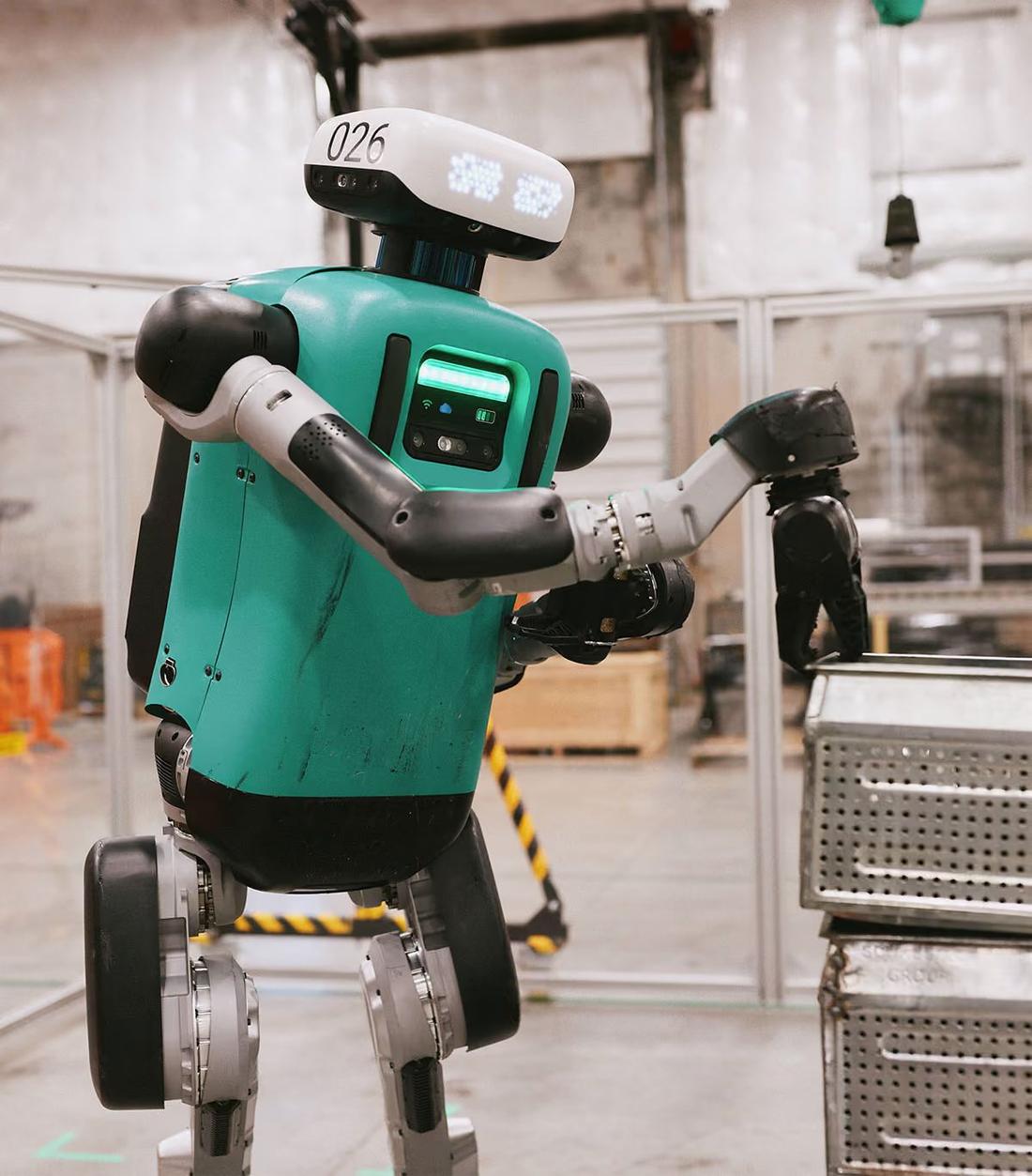
Digit moves totes to a human-run line (GXO, Toyota Canada)
Amazon DeepFleet; Locus fleets of 10 to 1,000+ (vendor claim)
In construction, most deployed systems are operator-directed or supervised autonomy. No signed US construction labor-management robotics agreement was found (as of Oct 2026).
A1.3VOCABULARY
Fourteen terms cover most of the robot talk.
Working definitions used throughout this primer. Autonomy is a spectrum, so most terms describe a type of machine, not a fixed ability.
Term
Meaning
AGV
Automated guided vehicle. Follows fixed infrastructure such as buried wire, magnets, reflectors or lasers.
AMR
Autonomous mobile robot. Navigates by natural features, with no added floor infrastructure. Vendors blur AGV and AMR.
Autonomous machine
Heavy equipment (excavator, dozer, haul truck) retrofitted or built to run with little or no operator on board.
Cobot
Robot designed for close-range work with people. Safety comes from limited force and speed, or sensors; judged per application.
Embodied AI
AI with a body that senses and acts in the real world in real time. Often used interchangeably with physical AI.
Humanoid
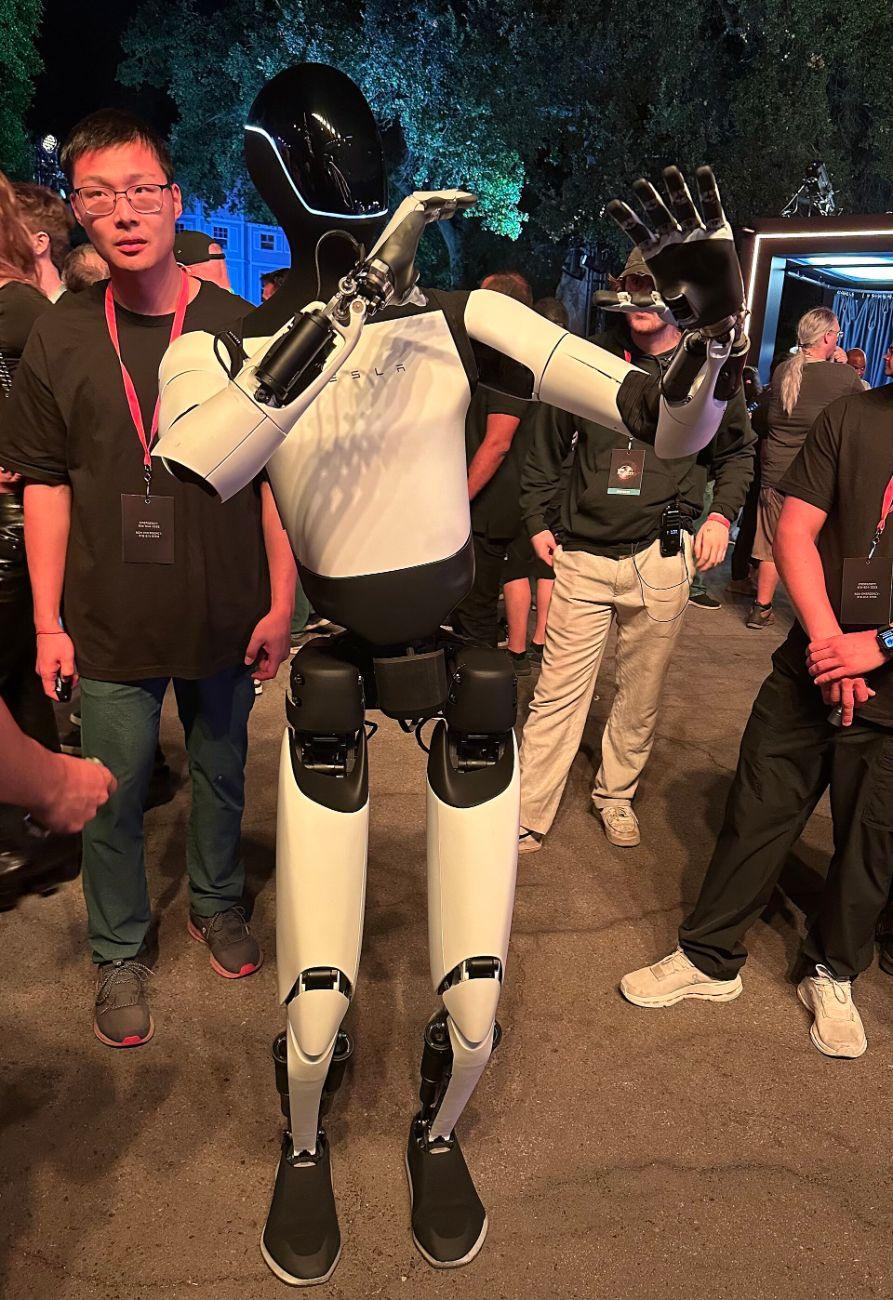
Robot shaped like a human body, usually torso, head, two arms and two legs. IFR counts "full-size" as above 55 in (140 cm).
Industrial robot
Automated, programmable machine, typically an arm, that moves on three or more axes. Usually fenced or zoned.
Physical AI
Industry term for AI models that perceive, reason and act in the physical world. No standard definition exists.
Quadruped
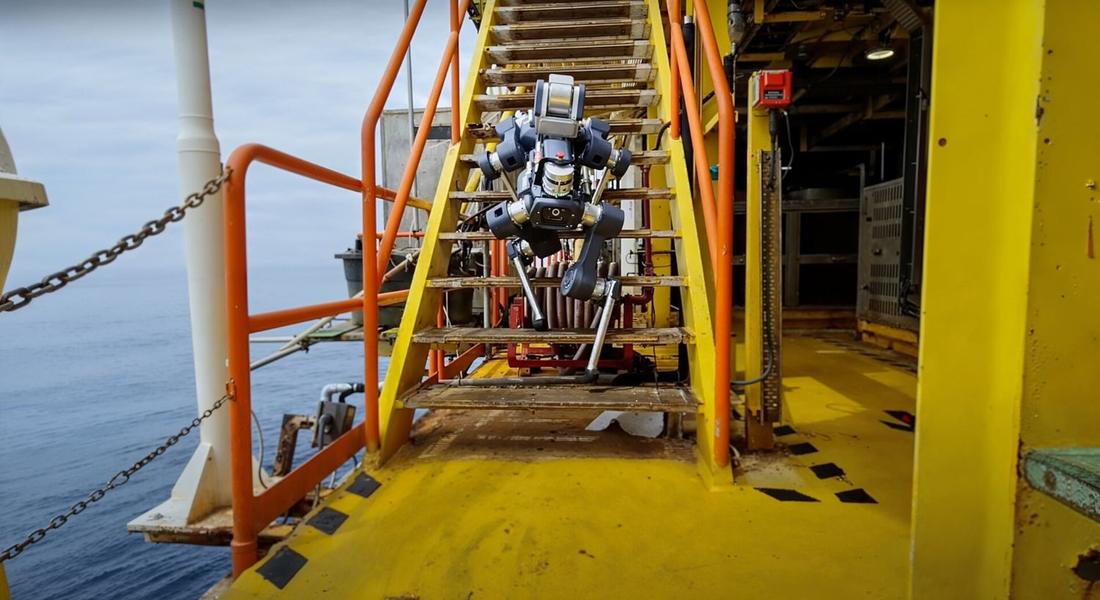
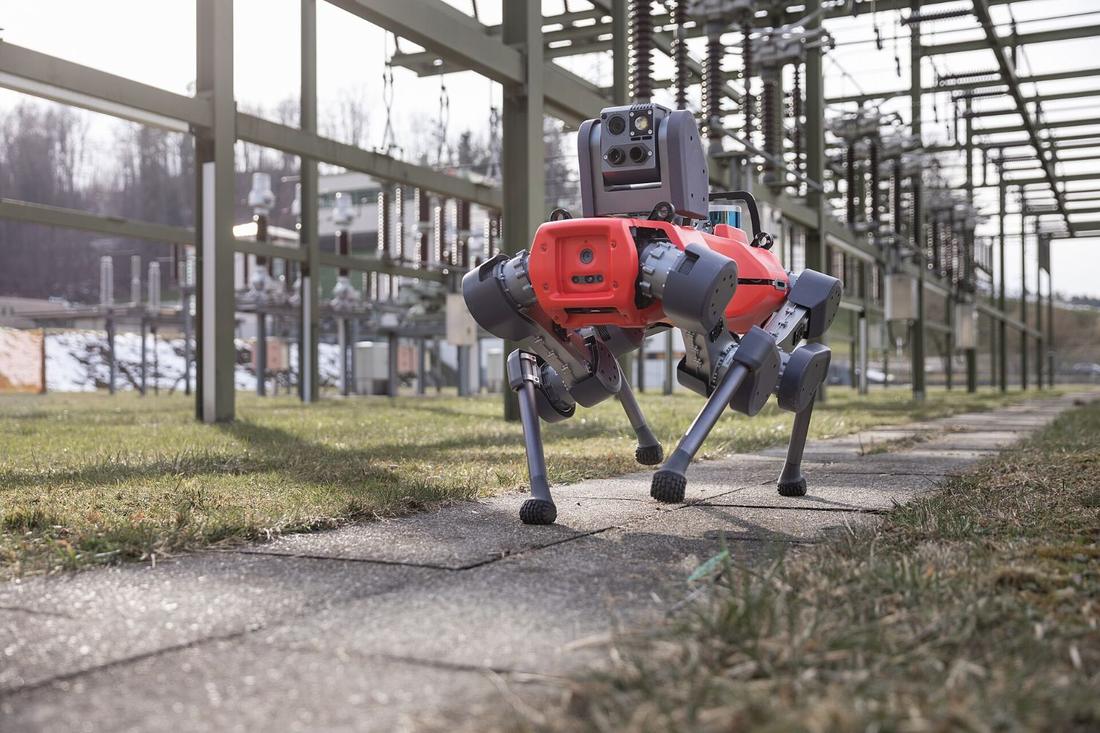
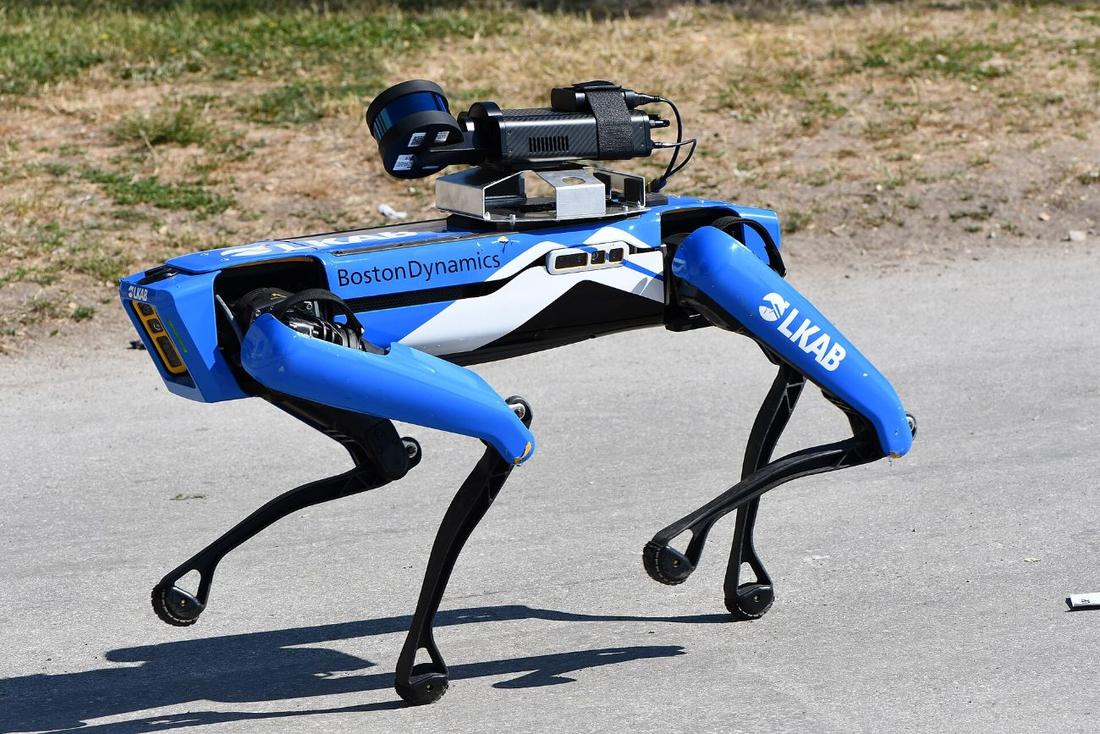
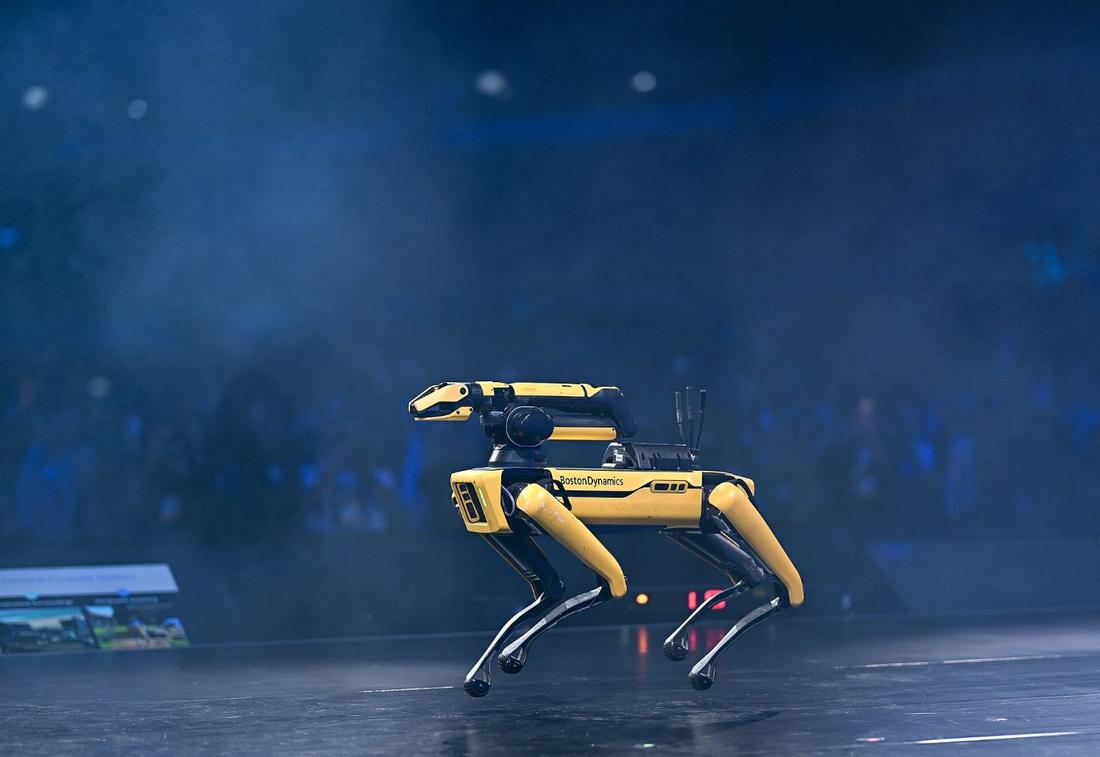
Four-legged mobile robot, such as Boston Dynamics Spot, ANYbotics ANYmal or Unitree models.
RaaS
Robot-as-a-service. Subscription or per-use pricing instead of purchase. IFR calls it dominant in the US for service robots.
Robot
Programmed, actuated machine with some autonomy that moves, manipulates or positions (working definition, based on ISO 8373).
Service robot
Robot doing useful tasks for people outside industrial automation. Professional (commercial) or personal.
Supervised autonomy
Robot executes the task; a human approves it and handles exceptions. Common mode for retrofit heavy equipment.
Teleoperated robot
Robot commanded by a remote human in real time. Also used to collect training data for autonomy.
A1.4WHY NOW
Four forces are pulling robots into the field.
Labor, capital, AI models and hardware cost all moved at once since 2023.
Labor
439,000
Data center construction worker shortfall (ITIF, secondary). Unverified against ITIF. ABC puts net new US construction workers needed in 2026 at 349,000. AGC 2022 survey (as cited, secondary): 89% of firms could not hire. BLS: 534,100 construction equipment operators, with 4% growth projected for 2025-35. No large pool of new entrants.
Capital and exits
$18.8B
Robotics startup funding in 2026 to date. Record $15B in 2025; prior peak $14.1B in 2021 (Crunchbase). Includes defense and maritime. Dealroom: $8.7B of humanoid VC in 2026, two-thirds to Chinese firms. Unitree IPO (Aug 2026); Agility SPAC deal announced (Jun 2026).
Models and compute
11 hours
To generate data equal to 6,500 hours of demonstrations. NVIDIA GR00T Blueprint synthetic data (vendor claim). Gemini Robotics 2 followed in Aug 2026. NVIDIA GR00T N1.6 (Jan 2026); Figure Helix 02 (vendor claim). Jetson AGX Thor developer kit from $3,499 (Aug 2025).
Hardware cost
40%
One-year fall in humanoid unit cost (Goldman, 2024). Cost range $30,000-$150,000, down from $50,000-$250,000. Analysts had expected 15-20%.
Counterpoint: the lowest-priced humanoid listed (Unitree G1) is near $13,500 (single source), while Agility's Digit 5 bill of materials is about $150,000 (reported). Cost depends on class.
A1.5TIMELINE
From one factory arm in 1961 to humanoids in 2026.
Only dated, verified milestones. Each step widened where robots can work.
First Unimate arm
Installed on a GM line in Ewing, NJ. Devol filed the patent in 1954; granted June 1961.
Cobot concept patented
Colgate and Peshkin patent robots meant to share space with people.
Roomba launched
A mass-market robot: 1 million sold by 2004, over 30 million by 2020.
Amazon buys Kiva
Pays $775M. Its fleet passed 1 million robots in July 2025.
Spot goes on sale
Legged robots become a product at $74,500, four years after the 2016 unveiling.
Tesla announces Optimus
A plan, not a product: no outside sales reported by Aug 2026.
Electric Atlas replaces hydraulic
Hydraulic Atlas retired in April. GXO signs a Digit RaaS deal in June (pilot from late 2023).
Humanoids reach production
Production Atlas shown at CES in January; Unitree lists in Shanghai in August.
A1.6TAXONOMY BY FUNCTION
Ten jobs cover what robots do on site today.
Grouped by the work performed, with typical examples and the maturity label for each group (as of Oct 2026).
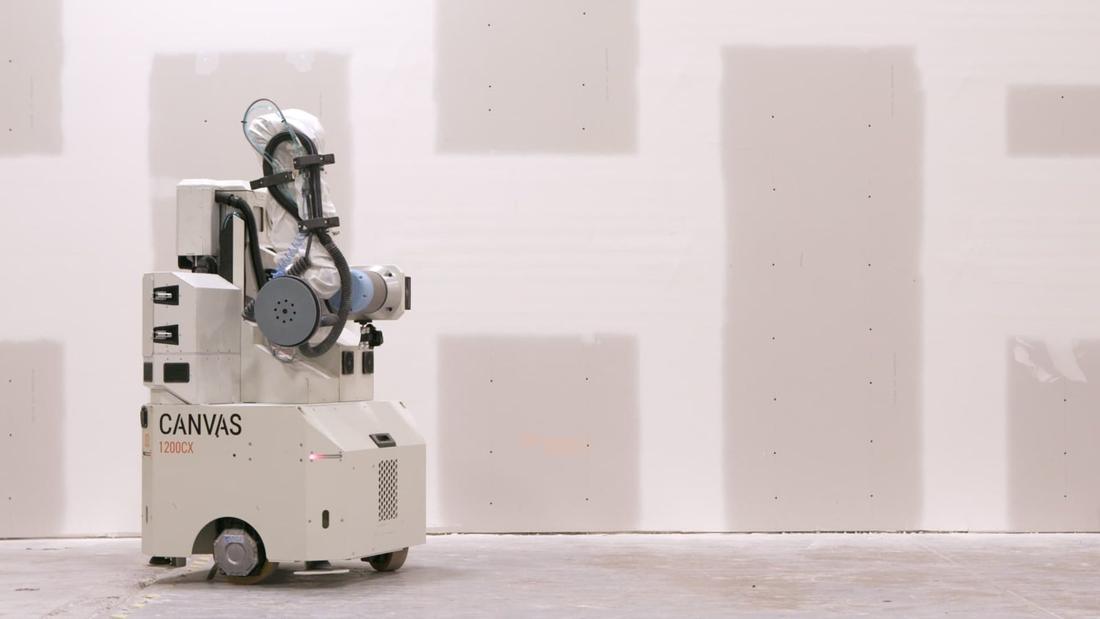
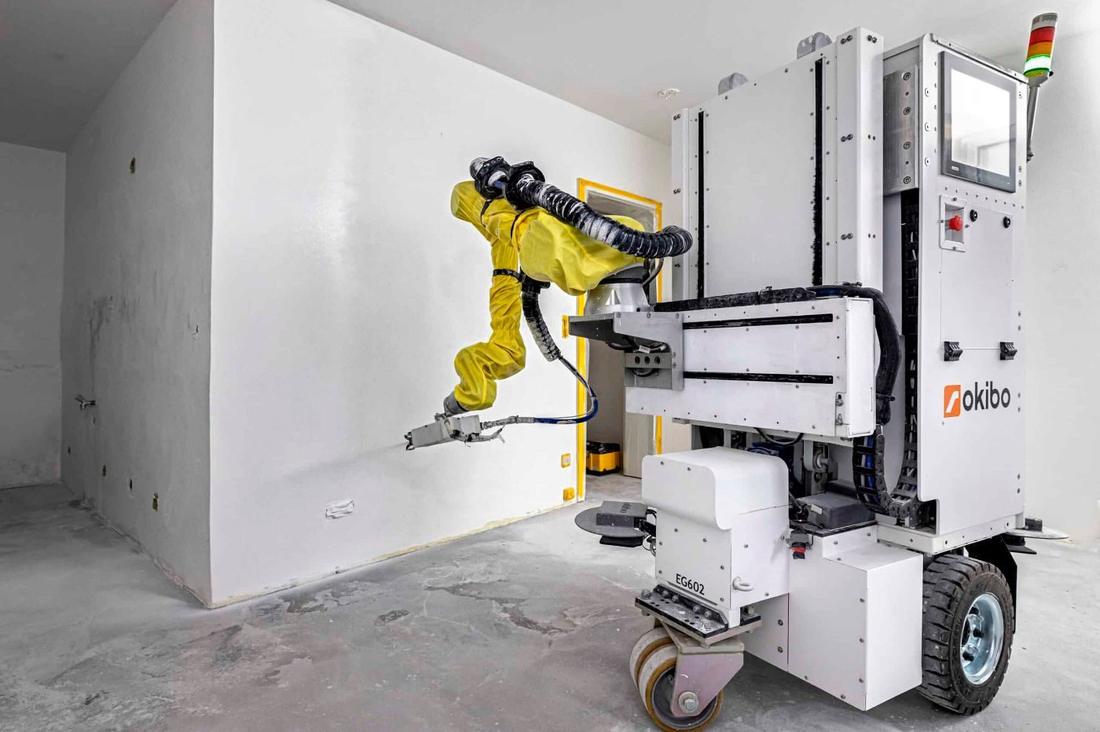
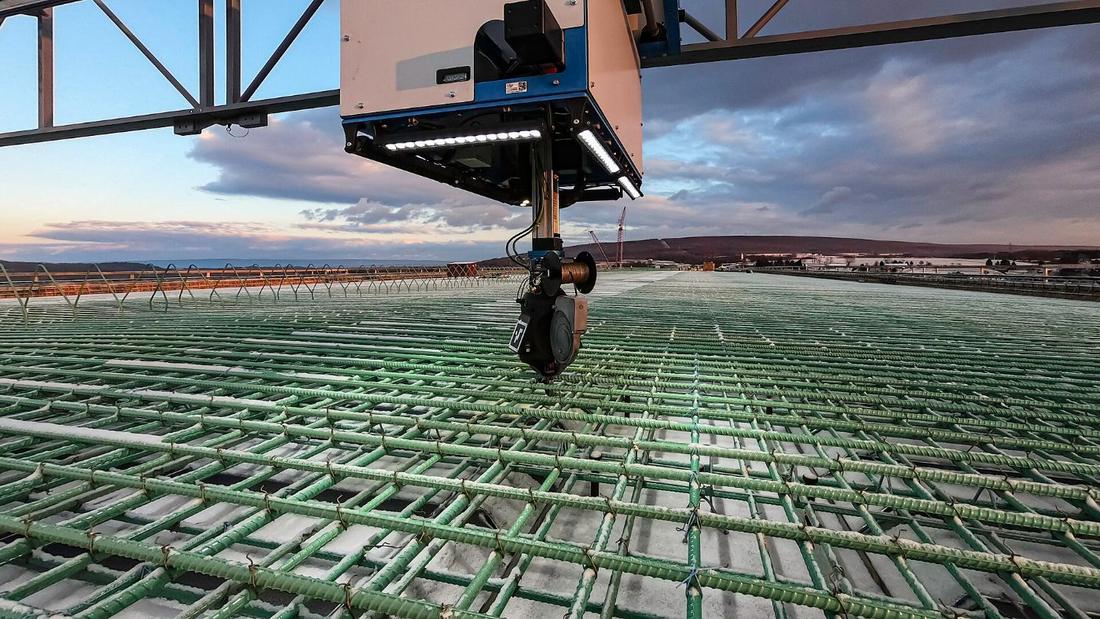
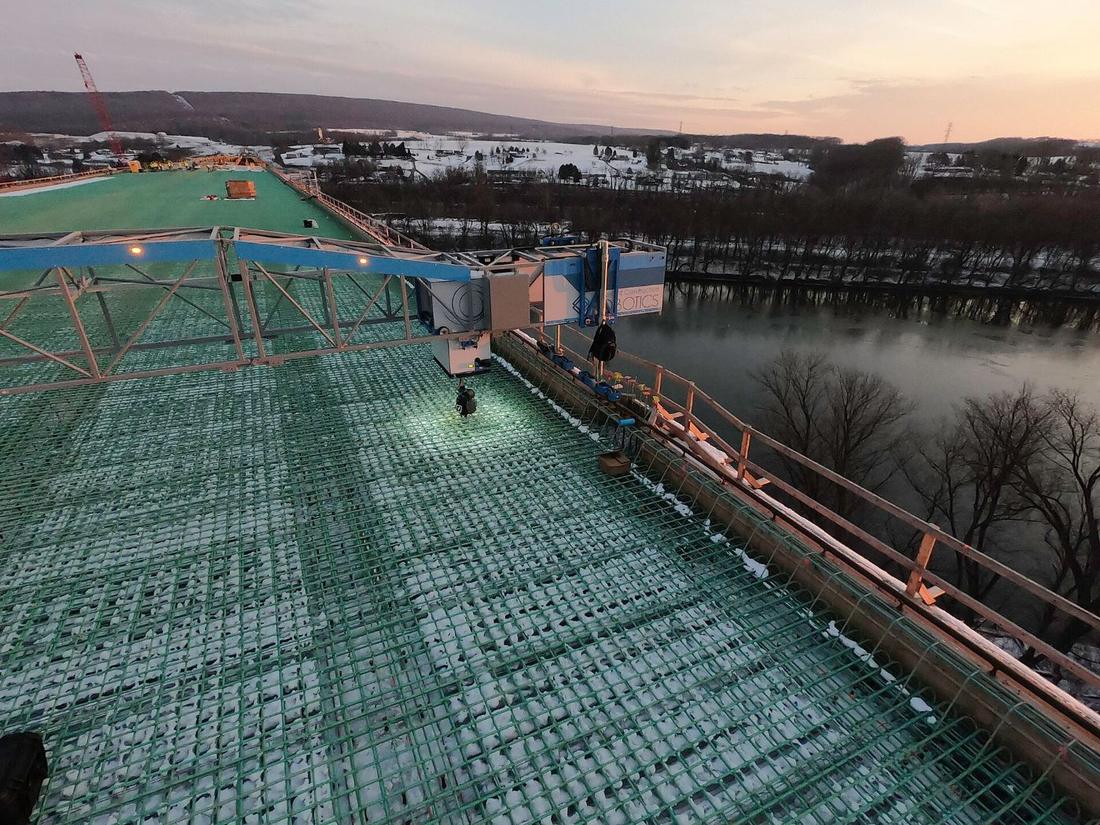
Drywall and wall robots (Canvas, Okibo); rebar tyers (TyBOT)
Interiors, bridge decks
Early; TyBOT commercial
General manipulation
Humanoids and mobile manipulators
Pilots across many sites
Pilot
A1.7TAXONOMY BY FORM FACTOR
Form factor decides where a robot can go.
Four families, from fixed arms to heavy equipment. Mobility sets the site preparation each one needs.
Fixed arms and gantries
Industrial arms: 542,000 installed in 2024. Cobots: 7,212 ordered in North America in 2025. Cobots were 19.6% of North American units. Gantries: 3D printers, bridge-deck rebar tyers. Suited to fenced or zoned, repeatable work.
Wheeled and tracked
AGVs follow wire or magnets; AMRs use natural features. Layout and finishing robots roll on a finished slab. Mobile manipulators: arm on a mobile base. Stretch moves boxes up to 50 lb (23 kg). Suited to flat, mapped floors.
Legged
Quadrupeds: Spot 74.5 lb (33.8 kg), ANYmal D 110 lb (50 kg). Humanoids: Atlas 198 lb (90 kg), Figure 03 134 lb (61 kg). Bipedal or wheeled-base designs. IFR: about 7,000 full-size humanoids sold in 2025. Reach stairs and uneven ground; short runtimes.
Rodney Brooks expects the "humanoid" label to persist even as designs drift toward wheels and varied grippers (Sept 2025).
A1.8SIZE AND WEIGHT CLASSES
Size sets the site rules: Light, Medium or Heavy.
Class follows the task and the site rules, not weight alone. Examples show published specs (vendor figures).
74.5-110 lbLight examples, Spot to ANYmal D
134-1,200 lbMedium examples, Figure 03 to Canvas
5,000-34,000 lbHeavy examples: machine weight or payload
Light: roll or walk on a slab
Specs
Spot
74.5 lb (33.8 kg); payload up to 30.9 lb (14 kg)
ANYmal D
110 lb (50 kg); nominal payload 22 lb (10 kg)
Runtime
About 90 minutes; docks needed along the route
Layout robots
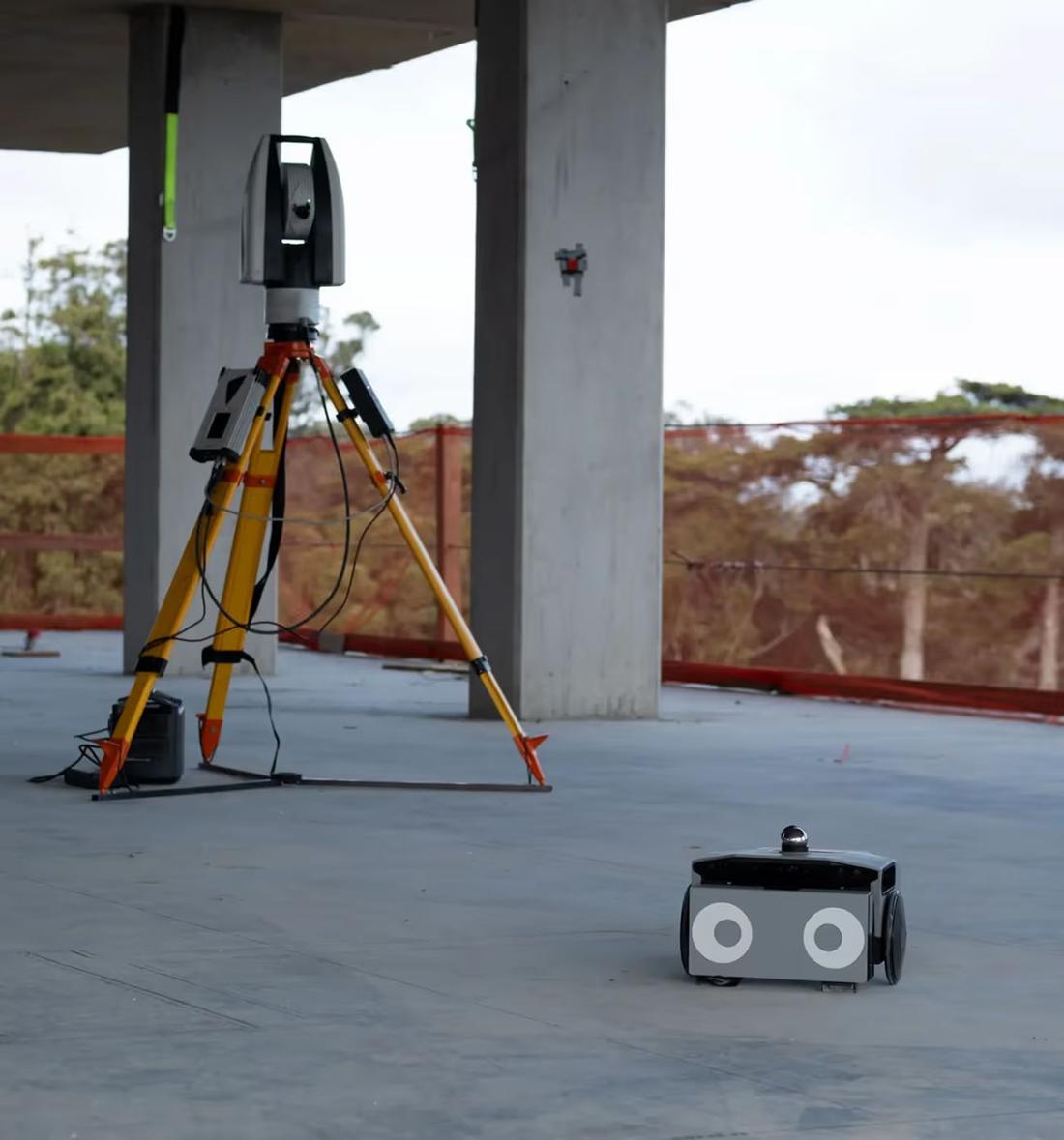
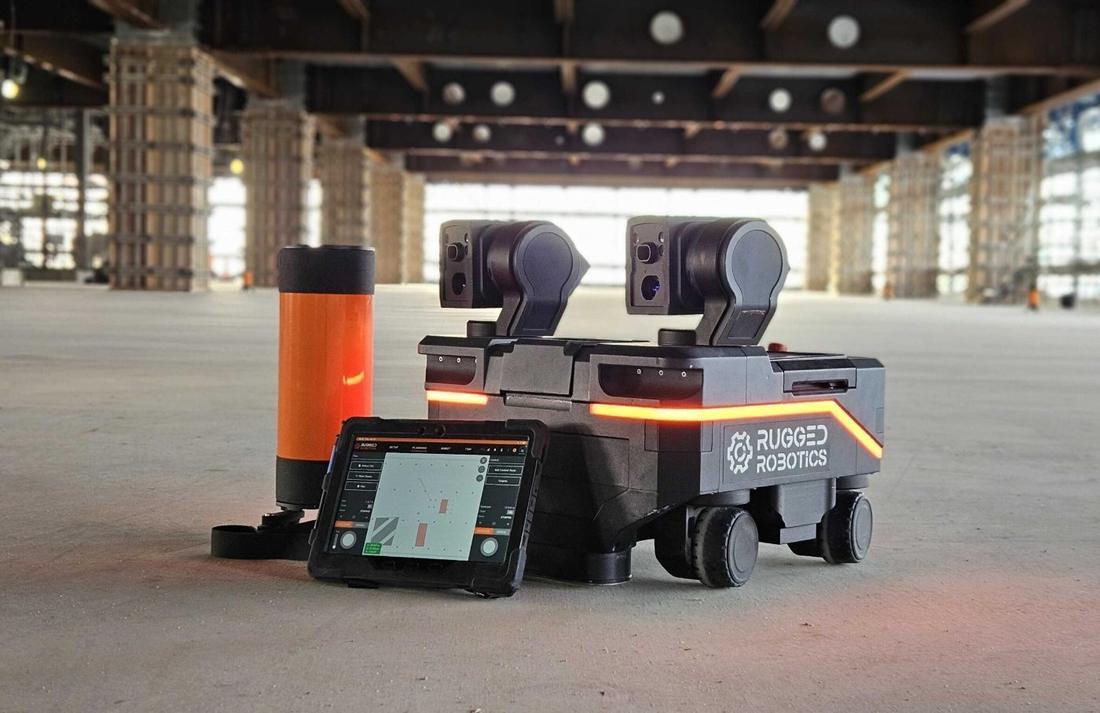
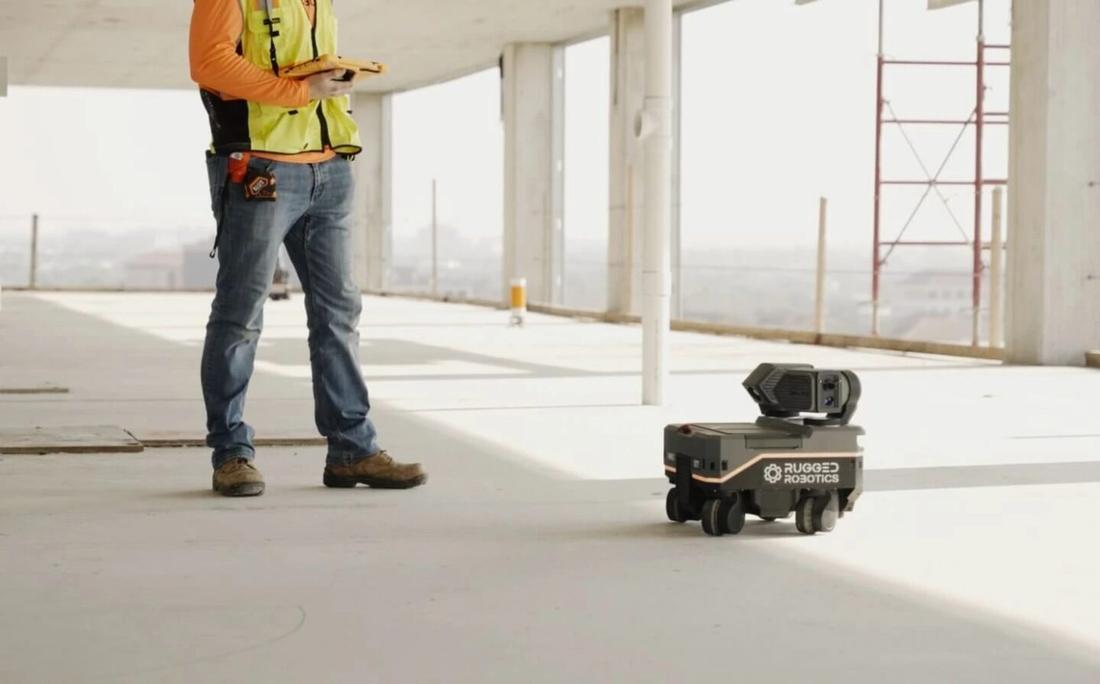
Dusty, Rugged: weight not publicly disclosed
Medium: humanoids, finishing, rebar
Specs
Apollo
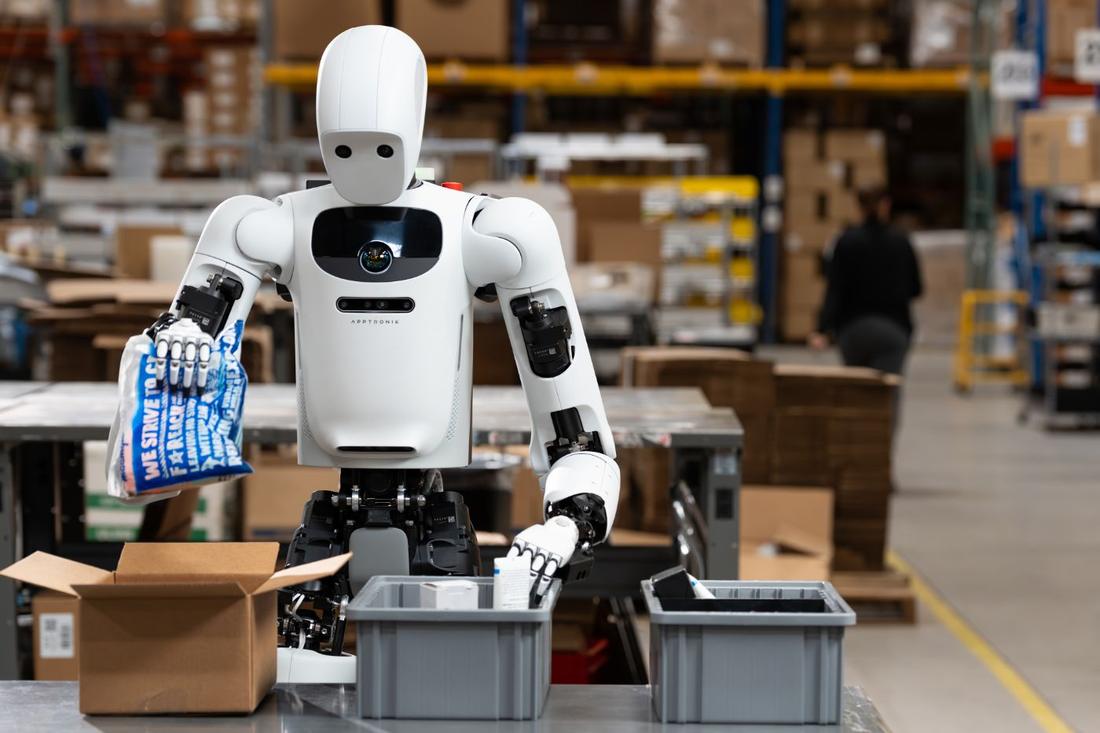
160 lb (73 kg); payload 55 lb (25 kg)
Figure 03
134 lb (61 kg); payload 44 lb (20 kg)
Atlas
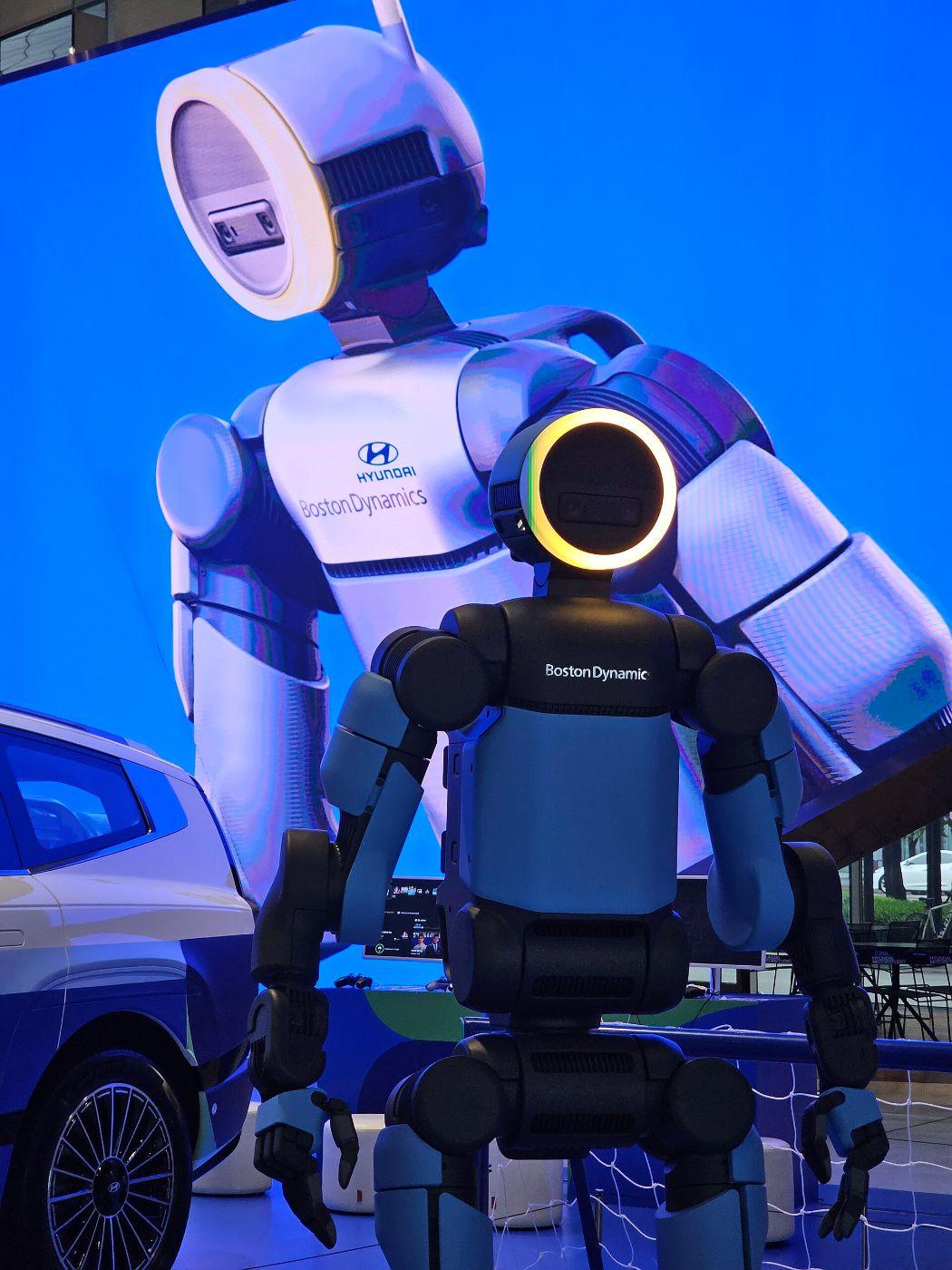
198 lb (90 kg); payload up to 110 lb (50 kg)
Okibo EG7
800 lb (363 kg); 27 in wide, fits doorways
Canvas 1200CX
1,200 lb (544 kg); finishes to 12 ft
Heavy: excavators, haulers, printers
Specs
ICON Vulcan
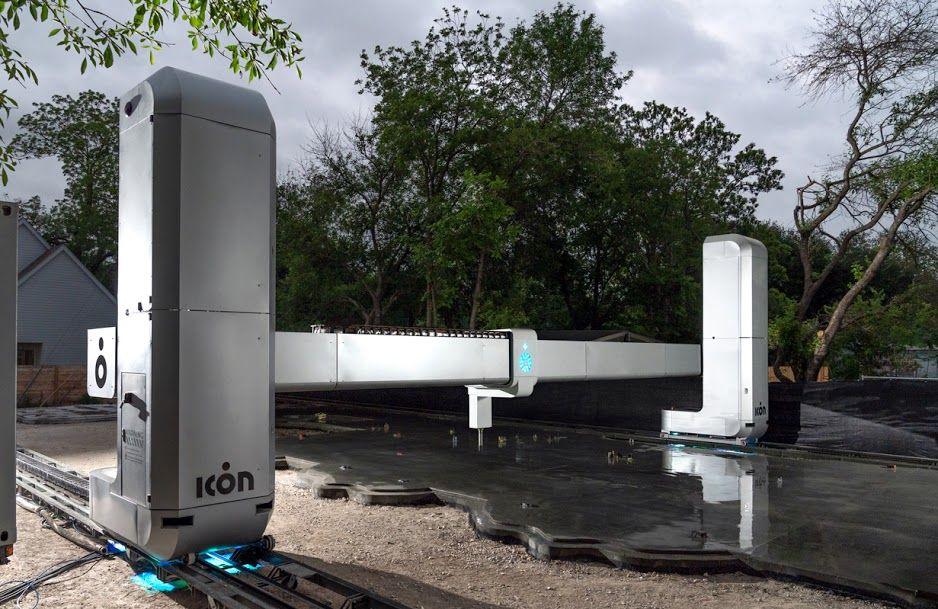
9,500 lb printer; up to 10.5-12 ft tall (sources differ)
Built RPD 35
Carries up to 224 piles; 34,000 lb max payload
IronBOT
Places rebar bundles up to 5,000 lb
Hadrian X
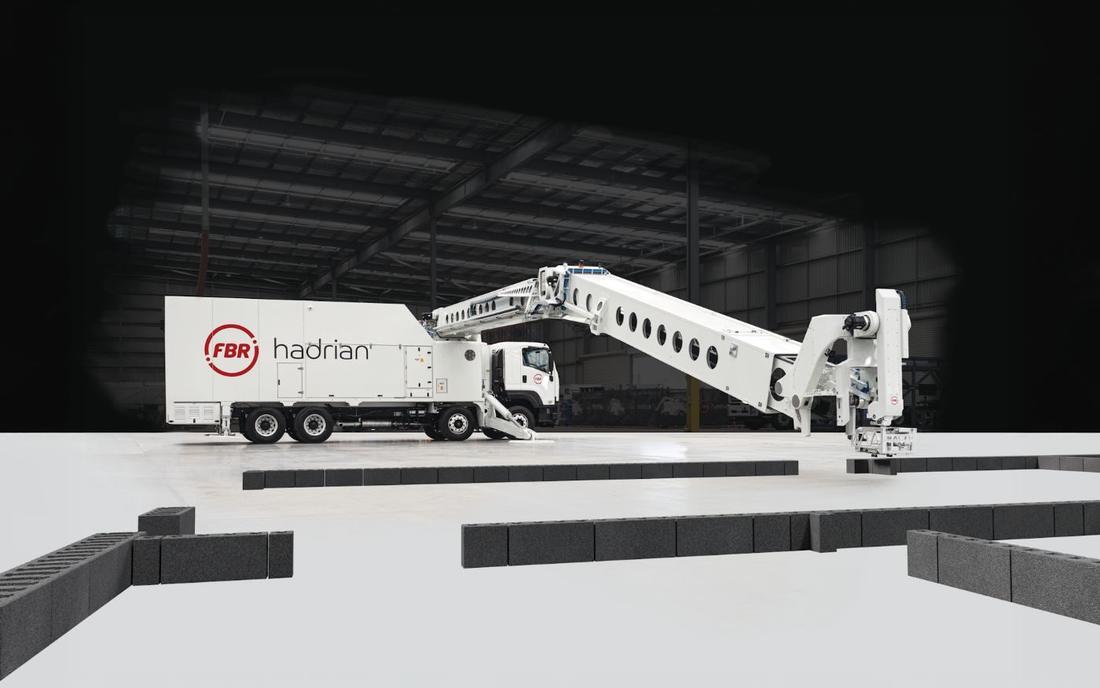
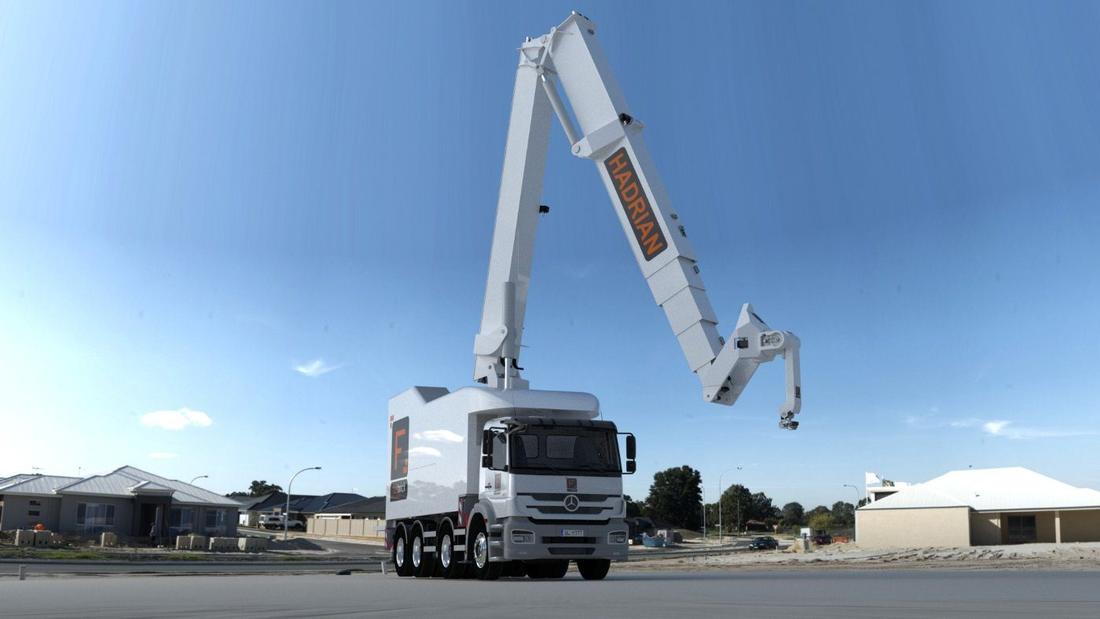
105 ft (32 m) boom; blocks up to 99 lb (45 kg)
Okibo's 800 lb finishing robot is Medium; a 74.5 lb quadruped is Light. Brooks advises staying 10 ft (3 m) from a full-size walking robot (opinion, not a rule).
A1.9AUTONOMY LEVELS
Autonomy is a ladder of five levels, not a switch.
The same robot can run at different levels by task. Level names are fixed across this primer.
Level 1: Teleoperated
A remote human commands each move in real time. Also used to gather training data.
Level 2: Assisted
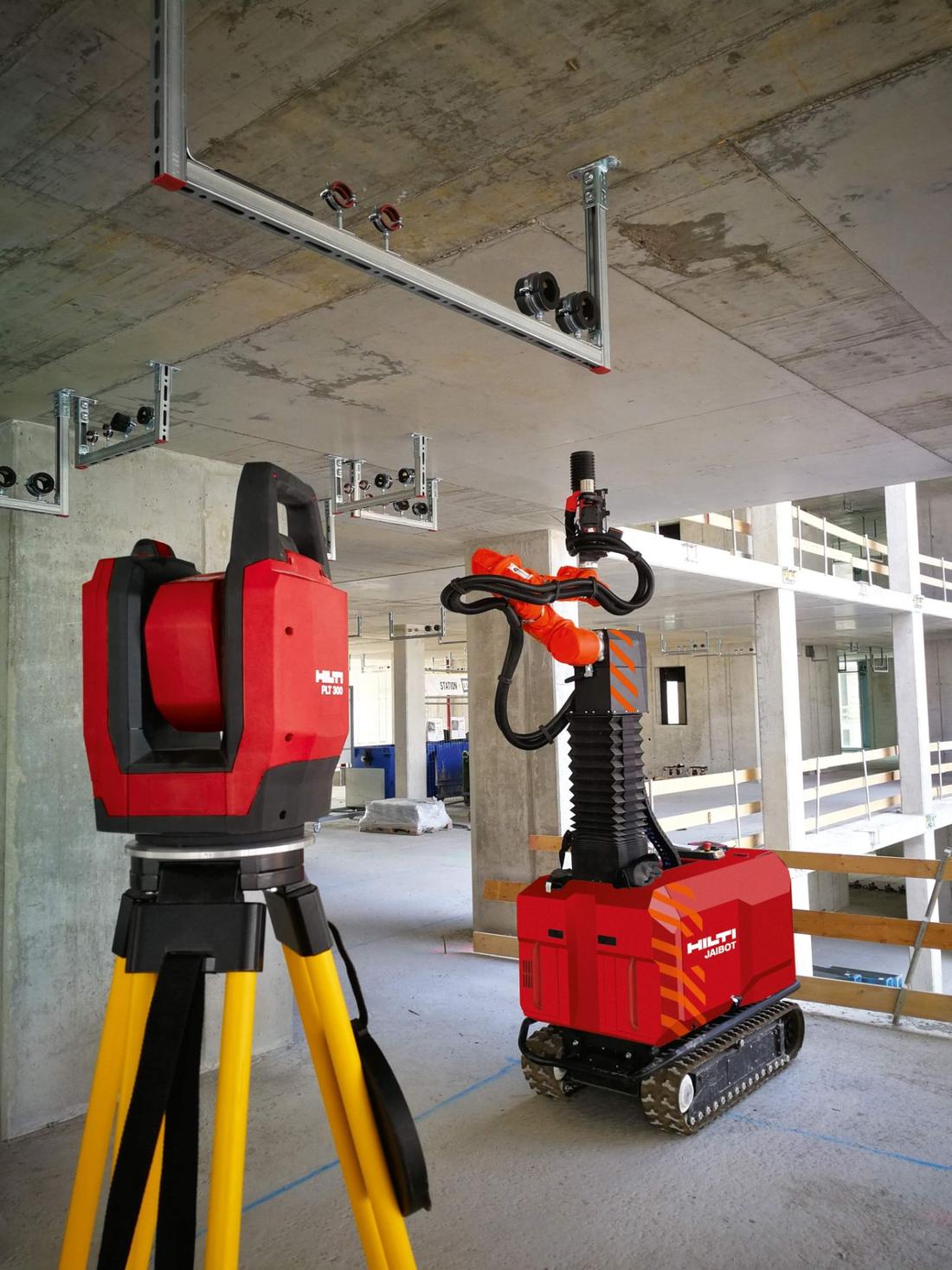
Human leads; the machine guides or automates a step. Example: Hilti Jaibot drilling.
Level 3: Supervised autonomy
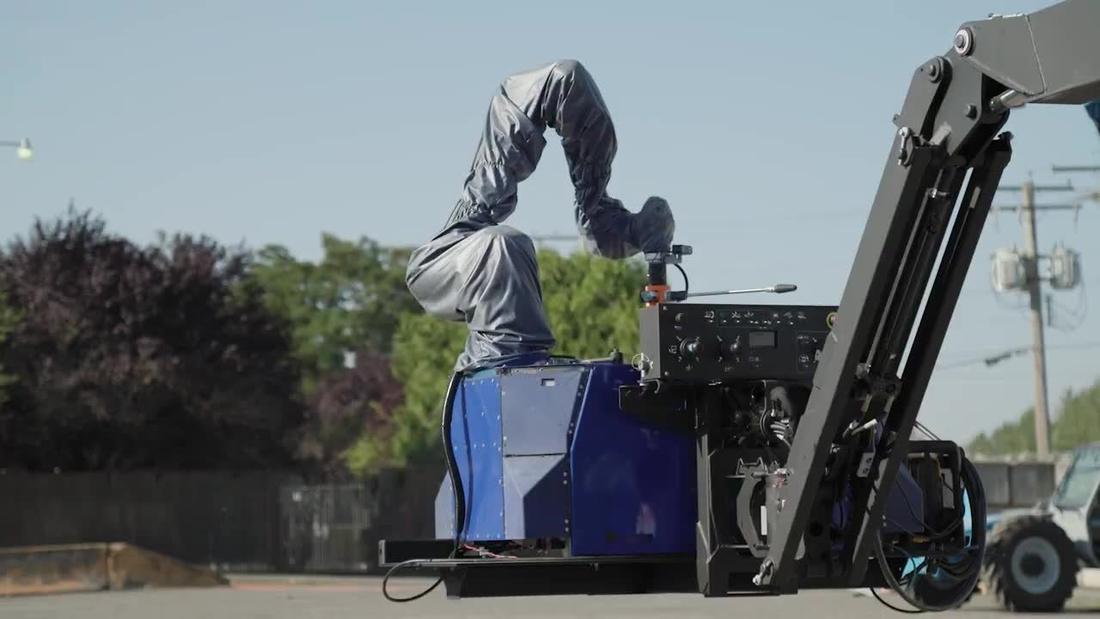
Robot runs the task; a human approves it and handles exceptions. Examples: Built, Teleo, Spot.
Level 4: Autonomous in defined tasks
No operator inside a set domain. Examples: warehouse AMRs; mining haul trucks (Cat Command, Komatsu FrontRunner).
Level 5: Fully autonomous
Open-ended work with no human help. No example found in public sources (Oct 2026).
How the levels relate to published scales
A construction scale from Morikawa and Otsuki (ISARC 2020) runs Level 0 manual to Level 5 automatic. It is a trial draft, not a standard.
It follows the SAE J3016 driving levels. No ISO standard for construction autonomy levels was found.
ISO 17757 addresses the safety of autonomous earthmoving and mining machine systems; it is not a level scale.
Many humanoid demos run on teleoperation or fixed paths (Robotics Summit, May 2026); IFR notes many applications rely on remote operation.
Targeted, not confirmed: Bedrock Robotics aims for operator-out excavators; no named customer deployment was found (Oct 2026).
Rule used in this primer: label each deployment by the level it runs at today, not by the level a vendor targets.
A1.10ROBOT FAMILIES BY WORK ENVIRONMENT
Maturity differs sharply by robot family and site.
Primer assessment from deployments found in public sources. Darker means more mature use (as of Oct 2026).
Robot family
Data center
Construction
Factory
Warehouse
Mining, energy
Industrial arms and cobots
None found
Pilot
Comm.
Comm.
None found
AMRs and AGVs
Pilot
Pilot
Comm.
Comm.
Pilot
Quadrupeds
Pilot
Early
Early
Pilot
Comm.
Drones and crawlers
None found
Early
Early
None found
Comm.
Autonomous heavy equipment
None found
Early
None found
None found
Comm.
Layout, drilling, finishing
Pilot
Early
None found
None found
None found
3D printing and masonry
None found
Early
None found
None found
None found
Humanoids
None found
None found
Pilot
Early
None found
Cabling and remote hands
Pilot
None found
None found
None found
None found
Legend: None found; Pilot; Early comm. (shown as Early); Commercial (shown as Comm.).
No public data center deployment of humanoids found (as of Oct 2026). The one long-running data center reference is a single ANYmal inspection site. Mining haulage autonomy has hauled over 3 billion tonnes (Cat, 2021).
A1.11MATURITY MAP OF FEATURED ROBOTS
Only 6 of 20 featured robots rate Commercial.
Class and maturity for each robot profiled (as of Oct 2026); primer assessment. Where weight is not disclosed, class follows task and site rules.
Robot
Class
Maturity
ANYbotics ANYmal D
Light
Commercial
Boston Dynamics Spot
Light
Commercial
Dusty FieldPrinter
Light
Commercial
Hilti Jaibot
Light
Commercial
Rugged Robotics Mark1
Light
Early commercial
Gecko Robotics
Light
Commercial
Raise Robotics
Light
Pilot
Agility Digit
Medium
Early commercial
Figure 03
Medium
Pilot
Apptronik Apollo
Medium
Pilot
Light and first Medium robots
Robot
Class
Maturity
Boston Dynamics Atlas
Medium
Pilot
Tesla Optimus
Medium
Research
Canvas drywall robot
Medium
Early commercial
Okibo EG7
Medium
Early commercial
TyBOT / IronBOT
Heavy
Commercial
Built Robotics RPD 35
Heavy
Early commercial
Bedrock Robotics
Heavy
Pilot
Teleo kits
Heavy
Early commercial
ICON Vulcan / Titan
Heavy
Early commercial
FBR Hadrian X
Heavy
Pilot (cash-stressed)
Medium and Heavy robots
A1.12MARKET SIZE AND ADOPTION
China installed 54% of the world's robots in 2024.
Industrial robots dominate unit counts; service robots and humanoids are growing from a far smaller base.
542,000industrial robots installed in 2024, 2x ten years ago
4.66Moperating stock, up 9%
34,200US installs in 2024, down 9%
~250,000professional service robots shipped in 2025
Industrial robot installs, 2024 (units)
China295,000
Japan44,500
United States34,200
Korea30,600
Germany26,982
India9,100
UK2,500
Service and humanoid robots
Professional service robots: almost 250,000 shipped in 2025, +24% (IFR, Sep 2026).
Transport and logistics: 117,500 units, 47% of the total.
About 7,000 full-size humanoids sold in 2025.
Industrial forecast: about 575,000 in 2025; above 700,000 a year by 2028.
The 2024 logistics base (102,900) appears restated; IFR does not explain why.
A1.13MONEY FLOWS
Record funding sits beside visible financial stress.
Valuation is not funding raised: figures below are as reported, and several are unconfirmed or differ by source.
$15Brobotics startup funding, 2025 (record)
$18.8B2026 to date; 2021 peak was $14.1B
$8.7Bhumanoid VC in 2026, two-thirds to China
Company
Event
Amount, value
Figure AI
Series C, Sep 2025
>$1B at $39B value
Skild AI
Series C, Jan 2026
$1.4B at >$14B
Apptronik
Extension, Feb 2026
$520M; >$935M total
Dogotix (XPeng)
Round, Aug 2026
>$900M, ~$5B pre-money
Neura Robotics
Series C, 2026
Up to $1.4B (sources differ)
Unitree
STAR IPO, Aug 2026
~$900M raised
Agility
SPAC, Jun 2026 (pending)
$620M+ expected; $2.5B pre-money
Physical Intelligence
Talks, Mar 2026
~$1B at >$11B (unconfirmed)
Money in (as reported)
Company
Event
Detail
iRobot
Chapter 11, Dec 2025
Amazon deal ended Jan 2024
Rethink Robotics
Closed, Oct 2018
Assets sold to HAHN Group
ICON
Layoffs, Jan 2025
WARN: 114; reported ~25% of staff
FBR
Cash-stressed, 2026
A$11-12M market cap
Agility
2025 results
$1.78M sales; $138.1M loss
Unitree shares
Sep 2026
-53% from day-one high
Unitree profit
Q1 2026
Sales +68.5%; profit -47.7%
Diamond Age
Liquidation, 2025
Peer Mighty Buildings sought a buyer
Stress signals
A1.14ADOPTION VERSUS HYPE
Real adoption is concentrated; hype is broader.
Evidence of use on one side, claims ahead of output on the other. Seven topics, same order.
Adoption: what is in use today
Arms: 4.66M in operation; 542,000 installed in 2024 (IFR).
Warehouses: Amazon passed 1 million robots in July 2025, one buyer.
Service robots: almost 250,000 professional units shipped in 2025.
Cobots: 7,212 ordered in North America in 2025, 19.6% of units.
Business model: over 24,500 RaaS service-robot units in 2024, +31%.
Humanoids in paid use: Digit at GXO, 100,000+ totes at 98% accuracy (vendor).
Construction: IFR calls it a niche market, +16% in 2024.
Hype: claims ahead of output
Optimus: announced 2021; output unverified, from a few test units to 1,000-1,200 (single sources).
Targets: Tesla's Jan 2025 goal of about 10,000 robots was missed (Electrek).
Autonomy: IFR notes many humanoid uses rely on remote operation.
Forecasts: 2035 humanoid estimates run from 1.4M to 10M units.
Valuation: Figure at $39B; ~350 delivered by Apr 2026 (vendor); one report says 1,000 built by Jul.
Data centers: no verified unit counts or independent performance data.
Verdict: scale today sits in arms, warehouse mobile robots and service robots. Humanoids, construction robots and data center robots remain early.
A1.15THE MAIN CHALLENGES
Eight challenges decide how fast robots scale.
Each challenge with the strongest public evidence. Many figures are vendor claims or single sources.
Check: intervention rate and uptime per shift
Reliability
Humanoids reach roughly 60-80% task completion against 95%+ needed (single source). No major vendor publishes MTBF.
Check: repeat success when objects change
Dexterity
Brooks (2025): demos are 10-30 second tasks with 1-3 cm precision. Hands: ~17% of an Optimus Gen-2 BOM (single source).
Check: the safety case for shared space
Safety
Walking robots store energy. Digit works inside cells today. ISO 25785-1 for legged robots is still a draft.
Check: cost per task hour, not per robot
Cost
Digit 5 bill of materials is about $150,000; Unitree G1 lists near $13,500 (single source). Unitree Q1 2026 sales +68.5%, profit -47.7%.
Check: real versus synthetic data hours
Data
Policies need teleoperated data: Helix v1 used about 500 hours. Touch data is scarce; vendors build "data engines".
Check: runtime under payload and duty cycle
Power
Runtimes (vendor): Atlas ~4 h, Figure 03 up to 5 h, Spot ~90 min, Digit 5 90 min with a 9-minute charge.
Check: network, dock and layout needs
Integration
Sites need networks, docks, maps, change control and a safety case. Digit 5 cage-free use is not yet certified.
Check: paid production versus pilots
ROI
Agility: $1.78M sales vs $138.1M loss in 2025. Boston Dynamics targets ROI within two years for Atlas (vendor claim).
No independent benchmark exists for humanoid reliability; most figures here are vendor claims or single sources.
A1.16OUTLOOK 2026 TO 2030
2030 forecasts for humanoids differ by nearly 5x.
Annual humanoid shipments in 2030 under three analyst views. The spread reflects scope, cost and use-case assumptions.
7k-18.6khumanoids shipped in 2025, by scope
30k-90k2026 forecasts (UBS to BofA)
250k-1.2M2030 forecasts (Goldman to BofA)
>700,000industrial installs a year by 2028 (IFR)
Humanoid shipments in 2030 (thousand units)
Goldman (2024 base)250
Goldman (later est.)890
Bank of America1,200
Why the forecasts differ
Goldman's 2024 base case is mostly industrial, led by logistics, warehousing and automotive.
Goldman does not size construction or data center use separately.
Brooks expects over ten years before the first profitable humanoid deployment.
Goldman's later 890,000 figure is single source and not reconciled.
Forecasts are analyst scenarios, not output. Goldman's 2024 report predates the 2025-26 funding wave.
A1.17ROBOT BRAINS
Robot brains attract the biggest valuations.
Foundation models and compute for physical AI; mostly early access, little deployed proof.
Player
What it is
Latest verified event
Caveat
Physical Intelligence (US)
Robot foundation models
Reported talks (30 Mar 2026) to raise ~$1B at over $11B; prior $5.6B
Close not confirmed; ~80 staff; no deployment beyond testing
Skild AI (US)
General robot model
$1.4B Series C at over $14B (14 Jan 2026), led by SoftBank; NVIDIA invested
Valuation tripled in seven months
FieldAI
Autonomy software
Caterpillar partnership to add autonomy to machines (4 Sep 2026)
Headline only; funding not retrieved
NVIDIA Thor and GR00T
Onboard compute and humanoid model
Jetson AGX Thor kit from $3,499; 2,070 FP4 TFLOPS at 130 W (Aug 2025)
Later GR00T versions not verified
Gemini Robotics 2
Google DeepMind models
Three models released 1 Aug 2026, shown on Apptronik Apollo 2
VLA and On-Device: early-access only
Mecka (data)
Robot training data
$60M Series B led by Sequoia, with NVIDIA and M12 (Oct 2026)
Shows demand for training data
Thor early users named by NVIDIA: Agility, Amazon Robotics, Boston Dynamics, Caterpillar, Figure. DeepMind says movement speed still needs improvement.
A1.17bROBOT CAPITAL
Billion-dollar rounds in 2026 go to a few firms.
Reported 2026 financings; deal status differs, so the bars are not like-for-like.
2026 rounds, $ million
Skild AI$1,400
Neura (up to)$1,400
Phys. Intell.$1,000
Dogotix$900
Unitree IPO$900
Ai2 Robotics$735
Bedrock$270
Read with care
Dealroom: over $8.7B of humanoid venture capital in 2026 so far, about two-thirds to Chinese firms.
Physical Intelligence: reported talks, not a closed round. Neura: announced, up to $1.4B.
Unitree figure is IPO proceeds (~6.1B yuan); Skild and Dogotix are private rounds.
Funding is not revenue: Agility had 2025 net sales of $1.78M and a net loss of $138.1M.
A1.18PIPELINE 2026-2028
Announced milestones run from Q4 2026 to 2028.
Company or press targets, not delivered output.
IRON: 1,000 a month
Dogotix targets this rate by end 2026; no external deliveries yet.
Optimus target
Musk target of 1M a year by late 2026 is a company target, unaudited.
Roze AI IPO
SoftBank unit eyes a ~$100B listing; may slip to 2027.
Faraday US assembly
Robot assembly planned; catalog uses Booster and AgiBot platforms.
Tomakomai opens
SoftBank robot-friendly 50 MW data center scheduled.
UBTech 10,000
Capacity target after 5,000 in 2026 (vendor claim).
Digit 5 available
Availability late 2027 to early 2028; $300M+ backlog, mostly one reported 1,000-robot contract.
EU AI Act Annex I
High-risk rules for AI in regulated products moved to 2 Aug 2028.
Dogotix deliveries begin in 2027 per the company. Slip risk for each item is shown in the next section.
A1.18bSLIP RISK
Slip risk is highest where volume is promised first.
Slip risk is a judgment based on the cited evidence, not a sourced probability.
Item
Announced milestone
Date
Slip risk
Tesla Optimus
Company target of 1M a year
Late 2026
Very high
Dogotix IRON
1,000 units a month; deliveries 2027
Q4 2026-27
High (volume)
Roze AI
US IPO at about $100B; executives skeptical
H2 2026-27
High
Faraday robot assembly
US assembly of sourced hardware
Feb 2027
High
UBTech Walker S2
Capacity 5,000 (2026), 10,000 (2027)
2026-27
Medium-high
1X NEO
Consumer deliveries
2026
Medium-high
Data center robot start-ups
Pilots; no verified performance data
2026-27
Medium-high
Agility Digit 5
General availability; SPAC close
2027-28
Medium
Tomakomai cableless rack
50 MW data center start
2027
Medium
Bedrock Robotics
Scale operator-free excavators
2026-27
Medium
Schaeffler gearboxes
Humanoid actuator mass production
2027
Medium
Not rated: Gemini Robotics 2 broader availability has no date. Figure and NVIDIA investment talks are reported talks only.
A1.18cFORECASTS TO 2030
Forecasts for 2030 span 250,000 to 890,000 units.
Humanoid forecasts differ by source and date; none names data centers or construction as an early volume segment.
Source
Forecast
Date
Caveat
IFR
About 7,000 full-size humanoids sold in 2025 (actual)
Sep 2026
Above 140 cm only
TrendForce
Over 50,000 shipments in 2026 (+700%)
Dec 2025
Implied 2025 base of 6-7k is derived
UBS
30,000 units in 2026 base case; 35,000-40,000 higher cases
2026
Single source
Goldman Sachs
Over 250,000 shipments in 2030 base case; 1.4M by 2035; $38B
Feb 2024
2.5 years old; predates funding wave
Goldman Sachs (later)
890,000 units in 2030; 6.5M by 2035; $138B
2025-26
Single source; another article says 2.6M by 2035
IDC
Over 750,000 shipments by 2030
Oct 2026
Data supplied by AgiBot; single source
Morgan Stanley
13M humanoids in use by 2035; about 1 billion by 2050
Spring 2025
Secondary source only
Goldman's 2024 report puts unit cost at $30,000-$150,000, down from $50,000-$250,000 a year earlier. Its early segments are logistics, warehousing and automotive.
A1.18dREALITY CHECK
Forecasts need growth with no precedent.
Today's units are small, and reliability is below what factories ask for.
7k-18.6kHumanoids shipped in 2025. Range across IFR, Omdia and UBS
~7.7xGrowth to reach 100,000 from 13,000. Top of a cited Goldman 2026 range (single source)
~30 yrsIndustrial robots took to reach 500,000 annual installs. Single source
60-80%Humanoid task completion today. Industry asks for 95%+; single source, no named study
Likely first segments
Goldman: logistics, warehousing and automotive, where tasks are tightly defined.
Not named as early
Construction sites and data center white space do not appear in the retrieved forecasts.
The mature base
542,000 industrial robot installs in 2024; 5 million at work by Sep 2026 (IFR).
Forecasts assume volume arrives first where tasks are defined; reliability and unit cost decide how fast it spreads to sites.
A1.18eACCELERATE OR STALL
What could speed adoption, and what could stall it.
Evidence gathered in this research; the balance is not forecast.
Could accelerate
Labor: about 439,000 data center construction worker shortfall (ITIF via a secondary outlet).
Capital: over $8.7B of humanoid venture funding in 2026 so far.
Models and compute: Gemini Robotics 2 and NVIDIA Thor.
Read top to bottom: from what the site manager sees to the parts that move.
Layer
Type
What it covers
Site system
SITE
Connectivity, safety system, fleet orchestration and human supervision sit above every robot on a site.
Planning and control
SOFTWARE
Task planning, learned policies and whole-body control for balance and contact, increasingly one neural network.
Perception and localization
SOFTWARE
Turns sensor data into a map, a position and a list of objects. In construction it is tied to the BIM model.
Sensors
HARDWARE
Cameras, lidar, inertial units, force and tactile sensing, plus total stations and GNSS at the site level.
Actuators and structure
HARDWARE
Motors, gears and screws that move the limbs, the frame, and the hands or tools at the end.
Power and compute
HARDWARE
Battery pack and onboard computer. Together they set what a robot can do in one shift.
Three control speeds
Reasoning model: scene and language, roughly 1-10 Hz.
Visuomotor policy: camera to joint targets, roughly 50-200 Hz.
Whole-body controller: balance and contact, up to 1 kHz.
Figure Helix 02 and NVIDIA GR00T both describe this split.
A2.2ACTUATORS AND DRIVES
Actuators are the largest cost in a humanoid.
Estimates put actuators at 35-60% of bill of materials; sources differ. Gear and screw types trade precision, shock and cost.
Drive type
How it works
Strength
Limit
Reported data
Harmonic (strain wave)
Flexible gear; ratios 30:1 to 320:1
No backlash; compact
Torsional wind-up at low torque
Example CSF-11-30: 8.5 Nm peak, 50 g (2023 design). $2,000-$5,000 each (single source)
Planetary gear / quasi-direct
Planetary stages; quasi-direct 6:1 to 30:1
About 90-95% efficient; lowest cost
Quasi-direct needs a large motor
Efficiency and ratio figures from one vendor blog (indicative)
Cycloidal (RV)
Rolling cycloidal disc
Rated high for surviving impact
Poor acoustically (vendor blog)
Nabtesco: est. 35% of RV reducer market (estimate)
Planetary roller screw
Linear actuator for knees, ankles, forearms
3,500-5,000+ N/kg specific force (vendor blog)
Expensive
$1,350-$2,700 each, about 12 per Optimus (unverified)
Brushless DC motor
Electric drive inside each joint
Low friction, low maintenance, high power-to-weight
Uses rare-earth magnets
About 100 g NdFeB per actuator (article estimate)
Hydraulic
Pump drives fluid through cylinders
Not quantified in public sources
Weight, pumps, pressurized tanks
Boston Dynamics retired hydraulic Atlas in 2024 for electric
Torque density by technology (Nm/kg, whole actuator) has no primary source. A target above 10 Nm/kg is cited for humanoid leg actuators (vendor blog).
A2.3SENSING
Sensing splits into seeing, touching and locating.
Four jobs, four sensor families. Construction robots add survey-grade positioning on top.
Seeing the scene
Head and palm cameras on Figure 03
360-degree camera view on Atlas
16-channel lidar, 100 m, on ANYmal D
Thermal camera -40 to 550 C on ANYmal D
Intel RealSense cameras reportedly in about 60% of humanoid and AMR robots
Position outdoors
RTK GNSS: centimeter-level
Single base about 8 mm + 1 ppm horizontal
Useful to roughly 20 km from a base
Blocked in steel enclosures and basements
Trimble GNSS added to Spot for site capture (2020)
Touch and force
Fingertip force sensing to 3 g (Figure 03, vendor claim)
Tactile sensing in Atlas hands
Contact-stop on FANUC CRX cobots
Force and torque sensor grades: no sourced figures
Policy takes touch as a direct input (Figure S1)
Position on a site
Total station sets the site frame (Hilti PLT 300)
Leica total station paired with Dusty printers
Dusty: 1/16 in at 600 DPI (vendor claim)
Jaibot: no drilling tolerance published
SLAM drift and loop-closure figures: not verified
Lidar price, radar and inertial-unit grades are not benchmarked in public sources. Ask vendors for tested range, accuracy and failure behavior.
A2.4LOCALIZATION AND BIM-BASED POSITIONING
Layout robots locate themselves against the BIM.
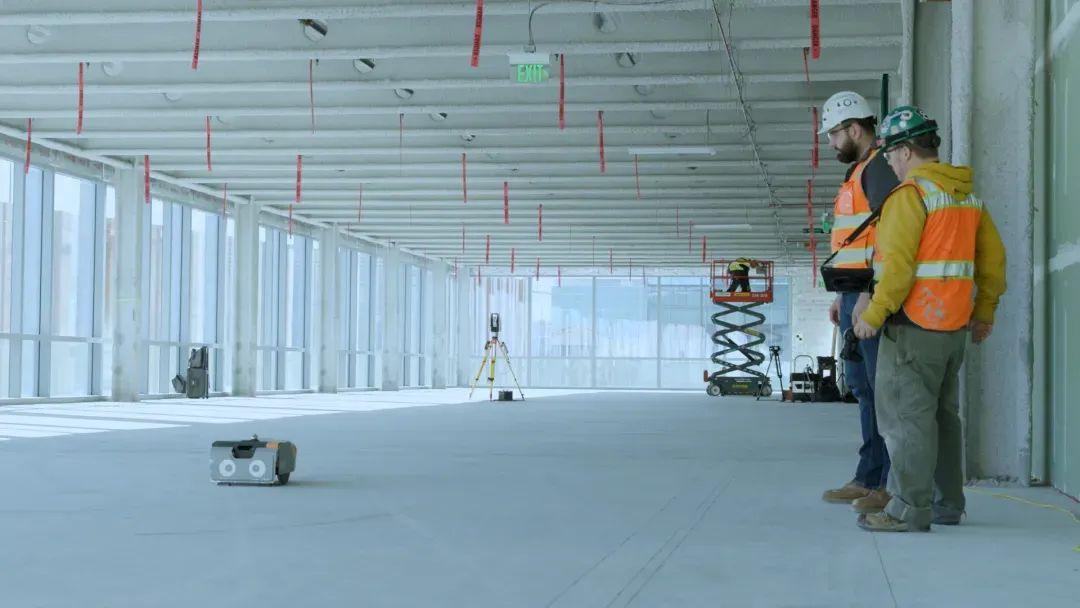
The pattern used by the Hilti Jaibot drilling robot and Dusty layout printers: one model, one surveyed frame.
Model
Design data in Revit or AutoCAD (Dusty also reads IFC) is the single source of truth. (Design)
Upload
The model goes to a cloud, and a job file goes to a field tablet. (Cloud)
Set frame
A total station on surveyed control points fixes the site coordinates. (Survey)
Locate
The robot measures its position against the total station, so against the model. (Robot)
Work and sync
The robot drills or prints, then syncs status back for documentation. (Execute)
What vendors report (vendor claims)
Dusty: 1/16 in accuracy at 600 DPI; 10,000-15,000 sq ft per day with one operator.
Hilti Jaibot: up to 8 hours per charge, cordless, with built-in dust removal. No drilling tolerance is published.
Outdoors, RTK GNSS can replace the total station. Trimble pairs scanning, total station and GNSS on Spot.
Spot-based capture is used for site documentation: Mortenson piloted Spot with Trimble GNSS on a solar farm (2020); no accuracy figures given.
A2.5POWER AND BATTERIES
Most robots run 1.5 to 5 hours per charge.
Verified figures only. Runtimes are vendor claims under unstated duty cycles; real runtime under load is likely lower (analyst inference).
Robot
Battery
Runtime
Charging
Basis
Boston Dynamics Spot
564 Wh
About 90 min average
Recharge 60 min
Vendor spec
ANYbotics ANYmal D
932 Wh, swappable
90-120 min
Full charge 3 h; 70% in 100 min
Vendor spec
Boston Dynamics Atlas
Not stated
4 h typical; about 2 h heavy lifting
Self-swap under 3 min; recharge about 90 min
Vendor claim; eWeek
Apptronik Apollo
Not stated
About 4 h per pack
Hot-swappable packs
Vendor claim
Agility Digit 5
Not disclosed
About 90 min
Recharge under 9 min
Management projection
Figure 03
2.3 kWh
Up to 5 h
Inductive, 2 kW, in the feet
Vendor claim; one trade source
Tesla Optimus
2.3 kWh (2022 prototype)
No measured runtime
Not published
Projection only
Hilti Jaibot (tracked)
Not stated
Up to 8 h
Cordless
Vendor claim
Swap versus fast charge changes site infrastructure: swap stations and spare packs on one side, charge docks and electrical load on the other. Both are on the market.
A2.6HANDS AND END EFFECTORS
Hands are costly; simple grippers still compete.
27 DoFHuman hand; 19-23 needed for human-like function
~$9,500Hands in Optimus Gen 2 teardown (17.2% of BOM; secondary)
3 gFigure 03 fingertip sensitivity (vendor claim)
20 DoFPer hand on Figure 03 (Wikipedia)
Why hands drive cost
A hand packs many small actuators, tactile sensors and cameras into a space the size of a fist. Estimates put hands at 15-17% of a humanoid bill of materials, second only to actuators overall. For most site tasks the end effector is chosen for the job: a drill, a printer, a gripper for totes.
Simple can win
Physical Intelligence won gold in 3 of 5 Humanoid Olympics categories with plain pincer grippers. Vision only; most tasks needed under 9 hours of data. Two tasks were physically impossible for its robot (secondary report).
Robot
Reported hand design
Figure 03
Tactile fingertips and palm cameras (vendor claim)
Optimus Gen 3
22 DoF in fingers (single source, unverified)
1X NEO
22-DoF hands (company)
Agility Digit 5
Swappable grippers
Reported hand designs
Digit 5 swappable grippers, Jaibot drills and Dusty printers show the same pattern on sites: the tool is matched to the task, not to the human hand.
A2.7COMPUTE AT THE EDGE
Fast control loops run on the robot itself.
NVIDIA Jetson Thor is the reference part. Figures are vendor specifications.
128 GBLPDDR5X memory at 273 GB/s. On the T5000 module.
40-130 WT5000 module power range. Sets battery draw and cooling needs.
$3,499AGX Thor developer kit price. Via partners (2025 report).
Why onboard
Loops at 200 Hz to 1 kHz must run on the robot. Figure states Helix runs entirely onboard. Tesla expects its own AI5 chip to run Optimus without Wi-Fi or cellular (Musk).
Who supplies
NVIDIA holds over 80% of humanoid compute (analyst figure). Qualcomm and MediaTek are alternatives. Digit 5 uses IGX Thor with a separate safety controller.
Cost and cloud
Compute is about 8% of humanoid BOM (estimate). Figure agreed at least $3.5B of GPU compute with Nscale for training (Sep 2026). VLA latency budgets and cloud inference cost: not verified.
A2.8AI FOUNDATION MODELS FOR ROBOTS
Robot foundation models: claims, not benchmarks.
All results below are company-reported. No standardized, independent robotics benchmark exists (noted by several commentators).
Model
Developer
What it claims
Caveat
pi0.5 to pi0.7
Physical Intelligence
pi0.5: 94% success out of distribution in unseen homes. pi*0.6: over 2x throughput on hardest tasks. pi0.7 (Apr 2026): one generalist matches specialists.
Authors note frequent errors; pi0.7 early and from one secondary source
Gemini Robotics 1.5 / ER 1.5
Google DeepMind
Top aggregate score on 15 embodied-reasoning benchmarks; skills moved from ALOHA 2 to Apollo and Franka without extra tuning.
Robotics 1.5 limited to select partners; ER 1.5 via API
Isaac GR00T N1 / N1.6
NVIDIA
Open dual-system VLA for humanoids. 780,000 synthetic trajectories in 11 hours; synthetic plus real data lifted N1 by 40%.
Vendor claim
Helix / Helix 02
Figure
One system from pixels to full-body actuators; a 4-minute, 61-action dishwasher task with no resets.
Described as early; not independently verified
Large Behavior Model
TRI + Boston Dynamics
One whole-body network on Atlas; recovers from pushed boxes and closed lids (Aug 2025).
No data scale disclosed
Skild Brain
Skild AI
One model for any robot body; adapts to lost limbs or jammed wheels without retraining.
No customers named; revenue about $30M is unaudited
As of Oct 2026. Funding context: Skild raised about $1.4B at over $14B (Jan 2026); Figure raised over $1B at $39B (Sep 2025).
A2.9SIMULATION AND DIGITAL TWINS
Simulation trains robots before the site sees them.
NVIDIA Isaac stack
Isaac Sim, Isaac Lab and Omniverse are the dominant robot-training tools. Isaac Lab-Arena (CES 2026): open-source capability tests before deployment
Open simulators
MuJoCo Warp is GPU-accelerated and maintained by DeepMind and NVIDIA. Genesis: open source (Apache 2.0), multi-physics. Speed figures: not verified
Sim-to-real gap
Policies trained in simulation must carry over to real contact. Figure S0: 1 kHz controller trained in simulation (vendor claim). Gap rates for contact-rich tasks: not published
Digital twins and BIM
The site model is the plan the robot executes against. Hexagon cites twin creation with its AEON humanoid. Dusty and Hilti consume Revit and AutoCAD models
200,000+Parallel simulated environments for Figure S0 (vendor claim)
780,000Synthetic trajectories in 11 hours (NVIDIA claim)
20M hrsReal-world video behind Cosmos world models (NVIDIA)
Simulation lowers the cost of trial and error, but results on site still depend on supervised trials with real data (see Section A2.14).
A2.10DATA COLLECTION AND TELEOPERATION
Hand-held grippers beat teleoperation by about 3x.
The UMI gripper collected 111 demos an hour against 35 for SpaceMouse teleoperation; bare hands reached 231.
Cup-arrangement demos per hour (UMI study)
SpaceMouse teleop35
UMI gripper111
Bare hands231
Where robot data comes from
Teleoperation is the base layer: Helix v1 used about 500 hours.
Pi Recap turns expert interventions during autonomous runs into training data.
Human video: Skild cites billions of clips; Figure S0 used over 1,000 hours of motion data.
Synthetic data: 780,000 trajectories in 11 hours (NVIDIA claim).
Data-factory cost per hour: not verified.
UMI (Stanford, Columbia, TRI; RSS 2024) is a hand-held parallel-jaw gripper with a GoPro. Bare hands is the human reference rate; the study also reports policy transfer between UR5e and Franka arms.
A2.11CONNECTIVITY AND CYBERSECURITY
Control stays onboard; the network is for fleets.
300 sTelemetry interval found in Unitree G1 study (2025)
10 GbpsFigure 03 mmWave data offload (vendor claim)
1URack size of Orbit on-premise Site Hub
Jun 2026DoD added Unitree to its military-linked list
Connectivity
Fast loops run onboard, so networks carry orchestration, updates and supervision.
Boston Dynamics Orbit runs as cloud SaaS over Wi-Fi, LTE or cellular, or on a 1U on-premise Site Hub.
Figure 03 uses 10 Gbps mmWave for data offload (launch post).
Construction sites likely need site-wide Wi-Fi or private LTE (analyst inference).
Wi-Fi 6/7, private 5G and latency figures: not verified.
Cybersecurity evidence
Researchers found a command injection in Unitree G1 Wi-Fi setup that gives root, with encryption keys hardcoded across units (arXiv, Sep 2025).
The same study reports telemetry sent every 300 seconds to two IP addresses.
Unitree called an April 2025 backdoor allegation a fixed vulnerability.
DoD added Unitree to its Chinese military-linked list in June 2026; Unitree denies sales to the PLA.
ISO 10218-1:2025 adds requirements where cybersecurity affects safety.
Owners with federal or critical-infrastructure exposure should treat robots from listed vendors as high risk. Orbit's product page does not address security.
A2.12SAFETY ARCHITECTURE
Humanoid safety standards are still being written.
Committee draft for legged and balancing robots; comments closed 8 Jul 2026
ANSI/A3 TR R15.108
Dynamically stable mobile robots; led by Agility
Existing gaps
ISO 10218 assumes no tipping; ISO 13482 is personal care; ISO 3691-4 (driverless trucks) excludes these machines
Standards and status (Oct 2026)
Layer
Design
Behavior
Reroute, stop or sit down near people
Controller
Safety controller separate from navigation compute
Framework
NVIDIA IGX Thor with Halos
Inspection
Third party via NVIDIA Halos lab
Digit 4
Safety PLC, on-robot e-stop, Category 1 stop; passed a lab field evaluation
Digit 5
Certification to work outside fenced cells is pending
Digit 5 safety design (reported)
Draft ISO 25785-1 topics: fall zones, controlled descent on power loss, contact-force limits and zoning. Most current humanoid deployments are fenced or zoned (single source). Safety-rated performance levels: verify against ISO 13849 before quoting.
A2.13FAILURE MODES TODAY
Demos and sites differ in what gets measured.
What demos and vendors show
Duration: an 18-hour espresso run (Pi) and a 4-minute, 61-action task (Figure).
Success: 94% out of distribution (pi0.5) and over 90% per stage (Recap), company numbers.
Autonomy: 1X NEO is autonomous by default and uses remote piloting for unknown chores.
Recovery: Atlas recovers when a box lid closes or a box is shoved.
Fleet: Digit 4 logged 65,000+ hours; 100,000+ totes at GXO (company).
Power: Atlas about 4 h; Figure 03 up to 5 h (vendor claims).
What site evidence shows
Duration: no major humanoid vendor publishes MTBF or intervention rates.
Success: near 100% on simple objects, about 30% on spoons or scissors (single source).
Autonomy: at the May 2026 Robotics Summit, many humanoids were teleoperated or on fixed paths (reported).
Recovery: production humanoids often cannot rise after a fall without help (single source).
Fleet: no measured uptime percentage found for Digit, Spot, Jaibot or Dusty.
Power: most humanoids run 90 min to 2 h versus 8-20 h of industrial need (single source).
Targets slip as well: Tesla's January 2025 goal of about 10,000 robots was missed (Electrek), and Agility's $300M+ of orders is milestone-contingent.
A2.14A DEPLOYMENT END TO END
Deployment runs from scoping to supervised scale.
Sequence synthesized from vendor and standards sources; no vendor publishes a single canonical plan.
Scope
Pick tasks with bounded variation: carry, layout, inspection, tote moves.
Baseline
Import BIM or CAD; scan the site to build or check a digital twin.
Site frame
Set control points (total station, RTK outdoors) so robots and BIM share coordinates.
Assess safety
Risk assessment to ISO 10218-2; fall and exclusion zones; e-stop.
Prepare site
Charge docks or swap stations, network backhaul, storage and spares.
Pilot
Simulate, run supervised trials, collect corrections and tune skills.
Run and scale
Humans lead, robots in the loop; log interventions; update fleet.
What to measure from day one
Agility Arc tracks uptime, throughput and mean time between incidents (MTBI).
Add interventions per shift, supervision ratio, first-pass quality and rework (analyst suggestion).
Spare limbs and packs matter: Atlas limbs swap in under 5 minutes (vendor claim).
Part A · Concepts
Where robots work
Five settings, one test: what is proven in paid work today, what is a pilot, and what is still a plan.
Tugger robots move heavy racks in Iowa and Virginia.
What limits it
Robots are slower than technicians and need supervision.
Meta says robots cannot yet handle GB300 cabling intensity.
Inventory robots struggle with corners and indicator colors.
One startup CEO: "a lot of pilots and demos, but no provable working solution."
Meta spokesperson: "We need more workers, not fewer."
An anonymous worker estimated cable-swap robots could someday remove up to 80% of the workload in some roles. This is an employee estimate, not a Meta forecast.
A3.11EMERGING DATA CENTER ROBOT COMPANIES
Emerging players are early, with thin public proof.
Status and funding as of Oct 2026. Vendor claims are labelled.
Company
Focus
Status and evidence
Funding or ownership
SoftBank Roze AI
Robot-built data centers
Press report only; SoftBank did not comment; executives doubt timing
IPO target about $100B, by end 2026 (reported)
Telescent
Fixed robotic fiber cross-connect
Commercial; largest order from unnamed hyperscaler; G5 has 2,000+ duplex ports
Not found in sources
Exclaim Robotics
Mobile remote-hands robots
Early stage; six employees; no customers or specs disclosed
$4.95M pre-seed (Aug 2026)
Watney Robotics
Two-armed cable swaps, restarts
Meta tests; "four nines" uptime is a vendor claim, undefined
$80M Series A (Sep 2026); $100M+ total
Boost Robotics
Teleoperation-first remote hands
Pre-pilot; seeking pilots (Y Combinator, 2025)
Not publicly disclosed
Foxconn + Intrinsic
Assembly, inspection, machine tending
JV announced Nov 2025; Houston humanoid use unverified
Unit counts not disclosed
Roze's reported ask is a $100B valuation with no disclosed product; its assets would include ABB Robotics ($5.4B deal, 2025) and SB Energy.
A3.12CHANGE THE RACK, NOT THE ROBOT
SoftBank redesigns the rack for robots.
The cableless robot-friendly rack announced Sept 2025 removes the cabling task instead of automating it.
Power
Busbar power replaces power cords at the rear of the rack. (No cords)
Optics
A blind-mate optical connector replaces patch cables. (Blind mate)
Cooling
A blind-mate liquid connector joins the server to a manifold. (Blind mate)
Carry
Container robots pass servers to lifter robots. (Handoff)
Seat
Lifter robots seat the server using QR codes and lasers. (Position)
Status and parallels
Based on OCP ORV3 with proprietary additions; test site is Hokkaido Tomakomai (initial 50 MW, scheduled 2027).
Dell IR7000 AI racks also blind-mate power, cooling and NVLink at the rear (2025).
Plan: standardize and roll out only if tests succeed.
Supermicro (2018, dated): automated rack handling; the customer plugs in two cables, power and network.
Rack-scale integration remains mostly manual, with automated handling of finished racks.
A3.13PROVEN VERSUS ASPIRATIONAL
No cable-pulling robot is verified as of Oct 2026.
Searches of trade press and vendor pages found no commercial cable-pulling, tray or conduit robot.
Proven in paid work
Slab layout printing on data center projects.
Overnight legged-robot inspection and 360 capture.
Autonomous piling for solar that powers data centers.
Robotic fiber cross-connect in hyperscale networks.
Single-site ANYmal patrols since 2022.
Robotic overhead drilling on commercial sites (Jaibot, since 2020).
Aspirational or unverified
Cable pulling, tray install and conduit bending.
Liquid-cooling pipefitting and field welding.
Robots handling dense GB300 cabling.
Lights-out data centers; humanoids building servers.
Roze AI as an operating company.
Rack-and-stack by humanoids or mobile manipulators.
Absence from public sources is a finding, not proof of absence. Welding vendors (Path, Hirebotics) show data center weldments but name no data center customer.
A3.14OTHER CONSTRUCTION SITES: TASK MATURITY
Repetitive, geometry-defined tasks lead.
Task, robots and maturity on non-data-center sites. Figures are vendor-reported unless noted.
Task
Robots
Maturity
Verified detail
Layout
Dusty; Civ Robotics (outdoor)
Commercial
Dusty: 10,000-15,000 sq ft/day; Civ: 8 mm accuracy
Company target: 1M robots/yr line; no verified useful work
Goldman Sachs projects humanoids could fill about 4% of US manufacturing labor shortages by 2030 (secondary report).
A3.19CASE: BMW AND FIGURE
BMW and Figure: best-documented humanoid factory case.
Two Figure 02 robots in the Spartanburg body shop. Two robots, one task: proof of concept, not of scale.
11 modeployment. Some sources say 10 months
1,250+runtime hours. 10-hour shifts, Mon-Fri
90,000+parts loaded. Sheet metal into welding fixtures
30,000+BMW X3s supported. Production during the pilot
Confirmed
BMW confirmed completion (Jun 25, 2026, per tracker). Framed as ergonomic relief; no layoffs reported.
Not reported
Cycle time, accuracy and interventions: Figure lists targets only. Forearm was the top hardware failure point.
Next
Figure 03 sorts parts into sequencing trolleys; no results yet. Figure 02 is being retired after Figure 03.
A3.20HYUNDAI ATLAS PLAN
Hyundai's Atlas plan runs to 2030, still unverified.
Dated milestones are Hyundai plans or press reports, not deployments.
Production Atlas shown at CES
56 degrees of freedom, 110 lb (50 kg) lift, self-swapping battery (Hyundai specs).
Training center opens
RMAC on the Metaplant campus trains Atlas on parts logistics.
RMAC moves
To a building about 10 times larger.
Sequencing starts
Metaplant first; US plant for 30,000 robots a year reported.
Kia Georgia
Second site in the plan.
Component assembly
Then heavy, repetitive, complex tasks.
Reports of "25,000 Atlas units" (installed total) and "30,000 a year" (capacity) are different metrics; the 25,000 figure rests on one aggregator citing Korea Times.
A3.21TASKS STILL MANUAL
Humanoid pilots target tasks that stay manual.
Industrial arms are the proven core; humanoids aim at work that is hard to fixture.
IFR: logistics is 47% of professional service robot shipments (117,500 units in 2025).
A3.24ENERGY AND SOLAR
Solar is the most advanced outdoor construction segment.
Robots install modules and piles at utility scale. Figures are company claims unless noted.
AES Maximo
100 MW completed at Bellefield, CA, in March 2026, with four version 3.0 units in parallel. Over 1 module/min per unit. 2024 target was 100 MW by 2025.
Built Robotics
RPD 35 rig carries up to 224 piles and places them within 1 degree of plumb. 40 deployments, 50,000 hours. Zero jobsite injuries (claim).
Terabase
Terafab field hardware completed field testing in March 2026. $130M Series C (2025). Paid production not documented.
Civ Robotics
CivDot+ marks layout points for solar and storage sites. 8 mm accuracy, 30 GW claimed. Speed claim not independent.
100 MWAES Maximo, Bellefield, Mar 2026
4 unitsMaximo v3.0 working in parallel
40Built Robotics deployments (vendor)
30 GWCiv Robotics solar and storage (vendor)
AES claims Maximo needs half the time and cost of conventional methods (unverified). Crew size and cost were not stated. AES said it did not change hiring practices.
A3.25MINING, PORTS, UTILITIES
Mining and ports automate; labor shapes ports.
Verified cases. Several are dated; current statistics were not found.
Site
System
Verified detail
Caveat
Rio Tinto, Pilbara
AutoHaul driverless rail
US$940M; about 1,700 km; about 200 locomotives; 16 mines to 4 ports; done Dec 2018
Dated; no current stats
Rio Tinto drills
Autonomous drills
One worker can run up to four rigs (2019)
Truck count not verified
BHP, Pilbara
Driverless rail
Rail ops suspended Nov 2018 after a train ran 92 km without a driver
A failure example
APM Terminals, Rotterdam
Automated terminal
Opened 2015; 2.7M TEU/yr; 8 automated cranes; EUR 500M reported
Dated (2015)
ILA East/Gulf ports
Union contract
2024-2030 contract; 62% wages; "full protections against automation"
Union statement
Energy plants
Spot, ANYmal inspection
Aker BP inspected Skarv FPSO with Spot (Nov 2020)
Proven niche
Rio Tinto trucks
Autonomous haul trucks
Plan: 130 autonomous trucks by start of 2019
Plan, not confirmed count
Substations
Deep Robotics DR02
Tested; commercial deployment planned for 2026
Maker claim
TSMC Arizona
Security drones
Reported plan of 100+ drones for patrol and safety
Single source
A3.26CROSS-SECTOR COMPARISON
Maturity is highest where work is repetitive and mapped.
Maturity of robot types by sector, as of Oct 2026 (author synthesis of the evidence in this section).
Sector
Inspection
Handling
Task work
Heavy plant
Humanoids
Warehouses
n/v
Commercial
Commercial
n/a
Pilot
Mining
Pilot
Commercial
Early comm.
Commercial
None
Ports
n/v
Commercial
Commercial
Commercial
None
Factories
n/v
Pilot
Commercial
n/a
Pilot
Energy and solar
Commercial
None
Early comm.
Early comm.
None
Other construction
Commercial
Early comm.
Commercial
Early comm.
None
Data center construction
Commercial
None
Commercial
Early comm.
None
Data center operations
Commercial
Pilot
Early comm.
n/a
None
Legend: None / n.a., Pilot, Early comm., Commercial.
None = no public deployment found as of Oct 2026. n/v = not verified in sources read. n/a = not applicable.
A3.27KEY TAKEAWAYS
Robots work where tasks are repetitive and mapped.
Seven conclusions from the application areas, as of Oct 2026.
01
Proof sits in simple tasks. Layout, piling, patrol inspection and warehouse moves are in paid work; most data center tasks are not.
02
Data center construction has one well-documented new robot. DEWALT's drilling results are vendor-only and partly inconsistent.
03
Rack-side work is a pilot. Meta's trials are supervised and slower than technicians, and GB300 cabling is out of reach for now.
04
No cable-pulling robot is verified. SoftBank is redesigning racks so robots do not need to handle cables.
05
Scale facts conflict. Cost per MW runs from under $8M to over $15M, and peak workers per MW from 0.7 to about 12.
06
Factories run on arms; humanoids are pilots. BMW and Figure is the best case: two robots, one task.
07
Warehouses are most mature, with Amazon above 1M robots. Labor tension is visible at ports, in Amazon plans and at Meta.
Part A · Concepts
Suppliers, availability and ways to acquire
Who sells robots, what ships today, and how buyers pay for them.
Humanoid suppliers by headquarters, route to purchase and US availability, as of Oct 2026.
Supplier
HQ
How to buy
US availability
Agility Robotics (Digit)
USA (Oregon)
RaaS about $8,500/mo plus $25,000 deployment (Dynamo, single source)
Digit 5 early access 1H 2027, general availability end-2027 (company projections)
Figure AI (Figure 03)
USA (California)
Not publicly disclosed
Pilot to early commercial; BMW pilot with Figure 02 ended 2025, Figure 03 pilot at BMW reported (Jun 2026)
Apptronik (Apollo)
USA (Texas)
Not publicly disclosed
Not yet: Apollo 3, the first intended shipping product, expected in 2027
Boston Dynamics (Atlas)
USA (Mass.); Hyundai-owned
Not publicly disclosed
2026 output committed; more customers from early 2027
Tesla (Optimus)
USA (Texas)
Reportedly lease to a short list (press report)
Not before 2027
Unitree (G1, H2, R1)
China
Direct, distributors and a US web store
In stock via distributors; on DoD Chinese military-linked list (Jun 2026)
UBTech, AgiBot, Galbot
China
Price not disclosed
Not sold in the US per sources read
1X (NEO)
USA (Palo Alto); founded in Norway
$20,000 or $499/mo
Consumer product on a waitlist; not a jobsite tool
Sources conflict on some Chinese pricing; ranges are shown in the price-point section.
A4.2SHIPPING VS WAITLISTED
Shipping, pilot, waitlist and not yet differ widely.
Where named suppliers sit on availability to US buyers, as of Oct 2026.
Shipping now
Pilot or early
Waitlist or sold out
Not yet
Boston Dynamics Spot
Agility Digit 4 (nine facilities)
Atlas: 2026 output committed
Apptronik Apollo 3 (2027)
ANYbotics ANYmal D
Figure 03 (pilots; BMW ran Figure 02)
ICON Titan: first units early 2027
ANYmal X (launch later 2026)
Unitree Go2, G1, R1 (resellers)
Bedrock (pilot sites, 2026; unconfirmed)
Digit 5: early access 1H 2027
Neura 4NE1 (Germany)
Dusty FieldPrinter (subscription)
Built Robotics (RPD 35)
1X NEO: consumer waitlist
Caterpillar x FieldAI (announced)
Rugged Robotics (service)
Canvas / JLG (previewed 2026)
Optimus: not before 2027
XPeng IRON (deliveries 2027)
Hilti Jaibot (rental)
Okibo (US launch 2025)
ICON reservation: $5,000 deposit
UBTech, AgiBot: not US-sold
ACR TyBOT (buy or RaaS)
Watney (data center pilots)
Arms: lead time not published
Gravis: US availability unknown
Only Chinese hardware shows immediate stock across categories, and it carries policy risk. Construction-specific vendors rarely publish price or lead time.
A4.3SUPPLIER MAP: SITE ROBOTS
Site robots are sold by quote, service or dealer.
Main suppliers by category: headquarters, how to buy and US availability (Oct 2026).
Category
Suppliers (HQ)
How to buy
US availability
Quadrupeds
Boston Dynamics Spot (USA); ANYbotics ANYmal D (Switzerland)
Spot: contact sales. ANYmal: purchase plus software subscription
Both commercial; Spot lead time 10 weeks in one tender (see Section A4.4)
Quadrupeds, China
Unitree Go2/B2; Deep Robotics
Direct or resellers
In stock; Unitree on DoD list (Jun 2026)
Layout
Dusty (California); Rugged (Texas); HP SitePrint
Dusty subscription; Rugged service only
In commercial use; Dusty has several dozen contractors
Drilling
Hilti Jaibot (Liechtenstein)
Rental by Order Form
Commercial since 2020; regional availability unverified
Rebar tying
Advanced Construction Robotics (USA)
Purchase $425,000-$455,500, or RaaS
RaaS states list FL, MD, NC, NY, OH, PA, SC, TN, TX, VA, WV; not California
Excavator autonomy
Bedrock, Built, Teleo (USA)
Install fee plus subscription; Teleo kit via dealers
Bedrock at pilot stage; RDO dealer covers Southern California (2023)
Cobot arms
Universal Robots (Denmark); FANUC (Japan); Standard Bots (USA)
Distributors and integrators; Standard Bots direct
No vendor read published a California service-level commitment; California coverage is the least documented column. Skydio drones are sales-gated with no public price.
A4.4LEAD TIMES
Published lead times are rare and mostly vendor claims.
The few weeks or dates found in public sources, as of Oct 2026.
10 weeksSpot delivery, one Italian university tender. From contract signature; late penalty 0.1% of supply value per day; base price EUR 200,000.
12 weeksFormic average lead time (vendor claim). Stated on the Formic site for its RaaS service; unattributed.
1H 2027Digit 5 early access (company projection). General availability is projected for end-2027.
Early 2027Atlas wider sales; ICON Titan first units. Atlas 2026 output is committed; Titan has a $5,000 reservation deposit.
Not publicly disclosed
Digit 4, Jaibot and Dusty lead times. Industrial arm lead times: no verified figure (FANUC reported longer deliveries in 2022).
Capacity limits
Agility RoboFab output reported below 100 robots a year. Same plant is designed for up to 10,000 units a year.
What a quote should state
Delivery date from signature. Remedy for late delivery. Commissioning time on site.
A4.5GEOGRAPHY AND TRADE
Trade rules shift every few months.
Events that affect robot cost and supply, in order (as of Oct 2026).
China licenses seven rare earths
Magnets using them need export licences; the rule is still in force.
Section 232 probe on robotics opens
BIS notice of Sept 24 covers robotics, machinery and parts.
China widens its controls
Adds more elements, equipment and lithium-ion battery items.
Wider controls are paused
Announcement 70 suspends them until Nov 10, 2026.
Court strikes down IEEPA tariffs
Ruling of Feb 20; about $166B in refunds; a 10% Section 122 tariff followed (later ruled illegal by the CIT; on appeal).
Unitree added to DoD list
Unitree denies PLA sales. Metals duties apply to full value from Jun 8.
Rare-earth pause expires
No extension was found in the sources read as of Oct 2026.
A4.6GEOGRAPHY AND TRADE
Trade status: some facts firm, many still open.
What is confirmed, what is not, and where components concentrate (as of Oct 2026).
50%Section 232 duty on steel and aluminum
69.2%Share of rare earths mined in China, 2025
Nov 10Scheduled end of China controls pause
Confirmed
Copper 50% on semi-finished items. Full customs value for metal derivatives from Jun 8, 2026. China processes up to 90% of rare earths. Tesla said magnet controls affected Optimus (Apr 2025).
Not confirmed
Outcome of the robotics Section 232 probe. Section 301 and all-in duty on Chinese robots. Whether the rare-earth pause is extended. Western magnet supply capacity. Battery cell supply links to robot makers.
Component concentration
Actuators: 35% to 60% of humanoid cost (estimates). Reducers: Harmonic Drive, Nabtesco, Leaderdrive. Hesai lidar on the DoD 1260H list. Jetson Thor kit $3,499; shortage not seen (unverified).
A June 2026 Section 232 update listed no robotics action. Treat the robotics outcome as pending until a proclamation is confirmed.
A4.7WAYS TO ACQUIRE
Five ways to acquire a robot shift risk differently.
Who owns the machine, how payment works and who carries the risk, with published examples.
Buy
Lease
Rent
RaaS
Outcome-based
Customer owns hardware
FMV: lessor owns, lower payments
Vendor owns and often supports
Vendor owns; fixed monthly fee
Pay per hour, tie, hole or day
Cash or loan, plus software and support
$1 buyout: customer owns at the end
Day, week or month; short minimum
Software and maintenance bundled
Vendor carries productivity risk
Customer carries residual and upkeep
Fixed monthly, often 36 to 60 months
Customer pays for loss or damage
Multi-year terms common
Few public examples
Year-one expensing possible
Early exit costs remaining payments
Fees run until the unit is returned
Vendor solvency becomes a risk
Formic: $8-$30/hour (single source)
Digit: ~$200,000 hardware (analyst assumption)
$130,000 robot: $2,549/mo (2022)
Cyphra rover: $200/day or $1,800/mo
Digit: $8,500/mo plus deployment
TyBOT RaaS: priced per tie/lb
Rent and RaaS move residual value, obsolescence and maintenance to the vendor. Buying keeps them with the customer.
A4.8OWN VS PAY PER USE
Own for steady use; pay per use for lumpy use.
Buy and lease versus rent, RaaS and outcome-based pricing.
Own (buy or lease)
Cost: capital outlay or fixed payments, with no usage premium on top.
Utilization: pays off when hours are high and steady across years.
Risk: customer carries resale value, obsolescence and repairs.
Tax: a purchase or $1-buyout lease can use Section 179 and bonus depreciation.
Flexibility: low; early exit costs remaining payments or resale effort.
Vendor dependence: moderate; support contracts still needed.
Pay per use (rent, RaaS, outcome)
Cost: a premium paid every month; Digit RaaS breaks even near 4,075 hr/yr (illustrative).
Utilization: suits short, uneven or pilot use with idle periods.
Risk: vendor holds residual, upkeep and obsolescence risk.
Tax: payments are deductible as incurred; no year-one expensing.
Flexibility: high; Jaibot orders end on 30 days notice.
Vendor dependence: high; solvency, recall and renewal pricing matter.
Digit break-even: $107,000 a year ($8,500 x 12 plus $25,000 deployment over 5 years) divided by $26.26/hr loaded hand-laborer cost is about 4,075 hours a year, before supervision and downtime. Illustrative.
A4.9WHEN EACH MODEL FITS
Hours per year and project length pick the model.
Illustrative guide for one robot, before supervision, downtime and tax. Not vendor or lender quotes.
Hours per year
Under 3 months
3 to 12 months
1 to 3 years
3+ years, steady
Under 1,000 (occasional)
Rent or per-project service
Rent or service
Rent
Rent: ownership idles capital
1,000 to 3,000 (single shift, partial)
Rent (one-month minimum)
Rent or RaaS
RaaS or FMV lease
FMV lease or buy; RaaS if capital-limited
3,000 to 4,000+ (near two shifts)
Rent if available
RaaS
RaaS or lease
Buy ($1 buyout or cash) for year-one expensing
4,075 hrDigit RaaS break-even a year vs $26.26/hr labor
3,567 hrSame break-even vs a $30/hr benchmark
$500/dayJaibot rental used in the holes-per-shift sum
~5,000Holes below which Jaibot savings erode (single source)
Buy suits steady use if residual and upkeep risk are acceptable. RaaS beats national-wage labor only near two shifts; higher local wages lower the hours needed.
A4.10PRICE POINTS BY ROBOT CLASS
Prices span about 300x; many are not disclosed.
Reported and list prices in USD by class, as of 2026. Sources differ for the same model by 30% to 40%.
Robot class
Buy (list or reported)
Rent / lease / RaaS
Source and quality
Unitree R1 and G1 humanoids
R1 about $4,900-$6,870; G1 $13,500-$27,990
Humanoid lease $3,000-$15,000/mo (one lessor)
Unitree sites 2026; lessor (vendor)
Agility Digit
About $200,000-$250,000 (analyst assumption); $210,000 each on one 5-robot order
Dusty $2,500-$5,000/mo plus fees; HP $1,500-$2,000/mo
Buildermuse 2026 (single source)
Drilling (Hilti Jaibot)
No sticker price; $300,000 loss charge
$10,000+/mo (reported)
Hilti terms; Buildermuse 2026
Rebar tying (TyBOT)
$425,000 (67 ft) to $455,500 (117 ft)
RaaS per tie/lb
ACR (vendor)
Excavator autonomy kits
Bluelight about $40,000-$50,000 (vendor claim); others not disclosed
Bedrock: install fee plus subscription
Equipment World 2026; Sacra 2026
Cobot arm (Standard Bots)
$29,500 to $49,500
Cobot lease $1,200-$3,000/mo (one lessor)
Standard Bots 2026; lessor (vendor)
Installed cobot cost is reported at 2.5x to 4x hardware. Hardware is a minority of total deployed cost.
A4.11HILTI JAIBOT RENTAL TERMS
Jaibot is rented on terms that favor Hilti.
Key terms from Hilti US Jaibot System terms (read Oct 2026). Prices sit in each Order Form and are not public.
1 monthMinimum rental (20 working days)
8 h/dayMaximum operating time
30 daysNotice for customer to end an order
$300,000Replacement charge for loss or misuse
Use and control
Model
Rental only; no purchase route in the terms read
Billing
Monthly for all workdays, until the full system is returned
Recall
Hilti may recall the unit and end an order at any time
Operators
Only Hilti-trained operators; only Hilti may repair
Ceiling height
8.3 to 16.5 ft (2.65 to 5 m)
Money and liability
Loss clause
$300,000 for loss, theft or damage from misuse; 40% of list for accessories
Defects
Repairs free; wear parts and consumables charged
Downtime
Fees waived on defect days if Hilti is told before 13:00
Exclusions
No business-interruption or consequential damages
Indemnity
Customer indemnifies Hilti; no uptime guarantee
Reported rate: $10,000+ a month (single source, Buildermuse, Sep 2026). The terms contain no data-ownership clause.
A4.12LEASE STRUCTURES
Lease structure decides cost, tax and exit.
General framework; robot-specific rates, residuals and advance rates are not publicly verified.
FMV (operating) lease
Lower payments because the lessor keeps residual-value risk and claims depreciation. End of term: return, renew or buy at fair market value. Lessee deducts payments as expense.
$1 buyout (finance) lease
Higher payments; the lessee is treated as owner and the title passes for $1. May qualify for Section 179 and bonus depreciation. Both lease types sit on the balance sheet (ASC 842).
10% option and TRAC
A 10% purchase-option lease also exists. TRAC leases normally cover titled vehicles. TRAC is unlikely to fit most robots. General industry definitions, not robot-specific.
Robot lease examples
HowToRobot and River Capital (2022): $130,000 robot at $2,549/mo over 60 months. $2,549 x 60 = $152,940; about 6.6% implied (illustrative). Program may no longer be active.
36-60 moTypical lease terms in program examples
2-6 moEarly exit cost in remaining payments (one lessor)
80% / 12%Advance and interest in Dynamo lender example
Rate context: one July 2026 SMB-finance site lists fixed equipment rates of 6.25% to 6.45% on $100,000-$249,999 (single source, low reliability). Robot-specific residuals are not published.
A4.13RAAS EXAMPLE: AGILITY DIGIT
Digit RaaS terms come from one reported source.
Reported terms and illustrative arithmetic. Source: Dynamo reading of the Churchill XI S-4 (single source).
$8,500
Per month, software and maintenance included. Reported; three-year terms implied.
~$25,000
One-time deployment fee. Reported; purchase scenario uses about $20,000.
$306,000
Monthly fees over 36 months, per robot. Illustrative: $8,500 x 36.
35%
Deposit on a five-robot order. $367,500 on $1,050,000 ($210,000 each).
Buy instead (scenario)
About $200,000 hardware (analyst assumption) plus $20,000 deployment. About $36,000 a year software and maintenance (about 18% of hardware). Dynamo assumptions, not a quote.
Not known publicly
Term, renewal pricing and exit terms in the filing. Uptime commitment and service credits. Data-ownership terms.
Vendor context
FY2025 net sales $1.8M; operating loss about $140M. Cash $103.0M at year-end 2025 against $99.8M burn. $300M+ orders subject to milestones.
A4.14CONTRACT STRUCTURES
Contracts move from pilot to fleet in stages.
Published examples of each stage; most SLA and data terms are not public.
One site, defined tasks. Deployment fee up front, such as about $25,000 for Digit.
Staged fleet
Orders tied to milestones. Digit order: 35% deposit; $300M+ backlog subject to milestones.
Run under SLA
Uptime, response time and credits in writing. Formic cites 99.30% (vendor claim).
Renew or exit
Fees can adjust at auto-renewal (reported). Leases charge 2-6 months on early exit.
Terms to read closely
Hilti gives no uptime guarantee and excludes business-interruption damages; Formic FAQ gives no uptime figure or remedy.
Hilti terms hold no data-ownership clause; the customer supplies project coordinates and answers for their accuracy.
Items to specify: ownership of site and BIM data, no reuse for model training, deletion on exit, confidentiality for data centers.
A4.15INSURANCE AND WARRANTIES
Insurance is bespoke; warranties are short.
What is published about cover and warranty for robots, as of Oct 2026.
2-5%Yearly insurance as share of hardware (single vendor source)
12 moSpot warranty in 2020 terms of sale
10 daysSpot CARE repair or replace response in one tender
~18%Digit service cost per year vs hardware (assumption)
Insurance
Benchmark
2-5% of hardware value a year; $2,000-$5,000 on a $100,000 robot (illustrative)
Products
Robotics liability and E&O exist (Koop, 2022); AXIS and Founder Shield offer cover
Pricing
Limits and premiums not published; quote only
Gap
Traditional policies may not fit cleanly (single source)
Lines to price
General and product liability, equipment floater, E&O, cyber, workers comp
Warranties and service
Spot (2020)
12 months; 90 days on consumables; falls from environment are not defects
Voiding
Unauthorized opening or repair voids it
Spot CARE
Accidental damage repair; response within 10 days (tender)
Jaibot
Defect repairs free; wear parts charged
Digit RaaS
Maintenance and software bundled
Other warranty terms, battery life and residual values were not found in public sources.
A4.16TAX AND INCENTIVES
Federal expensing is clear; California differs.
Tax and incentive rules relevant to a robot purchase, as verified (Oct 2026). Not tax advice.
Item
Rule
Scope
Status of evidence
Section 179
Limit $2,500,000; reduced once property placed in service passes $4,000,000
Federal
IRS page; 2026 indexed amounts not verified
Bonus depreciation
100% for qualified property acquired after Jan 19, 2025; 40% election for first year
Federal
IRS; Notice 2026-11 gives interim guidance
Lease treatment
$1-buyout lease treated as ownership; FMV lease and RaaS payments deducted as incurred
Federal
Lessor guidance; confirm with a CPA
California bonus
No conformity to federal bonus depreciation; standard MACRS only
State
Single source (CPA-firm blog)
California 179
Reported limit of $25,000 a year
State
Single source; confirm with FTB
ETP training grants
Reimburses training: up to $600,000 per employer per year ($850,000 multi-employer); fixed fee $28 or $24; 8-200 hours per trainee
State
FY2024/25 overview; not robotics-specific; current year unchecked
Depreciation class
Most machinery is generally 7-year MACRS; a robot-specific class was not confirmed
Federal
Secondary source; confirm with a CPA
Other incentives
State or federal robot-purchase rebates and grants: none found
-
Not found
Practical effect for a California taxpayer: full federal year-one deduction, smaller state deduction. Depreciation class for robots was not confirmed.
A4.17PROCUREMENT CHECKLIST
Ten points to settle before signing.
A procurement checklist drawn from the terms and gaps found in public sources.
01
Commercial model is in writing.
Price, deployment fee, software, support, term and renewal adjustment.
02
Delivery has a date and a remedy.
Spot tender example: 0.1% of supply value per day late.
03
Uptime is defined.
Measurement, response time, service credits and a right to exit for chronic failure.
04
Loss and damage are allocated.
Hilti example: $300,000 on the customer; confirm insured amounts.
05
Safety evidence is on file.
Risk assessment and certification status; no finished humanoid standard yet.
06
Data rights are settled.
Ownership of site data, no model-training reuse, deletion on exit.
07
Vendor failure is planned for.
Source-code escrow, step-in rights, spares and data return (framework).
08
California service is checked.
Technician location and response time; no vendor published a commitment.
09
Trade exposure is mapped.
Origin, tariff class, magnet sourcing and DoD-list status of Chinese parts.
10
Tax and insurance advice is taken.
Lease class, Section 179, California treatment and a broker quote.
A4.18SUPPLIER DUE-DILIGENCE SCORECARD
Check supplier health, support, safety, data and record.
Six scorecard criteria, and reported distress cases showing why they matter (as of Oct 2026).
Criterion
What to check
Financial health
Cash against burn, funding, revenue base, backlog quality
Support footprint
Technicians and spares in your state; response times in writing
Safety certification
Third-party evaluation, risk assessment, site safety case
Data terms
Ownership, reuse limits, deletion on exit, confidentiality
Track record
Named paid deployments, separate from pilots
Contract protections
Escrow, step-in rights, renewal price caps, data return
Scorecard criteria
Company
Reported position
Agility Robotics
FY2025 sales $1.8M, loss about $140M; cash $103.0M vs $99.8M burn
FBR (Hadrian X)
Jun 2026 quarter cash A$28k; going-concern risk evident
Rapid Robotics
Reported to have left RaaS and closed as a US firm, Sep 2025
ICON
Cut about 25% of staff (114 per a WARN notice) in early 2025; over $450M raised
Rethink Robotics
Closed in Oct 2018
Figure AI
Nov 2025 suit by ex-head of product safety alleges retaliation (allegation)
Reported distress examples
Each example is one filing or report at a point in time, not a verdict. Digit 4 passed an OSHA-recognized lab evaluation; Digit 5 third-party certification for work outside fenced cells is pending.
Part A · Concepts
Operations, lifecycle and return on investment
What it takes to run robots on a site, keep them working, and judge whether they pay back.
Verified integrations are few and vendor-described.
Only examples found on vendor or press pages are listed. Everything else is marked not verified.
Platform
Connects to
What it does
Evidence
Spot Orbit
Business systems via webhooks and APIs
Can create work orders automatically
Vendor page, 2026
Oxmaint CMMS
Orbit through a REST API
Work orders for findings rated Medium or above; under 5 minutes claimed
Third-party marketing
Agility Arc
WMS, WES and MES via APIs
Mapping, workflows, uptime, throughput, MTBI
Vendor, 2024 and 2026
Dusty FieldPrinter
Revit, AutoCAD, Leica total station
Prints BIM layout from RVT, DWG or IFC files
Press release, 2025
Hilti Jaibot
AutoCAD, Revit, Hilti Cloud, total station
Drills holes from a job file; status syncs to cloud
Vendor, 2020 and 2026
Procore, ACC, BMS
Not verified for these robots
No public integration found for these robots
Gap
As-built to BIM
Not verified
Automatic reconciliation by these vendors was not confirmed
Gap
Oxmaint figures (8 to 16 month payback, under-5-minute work orders) are marketing claims without cited sources. Dusty has no publicly documented API.
A5.4MAINTENANCE CYCLES: INDUSTRIAL ARMS
Arm service intervals depend on model and shifts.
Figures come from secondary summaries or one vendor presentation. The model manual governs.
Brand / model
Item
Interval reported
Source qualifier
FANUC
Encoder battery
Annually or 3,840 hours, whichever is first
Secondary trade article
FANUC
Grease or oil
3 years or 11,520 hours; shorten if over 3,840 h a year. Another source says 1 to 2 years
Secondary; conflicting, model-specific
ABB IRB 8700
Gearbox oil
20,000 hours
Vendor presentation (2019), one heavy model
ABB IRB 8700
Battery; gear overhaul
Battery 4 years at 3 shifts; gear inspection or overhaul 8 years at 3 shifts
Vendor presentation (2019)
KUKA KRC4
Inspection; gearbox oil
Basic inspection 1,000 to 2,000 h or 1 year; oil 10,000 to 20,000 h or 3 to 4 years
Third-party, single source
KUKA (own page)
Any interval
None published on the KR QUANTEC PA press page
Vendor press page (2021)
Cobot (UR)
Rated life
35,000 hours at full payload and speed
Forum post, not UR staff
Any brand
Grease interval
3,850 to 11,000 hours; harsher duty shortens it
Integrator article (2026)
Derived: 20,000 hours is about 10 years at 2,000 hours a year (one shift) and about 3.3 years at 6,000 hours a year.
A5.5MAINTENANCE CYCLES: MOBILE, LEGGED AND SITE ROBOTS
Outside arms, public service data is thin.
Warranty terms, consumables and who may repair are documented more often than service intervals.
Class
What is documented
Source qualifier
AMR (floor cleaning)
Li-ion battery life of 2,000 or more charge cycles; 5 to 6.5 hours runtime
Vendor claim (Tennant, 2022)
Spot (legged)
12-month warranty; 90 days on wearable parts; falls caused by the environment are not defects
Terms of sale (2020)
Spot CARE (one tender)
Year 1 covers accidental damage; repair or replacement within 10 days; EUR 200,000 base price
Italian tender, undated
ANYmal D (legged)
Swappable 932.4 Wh battery; service terms not publicly disclosed
Datasheet (2026)
Hilti Jaibot
Only Hilti repairs; defects fixed free; wear parts and consumables charged; 30-day cure period
Hilti terms (2026)
Digit (humanoid)
Maintenance bundled in RaaS; Agility service cost about $15,000 a year
Single source (Dynamo, 2026)
Autonomy kits
Built Robotics: install and calibration under a day. No service intervals published
Vendor claim (2022)
Dusty layout robot
No service intervals or spare-part terms found
Not publicly disclosed
No verified service interval was found for humanoids, quadrupeds, layout robots or excavator autonomy kits.
A5.6SPARE PARTS AND OEM SERVICE PLANS
Service is usually bundled, rented or a yearly fee.
Published plan prices are rare. The figures below are the ones with a source.
Bundled in a subscription
Digit RaaS at $8,500 a month includes software and maintenance. Locus is estimated at about $2,000 a robot a month all-in. Digit: single source (Dynamo, 2026). Locus: Sacra estimate, term not stated.
Yearly fee on hardware
Dynamo's Digit purchase case has about $36,000 a year for software and maintenance on $200,000 of hardware. Implied: about 18% of hardware a year. No arm service-plan share verified.
Rented, vendor repairs
Hilti rents Jaibot and does the repairs. It waives fees on defect days if told before 13:00 and does not guarantee uptime. Customer liable up to $300,000 for loss. Wear parts charged extra.
Spare parts
Spare battery list prices exist for Unitree only. Spot, Digit and AMR spares are not publicly priced. Unitree G1 battery $750. Unitree H2 battery $3,000.
~18%Digit service as share of hardware (implied)
~$15,000Agility cost to service one Digit per year
10 wkSpot lead time in one Italian tender
~12 wkFormic average lead time (vendor claim)
A5.7UPTIME AND AVAILABILITY
No verified uptime benchmark exists for most classes.
No verified MTBF or measured uptime was found for Digit, Spot, Jaibot or Dusty (as of Oct 2026).
NoneVerified MTBF for any robot class
99.30%Formic uptime (unattributed vendor claim)
99.5-99.6%AMR uptime in CMMS-vendor marketing
65,000+ hDigit 4 operating hours, nine facilities (company)
What is published
Formic states 99.30% uptime and committed SLAs, without a definition or a source. Oxmaint markets 99.5% and 99.6% AMR fleet uptime with predictive maintenance; pages not read in full. Agility Arc reports uptime, throughput and mean time between incidents, but publishes no values.
What vendors disclaim
Hilti does not guarantee uptime or minimum speed on Jaibot. Fees are waived only for defect days reported before 13:00. Hilti excludes business-interruption and consequential damages. One analyst: public proof of high uptime for Agility is still missing.
Terms to define
How availability and an incident are counted. Response and repair times. Remedy when targets are missed. Who supplies loan units or spares.
A5.8BATTERY MANAGEMENT
Runtime is short; cycle life sets replacement.
Runtime figures are vendor specifications. Cycle-life years are simple division (derived).
Robot
Runtime
Recharge
Spot
~90 min (564 Wh)
60 min
ANYmal D
90-120 min (932 Wh)
3 h full; 100 min to 70%
Digit 4
Up to 4 h reported
Auto docking; 2:1 work to charge
Digit 5 (plan)
~90 min
Under 9 min (management)
Figure 03
5 h (vendor)
Inductive, 2 kW
Jaibot
Up to 8 h (vendor)
Not stated
Unitree R1
~1 h
Hand-swapped battery
Runtime and charging
Item
Value
Qualifier
LiFePO4 AGV pack
~3,500 cycles
Battery vendor claim
Tennant Li-ion pack
2,000+ cycles
Vendor claim
1 cycle/day, 330 days
6.1-10.6 years
Derived
2 cycles/day, 330 days
3.0-5.3 years
Derived
Unitree G1 / H2 spare
$750 / $3,000
Vendor list
Optimus Gen 2 pack
~$300 (2.3 kWh)
Single secondary
Spot, Digit, AMR packs
Not disclosed
No price found
Battery life and price
Calendar aging and temperature also limit pack life and are not modelled here. Digit 4 runtime differs by source (up to 8 h in 2024; up to 4 h reported in 2025).
A5.9USEFUL LIFE
Physical life, support life and tax life differ.
The bars are different measures for arms, not one lifespan. Humanoid and legged life: none verified.
Years, by measure (arms)
IFR assumed12.0
IFR possible15.0
ABB overhaul8.0
IRC5 support10.0
UR rated life17.5
Accounting life
IFR assumes 12 years of service life for arms; a 2000 study suggested closer to 15.
ABB overhaul at 8 years is for 3-shift duty. It marks a refurbish point, not retirement.
IRC5 support is "at least 10 years" (floor, not a life). UR bar is 35,000 h at 2,000 h a year (derived).
7-year MACRS covers most machinery per a secondary source. No robot-specific class was confirmed: confirm with tax adviser.
100% bonus depreciation for property acquired after Jan 19, 2025; Section 179 limit $2.5M.
A5.10RESIDUAL VALUES AND SOFTWARE LIFECYCLE
Controllers can age out before the steel does.
Resale evidence covers refurbished arms only. Software support horizons are the nearer limit.
~50%Refurbished arm price vs new (integrator)
49-93%Current-generation milking robots, resale vs new
Charging cycles and sensor status drive service timing
Orbit, per third-party text
Baseline the manual process first. Without a pre-robot cost per unit, a payback claim cannot be checked.
A5.12TOTAL COST OF OWNERSHIP: FRAMEWORK
Rule of thumb: budget at least 3x the machine price.
BCG-cited rule: budget at least 3x the machine price, and 4 to 5x for larger overhauls.
Acquire
Purchase, lease, RaaS or rental. Deployment fee (Digit: ~$20-25k). Lead time and deposit. Training and setup fee. Freight, duty and tariffs. Financing and insurance cost.
Integrate
Installation and peripherals. Segregated work areas. Backup power and network. BIM and survey data prep. Guarding or safety scanners. Charging and dock space.
Operate
Remaining labor: ~25% of today. Operators and supervisors. Consumables and batteries. Downtime, rarely modelled. Operator and crew training. Supervision time.
Maintain
OEM plan (Digit ~18% a year). Wear parts and repairs. Ageing raises repair cost. Software and controller refresh. Spare batteries and parts. Annual software fees.
Risk and exit
Insurance: little actuarial history. Residual value or buyback. Tax: bonus depreciation, 179. Contract exit and recall rights. Vendor failure or support exit. Decommissioning and removal.
Example from the BCG-cited rule: a $65,000 six-axis robot implies a budget of about $195,000 (3 x $65,000). Simple ROI ignores downtime and scrap or rework gains.
A5.13ILLUSTRATIVE TCO: DRILLING AND LAYOUT
Labor rate and throughput drive both cases.
Illustrative. Inputs are sourced; throughput is a vendor claim; excludes consumables, setup, lifts and a second worker.
Step
Arithmetic
Result
Rental per day
$10,000 / 20 days
$500
LA inside wireman day
$103.12 x 8 h
$824.96
US median, loaded
$30.38 / 0.70 = $43.40; x 8
$347.20
Manual per hole, LA
$824.96 / 250 to / 150
$3.30-$5.50
Robot per hole, LA
($824.96 + $500) / 500
$2.65
Break-even, LA
$1,324.96 / ($824.96 / 200)
321 holes per shift
Break-even, US median
$847.20 / ($347.20 / 200)
488 holes per shift
A. Jaibot rental vs manual drilling
Step
Arithmetic
Result
Loaded laborer
$22.44 / 0.6933
$32.37/hr
Manual crew day
2 x 8 h x $32.37
$517.92
Manual per sq ft
$517.92 / 2,000 to / 1,000
$0.26-$0.52
Dusty fee per day
$2,500-$5,000 / 20 days
$125-$250
Operator day
8 h x $32.37
$258.96
Dusty per sq ft
($125+$259)/15,000; ($250+$259)/10,000
$0.026-$0.051
Cost ratio (vendor throughput)
$0.26/$0.051; $0.52/$0.026
About 5x-20x*
B. Dusty layout vs two-person crew
A: manual 200 holes per shift (150-250 range); 500 holes is the vendor claim; $10,000+ a month is a single-source report. At LA scale the break-even is 64% of the claim; at the US median, 98%. B: 20-day month assumed from Hilti's Jaibot terms. *Reported results are far smaller: 50-70% less layout labor; cost-neutral at Turner.
A5.14ILLUSTRATIVE TCO: HUMANOID AND INSPECTION
Humanoid and quadruped cases need heavy use.
Illustrative. Assumes one robot-hour equals one human-hour, which is unverified and the largest uncertainty.
Step
Arithmetic
Result
Human loaded rate
$18.38 / 0.700
$26.26/hr
RaaS per year
$8,500 x 12 + $25,000 / 5
$107,000
RaaS, 1 shift
$107,000 / 2,080 h
$51.44/hr
RaaS, 2 shifts
$107,000 / 4,160 h
$25.72/hr
RaaS break-even
$107,000 / $26.26
4,075 h/yr
Purchase per year
($200k + $20k + 5 x $36k) / 5
$80,000
Purchase, 1 / 2 shifts
$80,000 / 2,080; / 4,160
$38.46 / $19.23
C. Digit vs warehouse laborer
Step
Arithmetic
Result
Base price (2020)
Launch price
$74,500
All-in jobsite setup
Reported
$100,000+
Avoided time
20 h a week (Pomerleau)
~$50,000/yr
Implied rate
$50,000 / (20 x 52)
$48.08/hr
Simple payback
$100,000 / $50,000
2.0 years
If only 10 h is real
$25,000 saved a year
4.0 years
Utilization
Often lacking under $20M projects
Reported
D. Spot reality capture
C: human rate uses BLS hand laborer median $18.38 and the 70.0% wage share of compensation. Digit prices are Dynamo assumptions from one source; hardware $200,000 is not a filing figure. D: single secondary source, unverified.
A5.15PUBLISHED ROI AND PAYBACK CASES
Published paybacks are mostly vendor claims.
None below is an independent audit. Each is labeled by who made the claim.
Robot
Claim
Who says
Digit
ROI under 2 years versus a $30 an hour human
Vendor claim (Agility CEO, 2024)
Digit
Agility's own payback on a leased unit: about 21 months at $150,000 BOM, about 10 months at $75,000 (not a customer ROI)
Dynamo, single source (2026)
AMR
Lockheed Martin reached ROI in nine months with 6 River Systems
Vendor claim (2021)
Spot
About 2 years: $50,000 a year saved on $100,000+ all-in
Single secondary source
Dusty layout
Break-even if it displaces about 20% of one crew's hours; 50-70% less layout labor
Vendor and subs, reported
Jaibot
Up to 500 holes a shift vs 150-250; under $2 a hole at volume
Vendor claim, single source
TyBot rebar
34% projected saving in hours and duration on a PA bridge
Vendor / trade press
Bluelight kit
Up to 14% higher site output; idle time from ~70% to as low as 7%
Vendor claim (2026)
Jaibot savings erode below about 5,000 holes and pencil out above about 10,000 (single source). Data center ceilings may need 15,000 to 50,000 penetrations.
A5.16WHY ROI MISSES
Reported ROI misses cluster around site, volume, cost.
Reported causes, with the evidence behind each.
01
Site conditions were not met
SAM100 suited only long flat walls; "there were never enough of those walls" (single source).
02
Volume cannot recover mobilization
Below about 5,000 holes, mobilization eats Jaibot savings (single source).
03
The site had to change
Robots that failed often needed the site or workflow changed around them.
04
Total budget runs 3x to 5x machine price
BCG-cited rule: at least 3x, and 4-5x for larger overhauls.
05
Labor does not vanish
About 25% of current labor remains after automation (rule of thumb).
06
Downtime is not modelled
Simple ROI ignores downtime; vendors disclaim uptime and publish no MTBF.
07
Ageing robots cost more
Serve Robotics expects repair cost to rise as its robots age (10-K).
08
Financial staying power
FBR spent over A$200 million over a decade without a sustainable business (single source).
09
Insurance has little history
Insurers lack actuarial history on autonomous equipment (single source, 2026).
10
Humanoid case is unproven
No documented paying humanoid construction deployment as of 2026 (single source).
A5.17DECISION FRAMEWORK AND READINESS CHECKLIST
Decide in four gates before any rollout.
A yes to every item in a column clears that gate. Open items become contract terms.
1. Task fit
Is the task repeated and well defined?
Does the site match the robot's limits?
Is BIM or map data accurate?
Is the robot class mature enough?
Is a pilot separate from production?
3. Readiness
Is survey control in place?
Are network and charging planned?
Are operators and technicians named?
Are CMMS, BIM and WMS links scoped?
Is the safety case reviewed?
2. Economics
Is the manual cost per unit baselined?
Is the labor rate union or open-shop?
Is utilization at two shifts or more?
Are TCO items above all priced?
Does payback hold at 60% of vendor claims?
4. Contract
Are uptime and MTBI defined?
Are response times and credits set?
Who owns data and recall rights?
Is a software support horizon stated?
Is exit or buyback priced?
Supervision ratios beyond one operator per robot are earned from measured intervention rates, not assumed (inference).
Part A · Concepts
Safety, standards, regulation and key considerations
Which rules apply to robots on large sites today, what is still draft, and what to check before deploying.
Announced 9 Sep 2025; OSHA page still listed R15.06-2012
US reference for industrial robots
ANSI/A3 R15.08
Industrial mobile robots: maker, application, user
Part 1 reaffirmed 2026; Part 2 (2023); Part 3 (2026)
Built for structured, trained-staff sites
ISO 25785-1
Dynamically stable mobile robots (legged, wheeled)
Draft: CD comments closed 8 Jul 2026; not published
First humanoid and legged standard; not final
ISO 3691-4
Driverless industrial trucks (AGV, AMR)
In force; edition year not verified
Wheeled carriers; excludes balancing robots
ISO 13482:2014
Personal care robots
2014 edition; revision status not verified
Does not address self-balancing robots
ANSI/CAN/UL 3300:2026
Service, education and entertainment robots
Edition dated 14 Aug 2026
Excludes industrial and hazardous locations
ISO 17757
Autonomous earth-moving and mining machines
2022 edition (as adopted by GSO)
Autonomous excavators and haulers
IEC 62443
Industrial automation and control cybersecurity
Standards family; edition years not verified
Network and OT security reference
A6.2COLLABORATION MODES
Four modes set how robots and people share space.
ISO 10218-2:2025 now holds the collaborative requirements that were in ISO/TS 15066.
Monitored standstill
The robot stops when a person enters the shared space and resumes when the person leaves. Formerly called safety-rated monitored stop. Person and robot rarely work together. Least change to robot speed.
Hand guiding
A person moves the robot by hand through a guiding device, while the robot holds a safe state. Teaching and positioning tasks. Operator stays in direct contact.
Speed and separation
The robot slows or stops as the gap to a person shrinks, based on a computed protective separation distance. Needs reliable sensing of people. Must be extended for moving hazards (IEEE, 2025).
Power and force limiting
Contact is allowed, but force and pressure stay under limits set for each body region. Limits drive payload and speed. Judged per application, not per robot.
4Collaborative operation modes
2016ISO/TS 15066 edition, now absorbed into ISO 10218-2
2025ISO 10218 edition that moved to application-level
Under the 2025 edition a robot is not "collaborative" on its own. Only a specific application (robot, tool, workpiece and task) can be designed, tested and confirmed as collaborative.
A6.3OPERATING MODELS
Operating models run from caged cells to fleets.
Who holds authority and where the human stands. A working taxonomy, not a standard.
Model
Human role
Robot role
Field example
Caged
Outside the cell; enters under lockout
Full-speed repetitive work
Classic factory cells
Coexistence
Shares the building, not the task
Autonomous; zoned or time-separated
Amazon drive units; human stations at the edge
Cooperation
Same workspace, sequential tasks
Does the step before or after
Digit tote moves feeding a human-run line
Shared task
Hands-on with the robot
Responds to human motion
Locus pick-and-carry (vendor claim)
Operator-directed
Directs from a tablet or remote
Does the bulk repetitive work
Canvas drywall finishing; Hilti Jaibot
Supervised autonomy
Sets the job, resolves exceptions
Runs the mission alone
Spot site rounds; Dusty layout from BIM
Teleoperation
Takes control remotely
Executes low-level motion
Delivery robots; many humanoid tasks (IFR)
Fleet supervision
One person oversees many robots
Fleet self-coordinates
Amazon DeepFleet; Locus fleets (vendor claim)
In construction, most deployed systems today are operator-directed or supervised autonomy, not shared-task collaboration.
A6.4BUILDING A SITE SAFETY CASE
A site safety case is built in six steps.
Typical sequence for a robot on a construction or data center site. General practice, not a legal checklist.
Define
Specify the tasks, the site and the operating environment, including floors, slopes and zones. (Scope)
Assess
Run a task-based risk assessment under ISO 12100 and RIA TR R15.306 across the robot lifecycle. (Hazards)
Reduce
Design out hazards, then add guarding, zones, fall areas and e-stop and power-loss behavior. (Controls)
Validate
Test stability, stops and battery hazards; seek third-party inspection where available. (Proof)
Authorize
Train staff, integrate lockout/tagout and set user responsibilities (R15.08-3, TR R15.706). (People)
Operate
Log incidents, re-validate after changes and review the case on a fixed cycle. (Ongoing)
Site factors that constrain robot paths and payloads (inference)
Data centers: raised floors, cable trays, hot and cold aisles, energized gear (NFPA 70E) and gas fire suppression
Construction: changing layouts each day; the draft ISO 25785-1 assumes level ground and flags slopes above 5 degrees
Battery charging areas are likely to be reviewed by the local authority and the insurer
A6.5OSHA AND CAL/OSHA
OSHA has no robot rule; general duties still apply.
Only verified points shown; items marked general framework are background, not legal advice.
0Robot-specific OSHA standards
41US robot-related deaths, 1992-2017 (NIOSH)
2017NIOSH robotics research center founded
Federal OSHA
No specific standard for the robotics industry. Machine guarding and lockout/tagout apply. General Duty Clause: no recognized hazards. R15.06 and similar are consensus, not OSHA rules. Many accidents occur in non-routine work.
Sites: general framework
A robot is treated as powered equipment. No robot subpart in 29 CFR 1926 (unverified). Several employers on a site can share duties. Owners add contract rules above OSHA minimums. Standards act as evidence of recognized hazards.
California
Cal/OSHA is a State Plan; may be stricter. Robot-specific Title 8 rules: not verified. No state law found for worker-adjacent robots. SB 7 (2025) addresses automated hiring and firing, not robots; final status not verified.
A6.6EU AND CHINA
EU rules arrive in 2027; China set a standards map.
Two regimes a global supplier must plan for. Dates as of Oct 2026.
European Union
Machinery Regulation 2023/1230 applies from 20 Jan 2027 and replaces the 2006 Directive
AI Act high-risk dates moved by the Digital Omnibus: 2 Dec 2027 (Annex III) and 2 Aug 2028 (Annex I products)
Machinery-regulated products are largely exempt from direct AI Act duties; AI safety rules are to be added to the Machinery Regulation
Council approval of the Omnibus was announced 29 Jun 2026
US-built robots sold in the EU need CE-marking readiness (inference)
China
Humanoid Robot and Embodied Intelligence Standards System (2026 Edition) released 28 Feb 2026
Built with 120+ contributing organizations; initial list of 52 standards
Six areas, including complete systems, applications and safety and ethics
Of 13-14 key standards, statuses ranged from call for comment to drafting to approval
Also names an identity management initiative for humanoid robots
Both regimes are moving: EU duties start in 2027-2028, and China's standards were still mostly draft in early 2026.
A6.7LIABILITY AND INSURANCE
Liability follows the role each party plays.
General framework for US deployments; not legal advice. Insurance market data for humanoids was not found.
Manufacturer
Faces product liability for design, manufacturing and warning defects, including software behavior. Provides manuals and a risk assessment. Third-party claims reach the maker.
Integrator
Responsible for system design, guarding and the application risk assessment under ISO 10218-2 and R15.06. Owns the safety case for the application. Needs professional liability cover.
Operator / employer
Carries the OSHA duty and workers compensation exposure. Compensation generally bars employee suits against the employer. Claims shift to maker or integrator. Site rules may define who is "operator".
Contract and cover
Indemnities, additional-insured status and waivers of subrogation allocate risk. Insurer appetite for humanoids is not public. Confirm general, products, E&O and cyber. Confirm property cover for battery fire.
$51MSought in a suit over a 2023 Tesla incident (allegation)
41US robot-related deaths, 1992-2017 (NIOSH)
6+Insurance lines to confirm: GL, products, E&O, cyber, property, comp
Robot-as-a-service is described by IFR as already the dominant business model in the US, so who counts as "operator" is a contract question to settle early.
A6.8INCIDENTS AND LAWSUITS
Incidents and suits are mostly allegations so far.
Verified reports only; claims are allegations unless a finding is stated. Outcomes not found as of Oct 2026.
When
Event
What was reported
Status
Jul 2023
Tesla Fremont incident and suit
A technician alleges a robot arm released with great force and knocked him unconscious during base-motor removal (incident 22 Jul 2023; suit later); he seeks $51M.
Allegation; outcome not found
Dec 2024
Amazon injury report
Senate HELP minority report: workers nearly twice as likely to be injured as at other warehouses over seven years. No split by robotic vs non-robotic sites.
Amazon disputes it
Mar 2025
Digit trade-show fall
An Agility Digit collapsed at a trade show and dropped its load.
Reported; no injury stated
May 2025
Unitree H1 test
An H1 reportedly attacked an engineer during testing in China; stopped only by full power shutdown. Cause not independently verified.
Media-based record (OECD.AI)
Nov 2025
Figure AI suit
Former safety head alleges he was fired after warning that robots could fracture a skull. Figure denies the claims and cites poor performance.
Filed in N.D. Cal.; outcome not found
$51MSought in Tesla suit (allegation)
~2xAmazon injury odds vs peers (disputed report)
$39BFigure valuation about two months before its suit
Baseline: NIOSH counted 41 US robot-related workplace deaths from 1992 to 2017, mostly industrial arms. No humanoid recall was found.
A6.9CYBERSECURITY AND DATA PRIVACY
Connected robots add cyber and privacy exposure.
Security findings are researcher reports; privacy rules are a general US framework, not legal advice.
Sep 2025Researchers report root access on the Unitree G1
300 secTelemetry interval to two IP addresses, same paper
Jun 2026Unitree added to the DoD Chinese military-linked list
Cybersecurity
ISO 10218-2:2025 adds cybersecurity requirements that affect robot safety
IEC 62443 is the usual reference for industrial control security
Researchers (Sep 2025) reported root access via Bluetooth provisioning and hardcoded keys on the Unitree G1
The same paper reports telemetry sent every 300 seconds to two IP addresses
Unitree called an April 2025 backdoor allegation a fixed vulnerability
DoD added Unitree to its Chinese military-linked list in Jun 2026
Data privacy (general framework)
No general US federal privacy law; state laws apply, such as California CCPA/CPRA and Illinois BIPA for biometrics
Robot cameras and microphones capture workers; recording and audio-consent rules vary by state
Data centers often bar recording; contracts tend to require edge processing and no footage leaving the site
IEEE (2025) names privacy and security as challenges but leaves them undefined
Ask each vendor where data is stored and who can access it
A6.10REGULATORY OUTLOOK
Key dates through 2028 shape the rules ahead.
Published and expected dates for standards and regulation, as of Oct 2026.
ISO 10218-1:2025
New industrial robot edition published; ANSI/A3 R15.06-2025 followed on 9 Sep 2025.
China standards map
First humanoid standards system released, with 52 standards listed.
ISO 25785-1 draft
Committee Draft comment period closed; no DIS yet.
EU Machinery Regulation
Applies and replaces the Machinery Directive.
ISO 25785-1 final?
Analyst inference after DIS and FDIS stages; not an ISO commitment.
AI Act Annex III
Stand-alone high-risk duties, moved from 2 Aug 2026.
AI Act Annex I
AI in regulated products, moved from 2 Aug 2027.
Open items: no U.S. robotics executive order was found, H.R. 8189 (foreign-made humanoid procurement ban) is only proposed, and the Section 232 robotics outcome was not found.
A6.11KEY CONSIDERATIONS (1 OF 2)
Check technology, site and safety before committing.
Decision checklist before deploying robots on a large project.
Technology
Is the task proven in paid production, or only in a pilot?
Which autonomy level applies: teleoperated to autonomous?
What interventions per shift and what supervision ratio?
Is runtime (about 1.5-5 hours, vendor claims) enough per shift?
Can the robot recover from a fall without help?
How does it tie into BIM, CMMS and site networks?
Site
Are floors level and finished; any slopes above 5 degrees?
Is wireless coverage tested across every robot route?
Where do charging or battery swaps happen safely?
Do raised floors, trays and aisles block paths or payloads?
Is the site structured enough for R15.08 assumptions?
Can areas be zoned and kept clear as work changes?
Safety
Has a task-based risk assessment been done for this site?
Is there an independent safety controller and e-stop?
What happens to the robot on power loss: fall or descent?
Which standards apply, and what is still draft?
Who is trained, authorized and responsible (R15.08-3)?
Is there a lockout/tagout and incident reporting plan?
A6.12KEY CONSIDERATIONS (2 OF 2)
Then test commercial, workforce and supplier risk.
The second half of the decision checklist.
Commercial
Prices, uptime and service terms are often not public, so they must be written into the contract. Purchase vs robot-as-a-service; who is operator. Indemnities, insurance and uptime terms. Tariffs: metals duties apply; Section 232 outcome not found.
Workforce
Robots shift the work toward supervision and maintenance, and NIOSH flags worker stress and distrust as risks. Who supervises, who maintains. Training before first mobilization. Amazon reports 30% more reliability roles at a new site (company claim).
Supplier risk
A small set of suppliers and parts carries concentrated risk, and some timelines are targets, not output. Magnets: China about 90%; export pause ends Nov 10, 2026 (as reported). Unitree on DoD list since Jun 2026. Digit 5 early access H1 2027; Tesla targets missed.
1.5-5 hHumanoid runtime range (vendor claims)
~90%China share of rare-earth magnets
Jun 2026Unitree added to DoD list
Ask each supplier for measured uptime, intervention rates, financial position, service coverage and a safety file. None of the vendors reviewed publish measured uptime.
A6.13PART A TAKEAWAYS
Ten things to remember about robots.
The essentials from Part A, as of Oct 2026.
01
Industrial robots are a scaled market.
IFR counts 542,000 installed in 2024, 54% of them in China.
02
Service robots are growing fast.
IFR counts nearly 250,000 professional units shipped in 2025, up 24%.
03
Humanoids are early.
IFR counts about 7,000 full-size units sold in 2025; TrendForce forecasts over 50,000 in 2026.
04
Match the robot class to the task.
Light, Medium and Heavy classes carry very different site demands.
05
Human in the lead, robots in the loop.
People set the job and resolve exceptions.
06
Vendor numbers are claims.
Runtimes of about 1.5 to 5 hours and uptime figures are rarely independently measured.
07
No finished humanoid safety standard exists.
ISO 25785-1 was still a draft in Oct 2026.
08
Rules rest on general duties.
OSHA has no robot standard, so consensus standards set the benchmark.
09
Contracts allocate risk.
Settle operator status, indemnities and insurance before mobilizing.
10
Supply and security matter.
Magnets, actuators and Chinese-origin robots all draw scrutiny.
Part B · The robots
The robot index
All 22 robots at a glance, with their reference numbers R01 to R22.
Quadrupeds lead; only Digit has paid humanoid work.
Class, status, price signal, payload and runtime for each featured robot (as of Oct 2026).
Robot
Class
Status
Price signal
Payload
Runtime
ANYmal D (ANYbotics)
Quadruped, inspection
Commercial
Not publicly disclosed
22 lb (10 kg) nominal
90 to 120 min
Spot (Boston Dynamics)
Quadruped, inspection
Commercial
$74,500 at 2020 launch; now on request
30.9 lb (14 kg)
About 90 min
Digit (Agility Robotics)
Humanoid, totes
Early commercial
RaaS about $8,500/mo + $25,000 setup (Dynamo; single source)
35 lb (Digit 4); 50 lb (Digit 5, vendor)
90 min (Digit 5); 9-min charge
Figure 03 (Figure AI)
Humanoid
Pilot
Not published
44 lb (20 kg), vendor claim
Up to 5 h, vendor claim
Apollo (Apptronik)
Humanoid
Pilot
Not publicly disclosed
55 lb (25 kg), vendor page
About 4 h per swappable pack
Atlas (Boston Dynamics)
Humanoid
Pilot
Not disclosed; union estimate ~$145,000
110 lb brief; 66 lb sustained
About 4 h, vendor claim
Optimus (Tesla)
Humanoid
Research
Musk estimate ~$30,000 at scale (2024)
Not published
Not published
Two quadrupeds have data center references; none of the five humanoids does (as of Oct 2026). ANYmal: one documented site, 2022 onward (2023 vendor case study). Spot: 2023 reports. Digit is the only humanoid in paid use.
HOW THE SEVEN COMPARE
Reported values range from $2.5B to $39B.
The three humanoid makers with a reported value; the bars use different bases, so read them as signals only.
Reported value, $ billions
Figure AI$39.0B
Apptronik$5.3B
Agility$2.5B
What each bar means
Figure: $39B post-money after a $1B+ Series C (Sept 2025, company).
Apptronik: about $5.3B per TechCrunch; other reports $5B to $5.5B+. Not company-confirmed.
Agility: $2.5B pre-money equity value in the pending SPAC with Churchill Capital Corp. XI.
Not shown: ANYbotics (valuation not disclosed; $150M+ raised), Boston Dynamics (Hyundai-controlled), Tesla (public).
Valuation, funding raised and announced deals are different measures. Apptronik has raised nearly $1B; Agility $390M+ before the SPAC; Figure about $1.8B to $2B depending on source.
R01COMMERCIAL
ANYbotics ANYmal D
ANYmal is a rugged inspector for process plants: a Swiss quadruped with an IP67 body, built for scheduled rounds in industrial sites.
ANYmal X on an offshore platform stairway. Where: Offshore rig (per Commons description)Photo: Cvoellmy / ANYbotics, Wikimedia Commons, CC BY-SA 4.0ANYmal D on inspection in an electrical substation. Where: Electrical substation (per Commons description)Photo: Cvoellmy / ANYbotics, Wikimedia Commons, CC BY-SA 4.0
What you are seeing: offshore stairway
A grey quadruped walks down a steep yellow stairway with orange railings; the sea is visible behind it.
ANYmal X is the explosion-certified variant (ATEX, IECEx Zone 1); ANYbotics said launch was due later in 2026 (Feb 2026).
Vendor claim, May 2023: over $150M of ANYmal X pre-orders and reservations from oil, gas and chemical companies.
For scale, ANYmal D climbs stairs up to 45 degrees (rise 230 mm); ANYmal X specifications were not yet published.
What you are seeing: electrical substation
A red ANYmal D with a sensor payload walks a paved path between grass and steel gantries and insulators.
The Commons description names daily visual, thermal and acoustic inspection as the task.
ANYmal D datasheet (vendor): 110 lb (50 kg) without payload, IP67, 90-120 min per charge, swappable 932 Wh battery.
Product page names RTE (substation) and W.R. Grace; Digital Realty ran ANYmal at its Zurich data center (case study, 2023).
200+Robots deployed (vendor claim)
90-120 minRuntime per charge
IP67Robot and battery rating
1 siteData center reference (2023 case)
Specification
Detail
Maker
ANYbotics (Zurich, Switzerland)
Type
Quadruped inspection robot
Weight
110 lb (50 kg); 123 lb with payload
Payload
22 lb (10 kg); 33 lb at lower speed
Runtime
90 to 120 min; full charge 3 h
Speed
1.3 m/s max; 0.75 m/s recommended
Ingress
IP67 (robot and battery)
Sensors
360 LiDAR, 20x zoom, thermal, ultrasonic mic
Price
Not publicly disclosed
What it does
Walks scheduled routes, reading gauges and recording thermal, visual and acoustic data.
Docks and recharges itself, then resumes its mission.
Shift software turns confirmed anomalies into work orders in SAP or IBM Maximo.
ANYmal X, the explosion-certified variant (ATEX/IECEx Zone 1), has a formal launch planned later in 2026.
ANYbotics lists power, mining, oil and gas and chemicals as its industries; its one data center case study dates from 2023.
Map (Onboarding)
An operator walks the site once; gauges, pumps and panels are tagged as inspection points.
Schedule (Shift Fleet)
Missions start from a timetable, the ANYmal API or a control-system alarm.
Patrol (Autonomous)
The robot walks the route, avoids obstacles and captures visual, thermal and acoustic data.
Analyze (Shift Insight)
Shift Insight compares readings with operating data to flag heat, leaks and misalignment.
Act (Shift Connect)
Confirmed anomalies become work orders in the customer maintenance system.
ANYmal runs a five-step inspection loop. The robot learns a route once, then repeats it and sends findings to maintenance systems.
What a real deployment looks like (vendor reports)
Digital Realty, Zurich: daily missions since July 2022, about 9 a day, up to 70 monitored elements each, one robot (2023 case study).
The published mission count and length (9 of about 2 hours) do not reconcile with a 90-minute battery; treat as indicative. No savings or ROI is published.
Fleet: more than 200 robots in the field (vendor claim, Oct 2026); inspection-volume claims differ by source.
Shift (launched Oct 1, 2026) replaces the earlier Data Navigator product and is planned to support third-party robots.
Commercial model
Price and lease terms are not publicly disclosed. Shift is hosted in the EU or US cloud, in the customer cloud, or on premises.
Integration needs
Wi-Fi or 4G/LTE (works offline and syncs), charging docks, open-grate or standard stairs, and links to control, CMMS and ERP systems.
Labor impact
Replaces routine rounds, especially at night and in hazardous areas. Technicians still analyze data and decide. No crew-size effect is published.
Limits
The 90-minute battery needs docks along the route. Payload is 22 lb and pace is 0.75 m/s recommended. No manipulation capability is published.
Price is on request; integration is the real work. Alternatives in the class: Boston Dynamics Spot, Ghost Robotics Vision 60, Unitree Go2 and B2. For fixed points, fixed sensors may do the same job.
R02COMMERCIAL
Boston Dynamics Spot
Spot is the best-documented Western quadruped, sold to plants, utilities and builders; Boston Dynamics claims over 1,500 robots in customer hands (vendor claim, unverified).
Spot with a lidar payload outdoors. Where: Almedalen Week, Sweden (event, 29 June 2023)Photo: Tore Danielsson (Wikimedia Sverige), Wikimedia Commons, CC BY-SA 4.0Spot with a manipulator arm on stage. Where: Web Summit 2025, MEO Arena, Lisbon, PortugalPhoto: Lukas Schulze / Web Summit via Sportsfile, Wikimedia Commons, CC BY 4.0
What you are seeing: lidar payload
A blue Spot with a lidar and sensor unit on its back walks on asphalt; the livery reads LKAB.
The livery names LKAB, but the photo is from an event and does not show a work site.
Spot specs (vendor): 74.5 lb (33.8 kg), 1.6 m/s, IP54, about 90 min per battery, payload up to 30.9 lb (14 kg).
Boston Dynamics reports over 1,500 Spot robots with customers (vendor claim).
What you are seeing: arm on stage
A yellow Spot with an arm mounted on its back trots across a dark stage; an audience is blurred behind it.
The Spot Arm is a 6-degree-of-freedom accessory; the maker lists no arm price on its product page (2026).
Maker case studies include Woodside, Acciona (construction) and RATP Infrastructures.
A stage demo shows mobility, not a work task. Orbit is the fleet, data and inspection software.
1,500+Units claimed, unverified (vendor)
40+Countries with customers (vendor)
90 minTypical runtime
$74,5002020 launch price
Specification
Detail
Maker
Boston Dynamics (Hyundai Motor Group)
Type
Quadruped with optional 6-DoF arm
Weight
74.5 lb (33.8 kg) with battery
Payload
30.9 lb (14 kg); 150 W per port
Speed
1.6 m/s (3.6 mph)
Runtime
About 90 min; 564 Wh battery
Ingress
IP54; -4 to 131 F (-20 to 55 C)
Arm
Reach ~3.3 ft; lifts 24 lb (11 kg)
Price
$74,500 in 2020; now on request
What it does
Replays a recorded route on a schedule with obstacle avoidance.
Reads gauges and checks conditions in Orbit AIVI, which uses Google Gemini Robotics models (live Apr 2026).
Captures 360-degree images and laser scans to compare with BIM or a digital twin on construction sites.
Fleet size is not independently verified: Unitree shipped about 23,000 quadrupeds in 2025 alone. Boston Dynamics named Rohit Prasad CEO effective Oct 7, 2026; no Spot discontinuation has been announced.
Task
Status
Customer
Use
Scheduled inspection rounds
Proven (commercial since 2020)
Novva (Utah), Kio (Mexico)
Data center rounds (2023 report)
Thermal and gauge reading
Commercial; AI reading from Apr 2026
Oracle Labs, Chicago
Data center trial (2023 report)
360-degree progress capture
Commercial on construction sites
Kirin Brewery, Chitose
Full-scale plant deployment
Laser scan to digital twin
Commercial
BMW Hams Hall, UK
Routine inspection, digital twin
Door and valve work with arm
Aspirational at scale
FIFA World Cup 2026
Perimeter patrol at two venues
Dispatch by AI agents
Planned (MCP layer)
FieldAI construction fleets
Map-free autonomy (Mar 2026)
Spot is proven at inspection, not at manipulation. Task maturity and named deployments.
Boston Dynamics no longer lists data centers on its Solutions page (Oct 2026). No 2025-26 named data center customer was found and the 2023 fleets are unverified. Vendor claim: over 90% less inspection time on construction sites.
Topic
What is known
Commercial model
Price on request. The 2020 base price was $74,500; arm, payloads, dock, Orbit and support are extra and not itemized. Current lease terms are not verified.
Integration
Wi-Fi (2.4 and 5 GHz) and Ethernet; Spot Dock charges the robot; Orbit runs on Site Hub, VM or cloud and links to CMMS, MES and EAM hierarchies.
Supervision
Missions are recorded on a tablet and replayed autonomously, with remote supervision in Orbit. A robots-per-operator ratio is not published.
Labor impact
Reduces manual rounds and repetitive progress walks. Supervisors, safety and maintenance teams use the output; new roles are fleet administrator and inspection analyst.
Limits
IP54 rating, about 90 minutes of runtime, 30.9 lb payload. AI gauge reading requires sharing data with Boston Dynamics.
Safety
Spot 5.1 stops and alerts when it detects a person. No incident data is published; a site-specific risk assessment applies.
Alternatives
ANYbotics ANYmal (IP67), Ghost Robotics, Unitree Go2 and B2; fixed sensors and drones.
Spot costs beyond the robot are not public. Economics, integration and labor effects (as of Oct 2026).
Current data center references are unverified: the Novva, Kio and Oracle Labs reports date from 2023.
R03EARLY COMMERCIAL
Agility Robotics Digit
Digit is the humanoid with paid warehouse work. Digit 5 was unveiled Sept 15, 2026, with early access in 1H 2027 and general availability at end-2027.
Digit handling a stacked tote in a facility. Where: Industrial facility (customer not stated)Photo: Agility Robotics, company website (all rights reserved, reference only)
What you are seeing
A teal Digit (unit 026) reaches a gripper into a stacked perforated metal tote; fencing and pallets are behind.
Digit 5 is designed to lift 50 lb bins; battery about 90 min, charging in under 9 min (Oct 2026 investor day, projections).
Reported: a GXO site moved over 100,000 totes at about 98% accuracy while on task (vendor claim); Schaeffler moved over 1 million lb (Form 425, 2026).
Reported RaaS pricing (Dynamo, single source): about $8,500 a month plus a $25,000 deployment fee. No list purchase price is published; one analyst assumes about $200,000.
9Customer sites with commitments
65,000+Operating hours, Digit 4 (vendor)
~$1.8M2025 net sales (reported)
$300M+Digit 5 orders, milestone-based
Specification
Detail
Maker
Agility Robotics (Salem, Oregon)
Type
Biped humanoid for tote handling
Height
5 ft 9 in (Digit 4); 5 ft 11 in (Digit 5)
Weight
~160 lb (Digit 4); 284 lb (Digit 5)
Payload
35 lb (Digit 4); 50 lb (Digit 5)
Runtime
Digit 5: 90 min, 9-min charge
Safety
Digit 4 in work cells; Digit 5 cage-free pending
Production
Under 100 robots a year; plant sized for 10,000
Price
RaaS ~$8,500/mo (Dynamo; single source)
What it does
Moves totes between shelves, conveyors and mobile robots inside defined work cells.
Agility Arc software links Digit to warehouse and plant systems (WMS, WES, MES).
Digit 5 adds an independent safety controller and human-detection AI; third-party certification is pending.
2025 net sales were about $1.8M per Agility's filing (one trade headline misprints $18M). Digit 5 weight and specs are vendor figures, not independently verified.
Proven: tote handling
Detail
GXO (Georgia)
100,000+ totes at 98% accuracy; first humanoid RaaS contract (Jun 2024; pilot from late 2023), billed production
Schaeffler (SC)
Over 1 million lb moved (vendor claim)
Toyota Canada
RaaS for seven Digits from Apr 2026, after a pilot with three; loads and unloads totes at a tugger
Mercado Libre, Amazon
Named by Agility as testing partners
Safety check
Digit 4 passed an OSHA-recognized lab field evaluation (vendor claim)
Aspirational or pending
Working beside people without fences: Digit 5 third-party certification is pending.
Depalletizing, machine tending, kitting and quality inspection (Digit 5 tasks).
Digit 5 early access 1H 2027; general availability end-2027.
S-4 unit projections: about 800 Digit 5 units in 2027, 7,000 by 2030, up to 25,000 by 2035.
Data centers: no public deployment found (as of Oct 2026).
Proven work is tote handling; the rest is planned. The $300M+ Digit 5 order book depends on contract milestones and is not revenue; most is reportedly one three-year contract for 1,000 robots.
Robots-as-a-service
Price: about $8,500 per month plus a $25,000 deployment fee (Dynamo, single source).
Revenue per robot: about $535,000 over five years (Robot Report).
Payback: Agility says RaaS is designed for under one year (vendor claim).
In use: GXO since 2024; Toyota Canada from 2026.
Direct purchase
Price: about $200,000 plus $20,000 for deployment (analyst assumption, not a filing figure).
Software and maintenance: about $36,000 per year.
Revenue per robot: about $400,000 over five years (Robot Report).
Cost to build: about $150,000 (Digit 5) and $125,000 (Digit 4) per management.
Digit is priced to rent; purchase is an analyst case. Integration: charging station, a work cell for Digit 4, WMS/WES/MES links. Labor: augments tote moves; supervisors and technicians remain.
Limits: under 100 robots built a year; 2025 operating loss about $140M; the SPAC with Churchill Capital Corp. XI is pending, not closed (as of Oct 10, 2026).
R04PILOT
Figure AI Figure 03
Figure 03 is built for volume; paid use is unclear.
A row of Figure humanoids on a factory aisle.Photo: Figure AI, company website (all rights reserved, reference only) · Maker: figure.ai
What you are seeing
Four dark humanoids stand in a row in a factory aisle with green crates behind them.
This is a video still that headed the "F.03 at BMW" news post; the model of each robot is not stated.
F.02 worked at BMW Spartanburg for 11 months in 2025; Figure retired the F.02 fleet in a Sep 30, 2026 announcement.
Figure 03 (vendor claim): 5 ft 8 in, 134 lb, 44 lb payload, 5 h runtime, 1.2 m/s.
Figure reports 350+ Figure 03 robots delivered by April 2026 (vendor claim); revenue and paying customers are not public.
Sequences parts into trolleys at BMW Spartanburg, Hall 52 (announced June 2026); unit count not stated.
Package singulation and barcode orientation for an unnamed logistics customer (2025 post).
Home use is a long-term goal; whole-task success in 30 unseen homes was 56% (vendor claim).
"Delivered" includes robots used for internal R&D, data collection and home-task development, so it does not equal "in paid work".
Figure's BMW run is documented; revenue is not. Reported results, pilots and aspirations kept apart (vendor figures unless noted).
Reported results
BMW Spartanburg, Figure 02: 11 months on an active line, 10-hour shifts
90,000+ parts loaded; 1,250+ runtime hours
Contributed to 30,000+ BMW X3 vehicles
Targets, not results: 84-second cycle, >99% accuracy, zero interventions
Forearm was the top hardware failure point
Figure 02 being retired (date not verified)
Pilots and agreements
BMW Hall 52 parts sequencing with Figure 03 (June 2026)
Catalyst Brands distribution center, Reno (May 2026)
Parcel handling: about 4 seconds per package, ~94% barcode success (2025)
Paid volumes and revenue: not reported
Nov 2025 suit by former safety head alleges hazards; outcome unknown
No public safety certification
Aspirational
Homes: 56% whole-task success in 30 unseen homes, so about 44% failed
General-purpose labor through Helix 02 and 2.5
Brookfield tie-up names GPU data centers as a possible setting
Data centers: no documented use
Figure 04 design reportedly locked May 2026 (single source)
Nscale compute from 2H 2027 supports training, not site work
Figure discloses capacity, not price or revenue. Economics, deployment needs, labor effects and alternatives (as of Oct 2026).
01
Price: not published
Third-party listings ($130,000 purchase; about $600 a month home lease) are unverified.
02
Model: RaaS is the stated aim
Figure describes robots-as-a-service as the long-term goal. Industrial pricing is not public.
03
Capacity: 12,000 a year designed
BotQ first line; end-of-line first-pass yield above 80% (vendor claim).
04
Integration: Figure-run fleet
Fleet Management System, over-the-air updates, charging mat and cart interfaces as at BMW. Supervision ratio not published.
05
Safety: nothing certified yet
No certification or rating is published. A former head of product safety sued in Nov 2025; no outcome found.
06
Labor: replaces loading tasks
Sheet-metal loading and part sequencing. Catalyst says associates can focus on higher-value work. No crew data.
07
Funding: $1B+ Series C
$39B post-money (Sept 2025). Separate: Nscale compute deal, at least $3.5B from 2H 2027 (Sept 2026); not funding raised.
08
Alternatives in the class
Agility Digit, Apptronik Apollo, Boston Dynamics Atlas, Tesla Optimus, 1X NEO, and Unitree models.
R05PILOT
Apptronik Apollo
Apollo 2 is a prototype; Apollo 3 is the product.
Apollo at a packing bench in a warehouse. Where: Warehouse or 3PL setting (site not named)Photo: Apptronik, company website (all rights reserved, reference only) · Maker: apptronik.com
What you are seeing
A white Apollo holds a bagged item over grey bins and a cardboard box; shelving and a person are blurred behind.
Apollo (vendor figures): 5 ft 8 in, 160 lb, 55 lb payload, about 4 h per hot-swappable battery.
Status is pilot: a GXO R&D trial and a Mercedes-Benz pilot, both announced in 2024; no paid fleet size is disclosed.
Price is not publicly disclosed; Apollo 2 was launched in Jun 2026 and described by the CEO as a prototype for pilots.
Apptronik pilots Apollo with Mercedes-Benz, GXO and Jabil; its first intended shipping product, Apollo 3, is expected to be unveiled in 2027.
~$1BTotal raised (company: nearly)
$520MSeries A-X, Feb 2026
~300Employees (company: nearly)
Not publicFleet size and paid terms
Specification
Detail
Maker
Apptronik (Austin, Texas)
Type
Biped humanoid; wheeled-base option
Height
5 ft 8 in (173 cm), original Apollo
Weight
160 lb (73 kg)
Payload
55 lb (25 kg); page does not label it
Runtime
About 4 h per hot-swappable pack
Safety
Force control; impact and perimeter zones
Control
AI automation, teleoperation, override
Spec status
No official Apollo 2 sheet found
Price
Not publicly disclosed
What it does
Pilots lineside part delivery, kitting and inspection with Mercedes-Benz and Jabil.
Trains from teleoperated demonstrations at Robot Park, Austin (about 90,000 sq ft, opened Jun 30, 2026).
Google DeepMind Gemini Robotics models are demonstrated on Apollo.
Apollo 2 comes biped or wheeled; the wheeled form is expected to deploy first (single source).
Apollo learns tasks from people demonstrating them. A teleoperation-to-autonomy workflow, with three named pilots and no disclosed production terms.
Define
Customer and Apptronik pick a task, such as moving kitted-part totes to a line side. (Customer)
Demonstrate
Operators teleoperate the robot to collect demonstrations at Robot Park and customer sites. (Teleoperation)
Train
Demonstrations plus simulation train AI models, including Google DeepMind Gemini Robotics. (AI models)
Run
The trained policy runs on the robot; teleoperation covers gaps. (Mixed autonomy)
Work safely
Force control and safety zones pause motion near people; batteries are hot-swapped. (Safety zones)
Mercedes-Benz
Agreement Mar 2024; tests at Kecskemet, Hungary; contract value, units and duration not disclosed.
GXO
R&D trial reported Jun 2024, tested alongside Agility and Reflex robots (Apr 2025); results not published.
Jabil
Collaboration Feb 2025; Apollo units are validated in Jabil factories; Jabil is the stated manufacturing partner.
Google DeepMind
Partnership announced Dec 2024; Gemini Robotics 1.5 shown on Apollo Sept 2025.
Pilots and partners (none shown beyond pilot). Robot Park workflows run at Austin, Google DeepMind, Mercedes-Benz and GXO; the number of Apollo robots built or deployed is not disclosed.
No price, no unit counts, and no shipping product. Commercial model, deployment needs and limits for Apollo (as of Oct 2026).
2027Apollo 3 unveil expected (company)
~4 hRuntime per hot-swappable pack
$5B+Reported valuation, unconfirmed
Commercial model
Price: not publicly disclosed
One aggregator lists $200K-$300K with no basis
Lead times and leasing: not disclosed
Jabil volume is meant to lower cost
Apollo 3 targets a lower bill of materials
Integration and labor
Flat, structured indoor floors
Charging or battery swap; safety zones
Cloud orchestration (aggregator, unverified)
Positioned to augment intralogistics work
Teleoperators and data staff train the system
Limits and alternatives
Legged safety and power concerns
Relies on teleoperated training data
CEO warned of US actuator shortages (Sept 2026)
Availability dates have slipped before
Alternatives: Digit, Figure, Atlas, Optimus
Valuation reports differ (about $5B to above $5.5B) and are not company-confirmed. Series A totals differ by source ($403M vs $415M initial).
R06PILOT
Boston Dynamics Atlas
Atlas is in early production; 2026 is committed.
Electric Atlas on display at Hyundai Motorstudio. Where: Hyundai Motorstudio Goyang, South KoreaPhoto: Damian B Oh, Wikimedia Commons, CC BY-SA 4.0 · Maker: bostondynamics.com
What you are seeing
A black and blue Atlas with a ring-light head, seen from behind, stands before a screen showing Atlas and a Hyundai car.
Production Atlas (vendor claim): payload up to 110 lb (50 kg), reach 7.5 ft, 56 degrees of freedom.
Boston Dynamics said production began at its headquarters in Jan 2026 and that 2026 deployments are fully committed (company).
Hyundai RMAC and Google DeepMind fleets ship in 2026. This is a showroom display, not a work task.
The electric Atlas was shown at CES on Jan 5, 2026; Boston Dynamics says 2026 units are committed to Hyundai and Google DeepMind (vendor claim).
56Degrees of freedom
25,000Atlas units Hyundai plans (plan)
30,000/yrPlanned US factory capacity
2028Georgia plant parts sequencing
Specification
Detail
Maker
Boston Dynamics (Hyundai Motor Group)
Type
Electric biped humanoid
Height
6.2 ft (1.9 m)
Weight
198 lb (90 kg)
Payload
110 lb (50 kg) brief; 66 lb (30 kg) sustained
Reach
7.5 ft (2.3 m); 56 degrees of freedom
Runtime
About 4 h (vendor claim); swaps own battery
Environment
-4 to 104 F; no IP rating on vendor blog
Control
Autonomous, teleoperated or tablet
Price
Not disclosed; union estimate ~$145,000
What it does
Material handling and parts sequencing are the first stated tasks.
Skills are taught by teleoperation and simulation, then shared across the fleet through Orbit.
Detects people and vehicles and pauses within a set radius (fenceless guarding).
Google DeepMind Gemini Robotics models are planned for Atlas; research began in 2026.
Atlas factory use is planned for 2028, not 2026. Dated milestones and Hyundai plans; plans are not results.
Hydraulic Atlas retired
An all-electric design replaces it.
Electric Atlas at CES
Boston Dynamics says production began at its Boston headquarters.
All units committed
Vendor says Hyundai and Google DeepMind fleets take all units; counts not disclosed.
RMAC operational
Georgia center where Atlas learns parts sequencing. Training, not production.
More customers
External orders open; a larger RMAC is planned.
Georgia Metaplant
Parts sequencing at Hyundai; 30,000 robots a year capacity target.
Component assembly
Heavier repetitive work, subject to validation.
A third-party caution: training activity does not establish production readiness. Hyundai's Korean union said in Jan 2026 that no robot may enter the workplace without a labor-management agreement.
Price is undisclosed; Hyundai labor terms are open. Economics, deployment needs, labor effects and open questions (as of Oct 2026).
Price and model
Not disclosed. A Hyundai union estimate is about $145,000 per robot (its own calculation). A subscription model is suggested by one summary, unconfirmed.
Integration
Orbit links to MES and WMS, barcode and RFID workflows. A charging station swaps batteries automatically. Supervision ratio is not disclosed.
Labor impact
Hyundai says people move to training, oversight and maintenance. A union calculation puts one robot at about three workers (unverified).
Open questions
No ROI data is published; Boston Dynamics expects most customers to see ROI within two years (vendor claim). Data centers: no stated plan.
Alternatives: Agility Digit, Apptronik Apollo, Figure 03, Tesla Optimus, XPeng IRON. Hyundai plans 25,000 Atlas units across its plants (company statement, May 2026).
R07RESEARCH
Tesla Optimus
Optimus has targets and prototypes, not product.
Tesla Optimus at the We, Robot event. Where: Tesla 'We, Robot' event, Burbank area, 10 Oct 2024 (per Commons)Photo: Steve Jurvetson, Wikimedia Commons, CC BY 2.0 · Maker: tesla.com/AI
What you are seeing
Optimus stands at night among attendees with one arm raised in a wave; the photographer noted it was teleoperated.
Public demos drew teleoperation criticism (Oct 2024); a Dec 2025 demo in Miami ended in a fall (reported).
Reported Jan 2026: no Optimus robots were doing useful work at Tesla (Electrek).
Company target: useful outside Tesla in 2027. As of Sep 25, 2026 the V3 demo had not happened.
Tesla's humanoid program has no external customers and no verified production specs as of October 2026.
0Useful-work robots, Jan 2026
~10,000Unique parts, none mass-built
2H 2027Earliest external sales
1M/yrFremont line design goal
Specification
Detail
Maker
Tesla, Inc. (Austin, Texas)
Type
Biped humanoid; Gen 3 (V3) in development
Design target
5 ft 8 in, 125 lb, 45 lb carry (2021)
Hands
Gen 3 reported at 22 DoF (unverified)
Runtime
Not disclosed
Parts
~10,000 unique, none mass-produced
V3 demo
Not shown as of Sept 25, 2026
External sales
"As early as" 2H 2027; lease first (reported)
Price
Musk: ~$30,000 at scale (2024 estimate)
What it does
Runs limited, supervised tasks in confined areas of Tesla factories.
Most units go to testing, training and data collection.
Learns from teleoperation and motion capture; training hubs reported in Colorado, Arizona and Florida.
Hand and forearm assembly problems and supplier quality issues were reported in Sept 2026.
Company targets are targets, not output. The reported ramp (several hundred a week in Aug 2026) rests on one paywalled source.
Optimus timelines have slipped since 2022. Company statements set against the verified outcome.
2023Original production-ready date
~10,000Robots predicted built in 2025
0Useful-work robots, Jan 2026 call
Company target or statement
Date
Verified outcome
Production ready by 2023
2022
Missed; every major timeline since 2022 has slipped (Electrek).
1,000 to a couple thousand robots in factories by 2025
Jun 2024
Not met.
About 10,000 Optimus built in 2025
Jan 2025
Missed; Electrek found no evidence of even hundreds.
Useful work at Tesla
Jan 28, 2026
On the Q4 2025 call Musk said no Optimus robots were doing useful work.
Gen 3 (V3) unveil in Q1 2026
Jan 2026
Not shown as of Sept 25, 2026; Tesla says design is final.
Fremont production, slow at first
Apr 2026
Reported: a few dozen a week in Q2, several hundred in Aug (single source).
Reports conflict: Electrek (Aug 20, 2026) says only a few test robots exist, while the ramp above is one paywalled source. A "50,000 to 100,000 in 2026" target in one article does not appear in Tesla's Apr 2026 call coverage and is treated as unverified.
Price, capacity and sales dates are company targets. None of these numbers is a measured result (as of Oct 2026).
~$30,000Musk price estimate at scale (2024). A projection, not a Tesla commitment.
2H 2027External sales, "as early as". Said to JPMorgan, Aug 20, 2026.
1M/yrFremont line design capacity. A design goal.
10M/yrGiga Texas design capacity. Long-term goal; production ~summer 2027.
Commercial model
Tesla reportedly plans to lease to a short list of companies.
No external customers; no integration or safety documentation is published.
Integration and labor
Initial skills are simple factory tasks (Musk, Apr 2026); no measured labor effect.
500,000+ hours of training data reported, aim to double by year-end (single source).
Limits and alternatives
Hand and forearm: 100+ screws and small parts assembled by hand (reported).
Quadrupeds are proven; humanoids are mostly pilots.
Public evidence by task, from none found to scaled or paid use (as of Oct 2026; mostly vendor-reported).
Robot
Inspection
Data center
Totes
Auto parts
Paid use
Buy today
ANYmal D (ANYbotics)
Proven
1 site
None found
None found
200+
Yes
Spot (Boston Dynamics)
Proven
2023
None found
None found
1,500+
Yes
Digit (Agility Robotics)
None found
None found
Billed
Early
Early
RaaS
Figure 03 (Figure AI)
None found
None found
Pilot
Pilot
n/d
Select
Apollo (Apptronik)
None found
None found
Pilot
Pilot
None found
None found
Atlas (Boston Dynamics)
None found
None found
Plan
Train
None found
2027
Optimus (Tesla)
None found
None found
Plan
Tesla
None found
None found
Legend: scaled or paid; pilot or early; planned; none found.
No public data center construction deployment was found for any of the seven. ANYmal data center use is one 2022 site; Spot data center use rests on 2023 reports. Spot 1,500+ and ANYmal 200+ are vendor claims; Unitree shipped about 23,000 quadrupeds in 2025. "n/d" means not disclosed.
Part B · The robots
Layout, drilling and inspection robots
Five robots that turn BIM models into marked slabs, drilled ceilings and inspected assets.
Layout and drilling are the most commercial tasks.
The work starts from a drawing, repeats thousands of times and has a clear before-and-after measure.
The task is geometry
A mark on a slab or a hole in a ceiling is a coordinate in the model. The robot needs a map and a position fix, not judgment about unfamiliar objects. Layout: lines and footprints on a slab. Drilling: anchor holes at set points.
The input already exists
Dusty, Rugged and Hilti all read Revit or AutoCAD files that general contractors and trades already produce for coordination. Dusty and Rugged: Revit and AutoCAD. Jaibot: Revit, AutoCAD or 2D plans.
The vendor carries the asset
Dusty bills by days of use, Rugged sells layout as a service and Hilti rents Jaibot. Buyers pay for output and avoid owning a robot. Dusty: pay per day of use. Hilti: rental only, one-month minimum.
The evidence is still thin
The strongest gains reported are in layout, drilling and piling, all vendor-reported. Turner reported one Dusty pilot as cost-neutral. Independent studies were not found. Speed claims lack a stated manual baseline.
25M+ sq ftDusty floor plans printed in Q1 2022 alone
Oct 2020Hilti Jaibot first released
10 sitesDEWALT/August drilling pilot (vendor claim)
$71MGecko US Navy contract (Mar 2026)
Data center evidence: Dusty at Mortenson (two data centers, 700,000 sq ft); Rugged at Hensel Phelps (250,000+ sq ft); DEWALT/August pilot on 10 projects. No public Jaibot data center deployment found.
HOW BIM CONNECTS LAYOUT AND DRILLING
One BIM model feeds layout, drilling and as-built.
The same coordinated model sets where lines are printed, where holes are drilled and what is recorded afterward.
Coordinate
Trades coordinate in Revit or AutoCAD. Vendors clean the file and resolve clashes before any robot moves. (Output: MODEL)
Print layout
Dusty or Rugged prints each trade's lines, footprints and labels on the slab from the model. (Output: SLAB)
Drill holes
Jaibot drills overhead anchors from the model; DEWALT/August drills holes down into the slab. (Output: ANCHORS)
Install
Crews hang supports and set racks from marked or drilled points instead of measuring each one. (Output: TRADES)
Record
Rugged logs completed work as as-built; Jaibot syncs progress and Field-to-BIM data to the cloud. (Output: AS-BUILT)
Where accuracy comes from
Dusty guides the robot with a laser tracker; Hexagon Leica AT500 adopted July 2025; layout to 1/16 in (1.6 mm), vendor claim.
Rugged says accuracy depends on survey control: points set to 1/8 in (3.2 mm) or better, 1/16 in for high-precision work.
Jaibot locates itself against a Hilti PLT 300 total station; positional accuracy in mm is not publicly disclosed.
Hong Kong operators report help is needed when the BIM lacks coordinates, so model quality limits all of these robots.
DEWALT/August reports 99.97% location and depth accuracy over 90,000+ holes in its data center pilot (vendor claim).
A layout robot is only as accurate as its control network: it cannot be better than the survey points it starts from.
R08COMMERCIAL
Dusty Robotics FieldPrinter
FieldPrinter prints full-scale layout on the slab.
FieldPrinter beside a total station. Where: Construction site concrete deck (not stated)Photo: Dusty Robotics, company website (all rights reserved, reference only) · Maker: dustyrobotics.comFieldPrinter on an open floor with a site crew. Where: Truebeck life-sciences project (per Dusty alt text)Photo: Dusty Robotics, company website (all rights reserved, reference only) · Maker: dustyrobotics.com
What you are seeing: FieldPrinter beside a total station
A small grey layout robot sits on a bare concrete deck; a tripod-mounted total station stands to its left.
The robot takes its position from the total station and prints plan lines on the slab.
Dusty adopted the Hexagon Leica AT500 tracker for FieldPrinter 2 in Jul 2025; FieldPrinter 2 launched in 2024.
Pricing is usage-based and rates are unpublished.
What you are seeing: FieldPrinter on an open floor
The robot works on a large open concrete floor while two workers in hi-vis watch; a scissor lift and total station stand behind.
The site alt text names a Truebeck life-sciences facility.
Dusty: Series B $45M (May 2022); 25M+ sq ft printed in Q1 2022 (company).
Total funding is not publicly disclosed; no Dusty data center case study was confirmed (Oct 2026).
25M+ sq ftPrinted in Q1 2022 (company figure)
$67.8MRaised through May 2022
1/16 inLayout accuracy (vendor claim)
Up to 10xFaster than manual layout (vendor claim)
Specification
Detail
Maker
Dusty Robotics, Mountain View, CA (founded 2018; CEO Tessa Lau)
Type
Autonomous layout-printing robot for construction floors
Current model
FieldPrinter 2 (announced Jan 2024)
Layout accuracy
1/16 in (1.6 mm), vendor claim; 600 DPI
Obstacle approach
Prints to within 1.75 in (44 mm)
Throughput
10,000-15,000 sq ft per operator-day (vendor)
Positioning
Laser tracker; Leica AT500 from Jul 2025
Inputs
Revit and AutoCAD plugins, Dusty Portal
Control
iPad and joystick; North America only
Weight, battery
Not publicly disclosed
What it does
Prints every trade's layout at full scale on the slab, steering around obstacles.
Prints QR codes on the slab that link crews to drawings and documents.
Shows operators real-time print progress on an iPad.
Added a Floor Elevation capability in 2024 for elevation work.
Checks layout for conflicts in CAD before anything is printed.
Named users in press: DPR, Swinerton, PARIC, Southland, Turner.
Export
Export the coordinated model from Revit or AutoCAD with the Dusty plugin. (BIM)
Prepare
Convert it to layout files in Dusty Portal and check for conflicts before printing. (PORTAL)
Locate
Set up a laser tracker on the slab so it can locate the robot. (TRACKER)
Print
The robot prints each trade's layout at full scale and avoids obstacles. (FIELDPRINTER)
Monitor
The operator watches progress; QR codes on the slab link to documents. (IPAD)
The workflow needs BIM files, a laser tracker with sightlines and one trained operator.
Reported results: pilots and customer stories (vendor-published unless noted)
Mortenson: two data centers, 700,000 sq ft, $1B program; five trades laid out in one day each (vendor case study).
Turner pilot (not a data center): 42,000 sq ft in five days by one person; one project cost-neutral (Turner document).
Skanska medical facility, 70,000 sq ft: 50% faster layout, 75% less rework (vendor case study, undated).
Deacon Construction: 6 weeks saved. Jenco: $80,000 direct savings on one facility (customer quotes on vendor site).
Hexagon Leica AT500 laser tracker adopted Jul 2025 to speed setup and support 1/16 in (1.6 mm) tolerances for data centers.
DPR used FieldPrinter on sixteen projects by 2022 and later for its own corporate headquarters (Mar 2025).
Commercial model
Pay for each day the robot is used, with unlimited platform access and onsite training. Dollar rates are quoted, not published. Reported $2,500-$5,000 per month plus project fees (single source, Sep 2026).
Integration needs
A BIM file in Revit or AutoCAD, a trained operator, a clear slab with laser tracker sightlines and iPad connectivity. Insurance and safety case: not documented.
Labor impact
Replaces chalk-line and total-station layout by hand. A contractor quote frames the gain as layout staff freed for other work. Manual two-person crew: 1,000-2,000 sq ft a day (single source); Dusty claims 10,000-15,000.
Limits and alternatives
North America only. Accuracy is vendor-stated and tied to laser tracker use. Alternatives: Rugged, HP SitePrint, manual layout. HP SitePrint reported at $1,500-$2,000 per month (single source).
$2.5-5K/moReported Dusty rate (single source)
$26-33K/moTwo-person layout crew, loaded cost
~20%Crew-hours share at break-even (source)
400+ hrsLayout hours per project worth a quote
Single secondary source: a two-person crew at $75-$95 per hour loaded costs $26,000-$33,000 a month; break-even is displacing about 20% of one crew's hours.
R09EARLY COMMERCIAL
Rugged Robotics layout robot
Rugged sells slab layout as a service.
Rugged Robotics Mark1 with tablet and prism.Photo: Rugged Robotics, company website (all rights reserved, reference only) · Maker: rugged-robotics.comRugged layout robot with an operator on a slab.Photo: Rugged Robotics, company website (all rights reserved, reference only) · Maker: rugged-robotics.com
What you are seeing: Mark1 with tablet and prism
A black layout robot with an orange light strip stands beside a tablet showing a floor plan and an orange survey prism.
Two sensor heads sit on top of the robot; the floor is bare concrete in a building under construction.
Rugged is based in Houston, TX; founders Derrick J. Morse and Logan Farrell (company site, 2026).
Pricing is per project and a pilot is offered; the site states no numeric accuracy.
What you are seeing: operator on a slab
A worker in a hi-vis vest holds a tablet while a small layout robot sits on an open concrete slab of a high-rise.
The photo does not show the robot marking the floor.
Vendor claim: a Hensel Phelps hyperscale data center (250K+ sq ft) freed 750+ labor hours.
Vendor claim: one customer cut layout and install time from 8 weeks to under 2 weeks (75%).
2-3 mmData center accuracy (vendor claim)
750+ hrsLabor hours freed, Hensel Phelps site (vendor)
8 wk to <2Brogoitti equipment layout (vendor-cited)
~$12MTotal raised; last round Mar 2022
Specification
Detail
Maker
Rugged Robotics Inc., Houston, TX (founded 2018; CEO Derrick Morse)
Robot
Mark1, the only platform publicly described
Accuracy
Under 1/8 in (3.2 mm); 2-3 mm for data centers
Printhead
5.5 in wide; holonomic drive
Positioning
Onboard localization plus site control points
Inputs
Revit, AutoCAD (DWG/DXF), CSV point files
Sold as
Layout service; crews travel across North America
Funding
$2.5M seed (2019); $9.4M Series A (Mar 2022)
Latest round
No later priced round found
Weight, battery
Not publicly disclosed
What it does
Prints equipment footprints, labels and install notes on the slab, in the crew's language.
Handles several trades in one pass and curved geometry such as terrazzo.
Logs finished work as as-built documentation.
Rugged staff travel with the robot; one operator runs it (vendor claim).
Reads Revit, AutoCAD and CSV files and resolves clashes before printing.
Targets data centers, warehouses and factories with 2-3 mm marks (vendor).
Rugged's results are vendor-reported, not audited. Named projects come from Rugged's own pages; separate what is shown from what is still a goal.
Customer
Result
Hensel Phelps, hyperscale data center, 250,000+ sq ft
10-story Cambridge, MA building, about 40,000 sq ft a floor
Suffolk Construction
Case study published Oct 24, 2024; figures not read
1M sq ft distribution center
Vendor illustration, not a named job
Reported results (vendor claims)
Item
Status
Floor layout printing on slabs
Proven, commercial
Hyperscale data center layout
One named project
Unmanned overnight operation
2022 goal; not confirmed
Independent accuracy testing
None found
Units in service, sq ft printed
Not published
Named GC logos (Suffolk, Consigli)
Paid volume unknown
IEEE RAS award, ICRA 2025
Recognition, not test data
Proven versus still to show
Another vendor page claims up to 60% less layout time and 75% less rework, so figures differ by page. Rugged won the IEEE RAS Product Innovation Award at ICRA 2025.
Rugged and Dusty differ in who runs the robot. Same job, two commercial models. Status as of Oct 2026.
Rugged: layout as a service
Who operates: a Rugged operator travels with the robot and runs it.
Price: quoted per project from size, schedule, scope and density; no rates published.
Positioning: onboard localization plus survey control; no robotic total station (vendor).
Accuracy claim: under 1/8 in; 2-3 mm for data centers (vendor claim).
Customer inputs: BIM or CAD files, survey control points, site access.
Scale: units and square feet printed not published; funding about $12M.
Dusty: usage-based platform
Who operates: onsite training for the customer's operator, plus Dusty Academy.
Price: pay per day of use with platform access included; no rates published.
Positioning: laser tracker on the slab; Leica AT500 adopted July 2025.
Accuracy claim: 1/16 in (1.6 mm), vendor claim, tied to laser tracker use.
Customer inputs: BIM in Revit or AutoCAD, clear sightlines, a trained operator.
Scale: 25M+ sq ft in Q1 2022; $67.8M raised through May 2022.
A third option is HP SitePrint: a partner whitepaper reports a 120,000 sq ft hyperscale site laid out in 2 days instead of 20 with two robots (vendor/partner claim).
R10COMMERCIAL
Hilti Jaibot
Jaibot drills overhead anchor holes from BIM data.
Hilti Jaibot drilling robot with a total station. Where: Construction site (not stated)Photo: Hilti, company website (all rights reserved, reference only) · Maker: hilti.com
What you are seeing
A red tracked Jaibot with an orange arm and drill stands beside a Hilti PLT 300 total station inside a concrete frame.
Overhead anchor and pipe-clamp supports are already installed on the ceiling above.
Hilti: up to 8 h cordless runtime, built-in dust removal (Hilti); ENR reports a drilling zone about 6 ft in diameter.
Launched as a service to select partners; price was not announced and holes per hour are not disclosed.
Oct 2020First released; update June 2022
Up to 8 hCordless runtime per charge
1 monthMinimum rental term (US terms)
$300,000Customer charge if lost or misused
Specification
Detail
Maker
Hilti Corporation, Schaan, Liechtenstein (a Hilti product, not a startup)
Type
Semi-autonomous overhead drilling robot, tracked base
Arm
Six-axis; drilling zone about 6 ft (1.8 m) across
Footprint
Under 3 ft wide, under 5 ft tall (0.9 m, 1.5 m)
Ceiling height
8.7-16.4 ft (2.65-5 m); US terms say 8.3-16.5 ft
Hole size
3/16 to 3/4 in at launch (2020)
Runtime
Up to 8 h cordless; recharge 4-6 h (2020)
Positioning
Hilti PLT 300 total station; PLC 400 tablet
Inputs
Revit, AutoCAD or 2D plans via Hilti Cloud
Weight, holes/hour
Not publicly disclosed
What it does
Drills anchor holes in concrete and corrugated deck for MEP hangers.
Marks each hole by trade and avoids obstacles; the operator can skip a hole near rebar.
2022 update added deck mapping, wall drilling and 30% more dust removal.
Operator drives it by remote control; Hilti says it works alongside the install team.
Uses a Hilti TE 6-A22 cordless rotary hammer drill.
No data center Jaibot deployment found (as of Oct 2026); Hilti publishes no speed claim.
An operator moves Jaibot; the robot drills. Workflow on the left; what has and has not been shown on the right.
6 ftDrilling zone per set-up, about 1.8 m
500 holesPer 8 h shift, reported (single source)
150-250Holes per shift by hand (single source)
$3-$6Manual cost per hole (single source)
Upload the plan
Upload the Revit, AutoCAD or 2D plan to Hilti Cloud; set hole diameters and trades.
Set the reference
Set up the PLT 300 total station for a site reference.
Move the robot
The operator drives Jaibot to a work zone by remote control.
Drill
The robot locates itself and drills every hole in its 6 ft zone, avoiding obstacles.
Mark and sync
It sprays a mark by trade and syncs progress and Field-to-BIM data to the cloud.
Item
Detail
Pilot
ALEC, Dubai, including One Za'abeel (2020 report)
Owned unit
Wo Lee Capital, Hong Kong, with its own operators
Output
"Hundreds of overhead holes" per shift (ENR, 2020)
Reported rate
Up to 500 holes in 8 h vs 150-250 by hand (single source)
Wall range
Sources differ: 1.2-4.8 m (Hilti) vs 0.9-4.8 m (Design World)
Cadence
No Jaibot robotics releases found in 2024-2026
Deployments and open questions
Hilti also agreed in March 2023 to manufacture Canvas drywall-finishing systems on the Jaibot platform; terms undisclosed.
Hilti rents Jaibot; it does not sell it. Terms from Hilti's US Jaibot system terms (2026). Prices sit in each Order Form and are not public.
Term
What the terms say
Model
Rental only, under an Order Form; the price is set in the Order Form
Minimum
One month (20 working days); usage fees billed monthly for all workdays until the system is returned
Hours
Maximum 8 operating hours per day; multi-shift use must be reported
Exit
Customer may end an Order Form on 30 days' notice; Hilti may recall the unit at any time
Operation
Only Hilti-trained operators run it; only Hilti repairs it; wear parts are charged
Downtime
Fees waived for days inoperable from a defect if Hilti is told before 13:00
Liability
$300,000 for loss or misuse damage; 40% of list for accessories; customer indemnifies Hilti
Data
No data-ownership clause; the customer is responsible for the accuracy of project coordinates
Reported price (single source, Sep 2026): $10,000+ per month, about $500 per working day. Alternative: DEWALT/August downward drilling (announced Jan 2026; vendor claims).
R11PILOT
Raise Robotics Facade work cell
Raise builds a modular work cell for facade jobs.
Raise Robotics arm on a boom-lift chassis.Photo: Raise Robotics, company website (all rights reserved, reference only) · Maker: raiserobotics.aiRaise work cell at a high-rise floor edge.Photo: Raise Robotics, company website (all rights reserved, reference only) · Maker: raiserobotics.ai
What you are seeing: arm on a boom-lift chassis
A robot arm in a grey cover sits on a blue Raise base mounted on a boom-lift chassis in a yard with trees and poles.
This is the poster frame of a homepage video; the robot is not shown doing a task.
Raise started with facade bracket installation at slab edges; the platform footprint is 73 x 48 in (company).
A lift-mounted version was planned (ENR, 2025); price is not disclosed.
What you are seeing: work cell at a floor edge
A white collaborative arm on a mobile work cell reaches out at the open edge of a high-rise floor; towers stand behind.
A worker in hi-vis stands at the right; the image is a video still.
Raise: founded 2021; $7.75M seed (Jul 2025), $11.8M total; CEO Gary Chen (ENR, 2025).
Company reference: curtainwall layout of 10,000+ glass panels at St. Jude Children's Research Hospital (not necessarily this site).
$7.75MSeed round, Jul 30, 2025, led by MaC
$11.8MTotal raised (reported, ENR 2025)
10,000+Glass panels laid out at St. Jude
2021Founded; no round found since the seed
Specification
Detail
Maker
Raise Robotics, San Francisco per aggregators (founded 2021; CEO Gary Chen)
Treat Raise as a watch-list company: a small seed-stage maker with promising tools but little public evidence of paid production.
Commercial model
A robot-as-a-service lease is planned so contractors avoid upfront cost. No prices are public; a data aggregator lists revenue as zero (low reliability).
Funding and risk
Seed stage with $7.75M raised in July 2025 and no later round found. Valuation and headcount are not disclosed; aggregator totals disagree (one lists $14.26M, unverified).
Labor impact
Not publicly disclosed. The named tasks (layout, drilling, bracket install) overlap with work done today by layout crews and installers.
Alternatives
Hilti Jaibot and DEWALT/August for drilling; Dusty, Rugged and HP SitePrint for layout. All have longer public records.
Not publicPrice or lease rate
Not publicPayload, weight and runtime
1Named reference project (St. Jude, Memphis)
0Data center deployments found
The tasks Raise names (layout, drilling, bracket install) put it in the same category as Jaibot and Dusty, with far less public evidence of paid production.
R12COMMERCIAL
Gecko Robotics crawlers
Gecko inspects boilers, tanks and hulls.
Gecko crawler on the surface of a steel vessel. Where: Industrial plant (not stated)Photo: Gecko Robotics, company website (all rights reserved, reference only) · Maker: geckorobotics.com
What you are seeing
A black wall-climbing crawler with rows of sensor units clings to the underside of a curved vessel; a cable trails below.
Two people shake hands in the blurred foreground; the platform behind is out of focus.
Customers shown on Gecko's site include Siemens, ADNOC, US Air Force, US Navy and Georgia Pacific (2026).
US Navy deal of $71M announced Mar 17, 2026 (company); specs (weight, speed, sensors) are not published on the maker's site.
$71MUS Navy deal announced Mar 17, 2026
18 warshipsUnder the five-year Navy contract
$1.25BValuation at Series D (Jun 2025)
Up to 50xFaster than manual (vendor claim)
Specification
Detail
Maker
Gecko Robotics, Pittsburgh, PA (founded 2013; CEO Jake Loosararian)
Only TyBOT publishes a purchase price. None has a documented data center deployment (as of Oct 2026).
Robot
Job
Maturity
Public price
Data center evidence
Canvas (JLG)
Spray and sand drywall compound
Early commercial
Not publicly disclosed
Stated target market; no named project
Okibo EG7 / EG7+
Paint, sand, finish drywall
Early commercial
Not publicly disclosed
Data center job planned in 2025; no result published
TyBOT / IronBOT
Tie rebar; place rebar bundles
Commercial / Early commercial
TyBOT 3.0: $425,000-$455,500 (Sep 2024)
Listed as target; core use is bridge decks
Hadrian X (FBR)
Lay masonry block
Pilot; financial distress
Not publicly disclosed
None found
ICON Titan / Vulcan
Print concrete wall shells
Early commercial
Titan: $5,000 reservation; price not disclosed
None found
SQ4D ARCS
Print concrete wall shells
Builder early; printer pre-commercial
Not publicly disclosed
None found
R13EARLY COMMERCIAL
JLG Canvas Robotics Drywall Robot
Canvas is JLG-owned; commercial launch not stated.
Canvas 1200CX drywall finishing robot. A white mobile base carries an arm with a sanding head, covered in a protective suit, before a wall with joint-compound patches.Photo: Canvas / JLG, company website (all rights reserved, reference only) · Maker: canvas.build
What you are seeing
JLG (Oshkosh) announced the acquisition of the Canvas technology on Jan 6, 2026; terms were not disclosed.
In Jul 2026 JLG previewed a worker-controlled, battery-powered finishing robot; launch date and price are not stated.
Legacy vendor claims: 99% dust captured and 70% less repetitive motion; past sites include SFO Terminal 1.
1,200 lb1200CX weight
12 ftFinishing height, 1200CX
Jan 2026JLG deal; terms not disclosed
15%Floor share done at Newark (2021)
Specification
Detail
Maker
Canvas Construction Inc., San Francisco (founded 2017); core technology acquired by JLG (Oshkosh), Jan 2026
Model
1200CX (compact), announced Jul 2024
Footprint
30 x 34.5 in (76 x 88 cm)
Weight
1,200 lb (544 kg)
Finishing height
12 ft (3.6 m); larger 1550: 15.5 ft
Finish level
Level 4 (JLG, 2026); Level 5 was an earlier claim
Dust capture
99% or more (vendor claim)
Power
Battery; full workday (vendor claim)
Navigation
Lidar and vision; no floor plan needed (vendor claim)
Price
Not publicly disclosed
What it does
Sprays joint compound over a full wall in one application
Returns with a sanding head; a vacuum captures the dust
Operator directs the robot; crews keep detail work and touch-ups
JLG plans to pair the technology with its lifts for interior work
Scan (setup)
Operator positions the robot. Lidar and vision map the room; no BIM needed (vendor claim).
Plan (operator)
Software splits walls into work areas. Operator picks the finish level and reviews.
Spray (robot)
Joint compound goes on the full wall in a single application.
Dry (wait)
One dry cycle replaces the several manual coats and waits between them.
Sand (robot + crew)
Sanding head with vacuum. Crews do detail work and touch-ups.
One spray day, one dry cycle, one sanding day. Vendor-described workflow. No named data center project is public (as of Oct 2026).
Measured, 2021-2024, vendor-involved
Webcor Newark Civic Center
Level 5 cycle time down 34%; the work took four days. On the same project the robot covered about 15% of the floor because the layout was not fully compatible.
Measured, 2021-2024, vendor-involved
Robot Report (2024)
Five days by hand versus about two days with the robot (vendor claim). No independent productivity data and no unit count have been published.
Commercial model
Canvas was a drywall subcontractor using union crews (2021). JLG has published no sales model, price or launch date. ENR reads JLG plans as a move to equipment supply (reporter inference). IUPAT DC16 signatory in 2021.
Integration needs
Charging power, a compatible floor layout, compound supply and a trained operator. Operator training of about a week (vendor claim). Insurance and safety case not documented.
Labor impact
Replaces overhead spraying and sanding; people keep detail work. 70% less repetitive motion (vendor claim). Up to 40% fewer wall-finishing touchpoints (JLG claim).
Limits and alternatives
JLG now cites Level 4, not Level 5. Newark coverage was 15%. Alternatives: Okibo EG7+, conventional crews.
$24MSeries B, Apr 2021 (Menlo Ventures led)
~$43MCumulative funding reported in 2021
~20Staff per a Universal Robots case study (undated)
Level 4Finish level in JLG 2026 materials
No named data center project is public for Canvas; data centers are a stated target market in 2024-2025 marketing.
R14EARLY COMMERCIAL
Okibo EG7 and EG7+
Okibo EG7+ reaches 24 ft; fleet size is unstated.
Okibo EG602 finishing an interior wall. A mobile robot with an arm in a yellow protective cover works on a white wall in an unfinished room; the unit is labeled EG602.Photo: Okibo, company website (all rights reserved, reference only) · Maker: okibo.com
What you are seeing
Specs shown are for the EG7: 800 lb, 27 in wide, about 1,000 sq ft per hour (vendor claim).
PCI signed a national partnership with Okibo on Mar 31, 2026 and uses the EG7 and EG7+; unit count is not stated.
Price is not disclosed; pre-orders are open only in Europe and the USA (vendor).
24 ftEG7+ reach for high walls
800 lbEG7 weight
$7.85MEquity round, Mar 2024
1M sq ftCovered in Europe (vendor claim)
Specification
Detail
Maker
Okibo (R&D in Tel Aviv, Israel; U.S. headquarters in Englewood, NJ), founded 2018
Weight
800 lb (363 kg), EG7
Width
27 in (68.6 cm); fits a standard doorway
Reach
EG7+: up to 24 ft (7.3 m)
Throughput
About 1,000 sq ft/hr (vendor claim)
Hopper
18 gal (cage)
Power
Battery, 5 kWh golf-cart class
Drive
Omnidirectional swerve
Certification
CE; no UL or OSHA listing found
Price
Not publicly disclosed
What it does
Paints and applies coatings on walls and ceilings
Sands drywall when fitted with a dust collector
Scans the room in 3D; no markers, BIM or Wi-Fi needed (vendor claim)
Operator uses a control pad, loads material and swaps batteries
Netflix House is the one named U.S. project. Documented work versus what has not been shown (as of Oct 2026).
Item
What is reported
Netflix House
PCI used robots on drywall sanding at King of Prussia, PA; up to 5x on Level 4-5 sanding (reported)
PCI pilots
About one year of pilots; national partnership signed Mar 31, 2026
Hensel Phelps
Hosted the EG7 premiere in Nov 2025; purchase not stated
Europe
Over 1M sq ft covered (vendor claim); customers not named
Reach
EG7+ sanding and Level 4 finishing to 24 ft (vendor claim)
Documented work
Item
Status
Data center job
A Washington, DC job was planned for summer 2025; no result published
Fleet size
Not publicly disclosed; PCI ordered new units, count not stated
Paid vs pilot
Not publicly disclosed
Independent audit
None found; all productivity figures come from Okibo or partners
Throughput
Claims differ: 1,000, 1,500 and 3,700 sq ft/hr
Not shown or not disclosed
Another outlet reported "more than 300%" higher sanding output at Netflix House; the 5x and 300% figures differ and neither is independent.
Okibo and JLG Canvas differ in reach and backing. Two Level 4 drywall robots compared on public information (as of Oct 2026).
Sales: pre-orders in Europe and USA; price not disclosed
Company: about $8M equity disclosed; about 30 staff (single source)
JLG Canvas Robotics
Task: sprays joint compound and sands drywall
Size: 1,200 lb, 30 x 34.5 in; 12 ft finishing height
Integration: operator-controlled; plans to pair with JLG lifts
Sales: preview only; no price or launch date stated
Company: owned by JLG (Oshkosh) since Jan 2026
All productivity figures for both robots come from the vendors or their partners. No independent audit was found for either.
R15COMMERCIAL
ACR TyBOT and IronBOT
TyBOT has 65+ field deployments and a public price.
TyBot tying head above a rebar mat. Where: CSVT River Bridge, Central Pennsylvania (per Commons). A close view of the tying carriage above a green epoxy-coated rebar mat on a bridge deck at dusk; the gantry truss runs overhead.Photo: BryceNelson7, Wikimedia Commons, CC BY-SA 4.0 · Maker: constructionrobots.comTyBot gantry spanning a bridge deck. Where: CSVT River Bridge, Central Pennsylvania (per Commons). Elevated view: the gantry spans the full width of a rebar mat beside a river; snow lies on the ground and a crane is at left.Photo: BryceNelson7, Wikimedia Commons, CC BY-SA 4.0 · Maker: constructionrobots.com
What you are seeing
Vendor claim: TyBot self-ties 1,200+ rebar intersections an hour with no pre-mapping or programming; measured active rates in case studies ran 1,036 to 1,275 an hour.
Sold directly since a Jan 2026 announcement (earlier RaaS only); price is by quote.
Maker: Advanced Construction Robotics, Allison Park, PA; founder and CEO Stephen Muck.
Vendor field result (a different job): NASA Causeway Bridge, Florida, 139,261 ties, about 50% of the mats on part of a deck.
D.T. Read Steel is receiving two TyBOTs for the I-26/I-95 interchange in Harleyville, SC (Dec 2025).
Total funding is not publicly disclosed (single-source database lists one round, amount blank).
65+Field deployments by Sep 2024
$425K+TyBOT 3.0 purchase price
57-83%Share of time in active production
-53%Crew hours, Oakvale (vendor case)
Specification
Detail
Maker
Advanced Construction Robotics (ACR), Allison Park, PA; founded 2016; private, funding not disclosed
Type
Gantry over the rebar mat (TyBOT 3.0)
Span
67-117 ft on priced models
Rebar
Up to #8 x #9 intersections
Rated speed
1,200+ ties/hr (vendor claim)
Measured, active
1,036-1,275 ties/hr in case studies
Manual baseline
250-300 ties/hr (ACR statement)
Runtime / setup
Up to 10 hr; about 2 hr setup
Price
$425,000-$455,500 (Sep 2024)
IronBOT
Places bundles to 5,000 lb; price not published
What it does
TyBOT cameras find intersections and tie them with wire, no programming (vendor claim)
IronBOT lifts, carries, singulates and places rebar bundles
IronBOT is early commercial under a certified-contractor program
Core use is bridge decks; data centers are a listed target, none documented
Productivity, lb per man-hour (rebar placed, manual baseline versus robot; ACR-published case studies, vendor data)
Koppel: manual175
Koppel: robot263
Oakvale: manual180
Oakvale: robot378
Case study detail
Koppel Bridge, PA (2019): TyBOT tied 89% of ties at 1,128/hr active; crew hours 1,528 to 1,013 (-34%); shifts 19 to 13
Oakvale Bridge, WV (listed Sep 2026): TyBOT plus IronBOT; crew hours 900 to 423 (-53%); shifts 12.5 to 7
Crew size held at 10 (Koppel) and went 9 to 8 (Oakvale)
All metrics are ACR's own; no independent audit found
Marketed rate is 1,200+ ties/hr, but active production was 57-83% of shift time in the cases, so shift output falls below the 9,600-tie figure ACR cites for an 8-hour shift.
Buy or hire by the tie; bridge decks fit best. Economics and deployment (as of Oct 2026).
Price and model
Purchase since Sep 2024: $425,000 (67 ft span) to $455,500 (117 ft). Service is billed per tie or per lb. Purchase includes training, supervision and maintenance support. IronBOT price not published.
Integration and labor
Replaces tying; ironworkers still lay out, monitor and detail. Regular rebar grid, rails or edge forms, tie wire, fuel or power. One Robot Supervisor per robot.
Limits
Gantry rides rails or forms; no data center slab use is documented. IronBOT slipped from a 2022 target. Funding is not disclosed.
Alternatives
Manual tying by ironworkers runs 250-300 ties/hr (ACR). No competing autonomous tying robot was found in public sources.
$425-455KTyBOT 3.0 purchase price range
11 statesWhere robotics-as-a-service is offered
~2 hrSetup time after arrival (vendor claim)
3-5 daysBasic on-the-job training with the service
ACR lists data centers and warehouses as target sites, but every named deployment found is a bridge deck or elevated slab. All performance data are ACR's own.
R16PILOT; FINANCIAL DISTRESS
FBR Hadrian X
Hadrian X is pre-scale; FBR is short of cash.
Hadrian brick-laying truck in a large hall. A white truck with a long telescopic boom extended over dark block courses on a floor inside a large hall; the image looks staged.Photo: FBR Limited, company website (all rights reserved, reference only). Maker: fbr.com.auHadrian X render on a residential street. Where: Residential street (location not stated). A white truck with its boom raised stands on a street with houses under construction behind it. It appears to be a CGI render composited onto a photo (2017); it does not show a real laying operation.Photo: FastbrickRobotics, Wikimedia Commons, CC BY-SA 4.0. Maker: fbr.com.au
What you are seeing
Hadrian X is truck-mounted with a 105 ft (32 m) telescopic boom; first assembly was June 2018.
FBR held A$28k cash at Jun 30, 2026 and had nil customer receipts that quarter (4C filing, Jul 2026).
FBR now also promotes Mantis (welding) and Firehawk (ladle lining), built on the same stabilisation technology.
The Hadrian 105 demonstrator (2015) laid 225 bricks an hour (Wikipedia, 2025).
FBR is based in High Wycombe, Western Australia, and is listed on the ASX (FBR) and OTCQB.
A$28KCash, quarter ended Jun 30, 2026
NilCustomer receipts that quarter
0.04 qtrFunding runway in the filing
50:1Share consolidation, Jul 2026
Specification
Detail
Maker
FBR Ltd (formerly Fastbrick Robotics), High Wycombe, Western Australia; ASX: FBR
Type
Truck-mounted block-laying boom
Boom length
105 ft (32 m)
Block weight
Up to 99 lb (45 kg)
Joining
Adhesive instead of mortar
Height
Up to 3 stories (vendor claim)
Rate claims
65-1,000 per hr; units differ
Model
"Wall as a Service"
Machine price
Not publicly disclosed
Units, Jul 2026
H03 and H04 in Western Australia
What it does
Lays large blocks from a CAD/BIM wall model, course by course
Humans handle setup, reinforcement, openings and finishing
Pilots in Mexico (2020) and Florida (2024-25); no scaled fleet
FBR now leads with Mantis welding and Firehawk ladle-lining robots
The June 2026 quarter shows a very short cash runway. Figures from FBR's Appendix 4C for the quarter ended Jun 30, 2026 (filed Jul 31, 2026), reported factually.
A$28KCash at Jun 30, 2026
NilCustomer receipts in quarter
0.04 qtrFunding runway stated
A$11-12MMarket cap, Sep 2026 (aggregators)
In the quarterly report
Detail
Receipts, year to date
A$748k, from Samsung Heavy Industries engineering and a US truck disposal
Operating outflow
A$2.205M, excluding an A$2.212M R&D rebate
Products named
Hadrian X, Mantis (welding), Firehawk (no status given)
Mantis orders
First unit pre-sold in Louisiana, delivery 2H 2026
Financing after quarter end
Detail
Short-term loans
A$400k and A$300k at 2.5% per week interest
Convertible note
Commitment of up to A$3.87M
Share facility
A$20M subscription facility
Market cap
About A$197M in Jul 2025 (pre-consolidation) vs A$11-12M in Sep 2026 (aggregators)
Single-source aggregator figures (market capitalization) are indicative. Operating outflow was about A$2.2M in the quarter, against A$28k of cash at quarter end.
Date
Event
Evidence level
Nov 2018
3-bed, 2-bath structure (180 sq m) built in under 3 days
Vendor milestone
Aug 2020
GP Vivienda, Mexico: four 2-bed houses, each under one shift on average
Vendor claim; pilot
Sep 2020
First non-residential structure, near Perth
Reported
Jul 2024
Truck shipped to Florida with CRH Ventures Americas; up to 300 units discussed
Aspiration, not a contract
Feb 2025
PulteGroup pilot in Florida: "entire house in a single day"
Vendor claim; no follow-on order found
Jul 2026
H03 back in Fremantle for recommissioning; H04 road-registered for Western Australia
FBR 4C filing
Milestones are vendor-reported; none is audited. Hadrian X deployments and claims, 2018 to 2026.
Block-laying rates quoted differ (225, 65-80, 500 and 1,000 per hour) and unit definitions differ. No audited sustained rate was found. One source reports over A$200M spent over a decade (single source).
R17EARLY COMMERCIAL
ICON Titan and Vulcan
ICON prints homes and barracks; Titan ships 2027.
ICON gantry printer on a residential lot. A gantry printer on rails holds its print head over a freshly printed concrete wall outline; trees and a house are behind. The Commons file title reads 'ICON Next-Gen Construction System'; the photo is lit at dusk.Photo: ICON Team, Wikimedia Commons, CC BY-SA 4.0. Maker: iconbuild.com
What you are seeing
ICON has raised over $450M; the last raise was $185M (Feb 2022, valuation near $2B).
ICON cut about 25% of staff (114 per a WARN notice), effective Mar 8, 2025; printer price is not publicly disclosed.
245+Homes and structures (ICON, Mar 2026)
$62.8MFort Bliss Army contract
114Layoffs, reported ~25% of staff, Jan 2025
$450M+Raised; other reports say $500M+
Specification
Detail
Maker
ICON Technology, Inc., Austin, TX; founded 2017; CEO Jason Ballard
Titan
Multi-story printer; prints up to 27 ft
Titan output
2,500 sq ft home in under 7 days (vendor)
Titan crew
2 technicians; 2-week training in Austin
Warranty
3 years (vendor)
Wall cost
$20/sq ft target, not a guarantee
Vulcan
Gantry; footprint 46.6 x 15.6 ft
Vulcan height
10.5 ft (2021) or 12 ft (2026); sources differ
Titan price
Not disclosed; $5,000 reservation
Deliveries
Early 2027 (vendor)
What it does
Prints concrete wall shells; trades add roof, windows and MEP
Vulcan printed Wolf Ranch: 100 homes with Lennar, Georgetown, TX
Titan went on sale to builders Mar 11, 2026
Army barracks at Fort Bliss and Fort Polk; NASA lunar construction R&D
ICON reports large Army and NASA contracts. Military and NASA work reported by ICON; figures are company claims unless stated.
$62.8MFort Bliss Army production agreement. Awarded Dec 2025; ten barracks
58 daysTo print all ten barracks. Delivered in about 7 months (vendor claim)
10 open-bay barracks for 560 service members, 78,000+ sq ft covered. Ribbon cutting Jul 2026; ICON says 9.3% below the USACE price benchmark.
Fort Polk, Louisiana
Groundbreaking Jun 29, 2026; vertical construction Sep 2026. Occupancy planned for summer 2027.
NASA and ICON Prime
$57.2M NASA SBIR Phase III award (Nov 2022) for lunar construction. ICON Prime, a government division, launched Apr 14, 2026.
ICON reports over $360M in government contracts (vendor claim). The printer model used at Fort Bliss is not named in the release.
Large raises, then layoffs, then a pivot to machines. Economics, stress and limits (as of Oct 2026).
Residential economics
Wolf Ranch homes were priced from about $400K-$429K against a $425K local median. Walls of a 2,000 sq ft home printed in about 7 days. Rest of the build takes months.
Titan terms
Purchase with financing; price not disclosed. Training from Q3 2026, deliveries early 2027. Service and software sit in the Titan Program.
Company stress
Jan 2025: 114 layoffs, reported as about 25% of staff (Texas WARN notice; headcount figures differ by source). WARN notice effective Mar 8, 2025. ICON called it a realignment toward its multi-story printer.
Limits
Shells only; no data center project found. Titan figures are vendor claims. Peers: Mighty Buildings sought a buyer; Diamond Age entered liquidation (2025).
98 of 100Wolf Ranch homes sold by Feb 2026
$5,000Titan reservation deposit
$56MInvestment reported weeks after layoffs
~$2BLast valuation reported (2022)
Titan price is not disclosed and the $20/sq ft wall cost is an engineering target. ICON's product is the wall shell; other trades still complete the building.
R18BUILDER EARLY; PRINTER PRE-COMM.
SQ4D ARCS
SQ4D lists ARCS 4.2 for sale with no public price.
SQ4D ARCS gantry arm and mast. A truss gantry arm and mast of the ARCS printer rise against trees and sky; a US flag is mounted on the mast. Only hardware is visible; no printed structure appears in the frame.Photo: SQ4D, company website (all rights reserved, reference only). Maker: sq4d.comSQ4D crew beside the ARCS equipment. Three crew members in hi-vis stand beside printer equipment on a residential job site behind a wooden fence. The frame is tightly cropped and the printer shows only at the right edge.Photo: SQ4D, company website (all rights reserved, reference only). Maker: sq4d.com
What you are seeing
SQ4D lists ARCS 4.2 for reservation and a printer "now for sale"; no price or print speed is stated (vendor).
Projects listed: Islip, Islandia, Riverhead and Calverton, NY (vendor).
SQ4D is based in Patchogue, NY; partner 4Dify plans a permitted 3D-printed home community in California (CBS, Jul 2025).
Vendor claims: homes in "hours, not days" and double the standard compressive strength.
1,900 sq ftHome printed in 2020
48 hrPrint time over 8 days (vendor, 2020)
$299,9992021 listing, 1,407 sq ft home
<$6,0002020 materials only (vendor claim)
Specification
Detail
Maker
SQ4D Inc., Patchogue / Riverhead, NY; founded 2016 or 2017 (sources differ)
Type
Gantry concrete printer (ARCS)
Current model
ARCS 4.2, "Now For Sale" on the site
Nozzle
Patent-pending rectangular tangential
Strength
2x industry standard (vendor claim)
Power draw
About a hairdryer (vendor claim)
Crew
As few as three (vendor claim, 2020)
Size, speed
Not publicly disclosed
Printer price
Not publicly disclosed
Units sold
Not publicly disclosed
What it does
Prints footings, walls and utility conduit on site
Roof, windows, MEP and finishes done by conventional trades
Permitted printed homes in Islip, Islandia, Riverhead and Calverton, NY
Partner 4Dify plans a printed community in California
Projects are few and priced figures are partial. Reported projects and what SQ4D does not publish (as of Oct 2026).
Year
Reported project
2020
1,900 sq ft permitted home; materials under $6,000 (vendor claim)
2021
Riverhead, NY: 3-bed, 2-bath listed at $299,999; printed part about 41% of the build
2025
Habitat for Humanity, Brentwood, NY: 4-bed home, more than half printed; Islip subsidy $250,000
2025-26
4Dify partnership: planned permitted California community; no homes reported
Not publicly disclosed
All-in cost per home; materials-only figures mislead
ARCS 4.2 price, dimensions, print speed and power needs
Number of ARCS machines built or sold
Independent productivity or strength data
Any data center or large commercial project: none found
SQ4D says the printed portion of a 2021 home cost up to 70% less and was 3x faster; these are vendor claims. Alternatives: ICON, COBOD, Apis Cor.
COMPARISON
Price, proof and cautions side by side.
Six robots on the same four questions (as of Oct 2026).
Robot
Public price
Strongest public evidence
Main caution
Canvas (JLG)
Not publicly disclosed
Webcor Newark: Level 5 cycle time down 34% (2021)
No launch date or price; 15% floor coverage at Newark
Okibo EG7+
Not publicly disclosed
Netflix House with PCI; partnership Mar 2026
No independent data; fleet size unstated
TyBOT / IronBOT
$425,000-$455,500 (TyBOT)
65+ field deployments; case studies
Bridge-deck focus; data are ACR's own
Hadrian X (FBR)
Not publicly disclosed
Pilots 2018-2025 (vendor)
Cash A$28k at Jun 30, 2026
ICON
Titan: $5,000 reservation
Fort Bliss: 10 barracks (vendor)
114 layoffs in Jan 2025; Titan ships 2027
SQ4D ARCS
Not publicly disclosed
Permitted New York homes since 2020
No specs, price or sales data
COMPARISON
Evidence is deepest for TyBOT and ICON.
Grades summarise the public record reviewed in this section; they are not performance ratings.
Robot
Named projects
Public price
Measured results
Funding disclosed
Data center project
TyBOT / IronBOT
Yes
Yes
Yes
None
None
ICON Titan / Vulcan
Yes
Thin
Part
Yes
None
Canvas (JLG)
Part
None
Part
Part
None
Hadrian X (FBR)
Part
None
Thin
Yes
None
Okibo EG7 / EG7+
Part
None
Thin
Part
None
SQ4D ARCS
Part
None
Thin
None
None
Legend: None found (None), Thin, Partial (Part), Documented (Yes).
No public data center deployment was found for any of the six robots (as of Oct 2026). Measured results are mostly vendor-reported or vendor-involved.
Part B · The robots
Heavy equipment autonomy and hauling
Autonomy kits and machines that dig, drive piles and haul earth.
Three routes to an autonomous heavy machine, with named examples in each.
Retrofit autonomy kit
Teleo: kit on Cat, Komatsu, Deere, Volvo. Bedrock: kit for large excavators. Built Exosystem: aftermarket excavator kit. Teleo says no OEM involvement is required. Teleo model years 2005-2022 (vendor claim).
Modified machine
Built RPD 35 sits on a modified Cat 335. Task-specific: solar pile driving only. Hitachi and Teleo showed a joint demo, 2026. Cat said in Sep 2026 it will add FieldAI (headline only; terms not read).
Purpose-built or factory
Cat Command trucks, 190-360 t, since 2013. Komatsu FrontRunner: 251 trucks, 2020. Doosan Bobcat RX3 concept loader, CES 2026. Cyphra PAL: small tracked rover, rented. Mining examples are dated; counts not refreshed.
Kits reach the installed fleet faster; factory autonomy can integrate more deeply. Evidence for construction use is thinner than for mining haulage.
HOW THE OEMS FIT
Four OEMs: rivals, hosts and partners to kits.
What is documented for Caterpillar, Komatsu, Deere and Hitachi; gaps are stated as gaps.
OEM
Documented autonomy
Link to kit makers
Gap
Caterpillar
Cat Command hauling: 3B+ tonnes, 17 mines, 9 customers by May 2021; first trucks 2013. Sep 2026: FieldAI tie-up to add autonomy (headline).
Many Teleo orders are Cat machines; Built RPD 35 sits on a modified Cat 335.
Current mining counts not verified
Komatsu
FrontRunner: 3B+ tonnes, 251 trucks, 11 sites at end June 2020.
A Teleo kit was tested on a Komatsu WA500 loader.
2026 construction autonomy not read
Deere
Deere machines are retrofitted: 410P trucks, 624K and 333G loaders, 850L dozers.
Host for Teleo orders (e.g., MS Park, 8 trucks).
Own autonomy program not retrieved
Hitachi CM
2024 startup challenge drew 127 proposals; Teleo won the autonomy theme.
Partner: CONEXPO 2026 demo of a ZW310 loader and a dump truck, operator 500 miles away.
Commercial terms not disclosed
3B+ tCat Command hauled by May 2021
251Komatsu FrontRunner trucks, Jun 2020
127Proposals in Hitachi 2024 challenge
500 miOperator-to-machine distance, 2026 demo
Teleo states no OEM involvement is required to retrofit; OEM warranty and service terms for retrofitted machines are not documented in sources.
UNION CONTEXT
Unions are shaping how autonomy is introduced.
IUOE has trained members on Built systems; ports and trades show the range of positions.
400,000+IUOE members (2020)
2020IUOE and Built training partnership
~99%ILA members ratifying 2025 contract
~500,000LiUNA members, US and Canada
IUOE and Built Robotics
Announced March 2020; multi-year. Members learn to install, operate, repair Built systems. Training at IUOE center near Houston. Built supplies its system to the curriculum. Described as "first-of-its-kind" by IUOE president.
ILA ports precedent
Oct 2024 strike over automation; suspended after 3 days. Six-year contract ratified Feb 2025, to Sep 2030. Union cites "full protections against automation". Clause text not public in sources found. Do not read it as a ban without the contract.
LiUNA and AFL-CIO
LiUNA, May 2026: workers will not be replaced. Open to tools such as drones checking PPE. No negotiated robotics clauses reported. AFL-CIO poll: humans as final decision-makers.
R19EARLY COMMERCIAL
Built Robotics RPD 35
Heavy autonomous pile driver on a modified Caterpillar 335 excavator; Hyperion figures are reported.
Built Robotics Exosystem on a Komatsu excavator.Photo: Carolinah13 / Built Robotics, Wikimedia Commons, CC BY-SA 4.0 · Maker: builtrobotics.comExosystem frame on a CAT excavator.Photo: Carolinah13 / Built Robotics, Wikimedia Commons, CC BY-SA 4.0 · Maker: builtrobotics.com
What you are seeing: first photo
A rear view of a yellow Komatsu excavator with the Built Robotics Robotic Exosystem frame, solar panels and antennas on top.
The kit is a retrofit: sensors, compute and GNSS are carried on a frame fitted to a standard machine.
Built RPD 35 pile driver (company): up to 224 piles, 34,000 lb payload; RPS 25 stabilizer holds within 1.0 degree plumb.
Vendor claim: 50,000 hours, 40 deployments and 0 jobsite injuries; funding and price are not disclosed.
What you are seeing: second photo
A close-up of the Exosystem frame with three solar panels, sensors and GNSS antennas on the back of a yellow CAT excavator.
The source describes this as a company advertising photograph; the plate reads Built Robotics, Robotic Exosystem.
Meta Hyperion (Louisiana) solar site: 10 Built robots at 72 tons each drive nearly 1,000 piles a day (eWeek, Jul 2026).
CEO estimate: a conventional crew would need 3-4 times as many workers; the robots shown there are not this kit.
~1,000Piles/day at Hyperion (reported)
40Deployments (vendor claim)
50,000 hrsField hours (vendor claim)
$112MRaised, Series A-C
Specification
Detail
Maker
Built Robotics, San Francisco (founded 2016)
Type
Autonomous pile driver, tracked
Carrier
Modified Caterpillar 335 excavator
Weight
72 US tons per robot (reported)
Pile capacity
Up to 224 piles carried
Pile length
Up to 19 ft; W6x7 to W8x28
Max payload
34,000 lb (vendor)
Cycle time
One pile per 73 s (vendor claim)
Price
Not publicly disclosed
What it does
Drives solar piles to surveyed points without a driver in the cab.
Supervised by Robot Equipment Operators through the Everest web platform.
Reported at Meta Hyperion: 10 robots, nearly 1,000 piles a day (one source).
Works on the power plant serving the data center, not the building.
Status as of Oct 2026. EPC contractor, megawatts and contract value at Hyperion are not named in sources.
Built says supervisors oversee several machines. RPD 35 workflow from design points to driven piles; the supervision ratio is not disclosed.
Load layout (input)
Pile design coordinates are loaded from the survey.
Start job (human)
A supervisor sets up and starts the job in Everest.
Position (robot)
Machine picks a pile, drives to the stake and aligns plumb.
Drive pile (robot)
It hammers to depth and checks tolerance.
Repeat (human)
It moves on; people handle exceptions and refueling.
PROVEN
Proven
Solar piling for named customers incl. Black & Veatch, Mortenson, Sunstate, MPC Kinetic
REPORTED
Reported
Hyperion share of piling and a 3-4x crew-size estimate (CEO estimate)
NOT DISCLOSED
Not disclosed
Units in service, total piles driven, MW built, supervision ratio
Built rents Exosystem; RPD 35 pricing is private. Commercial model, site needs and labor effects.
Commercial model
Exosystem was a monthly rental with installation and training, plus an hourly charge (2022). RPD 35 price: not publicly disclosed. No large upfront cost for Exosystem (2022). Built acquired Roin Technologies, Jan 2023.
Site readiness
Needs RTK GPS, surveyed pile layouts and trained supervisors. Network needs: not published. Charging or fueling plan: not published. Safety case: not published.
Labor impact
Augments pile-driver crews; IUOE trains members on the systems. CEO: a manual crew would need 3-4x the workers. Roles: supervisors (REOs), refuelers. Several machines per supervisor: claimed; ratio not disclosed.
Limits and rivals
Narrowed to solar in 2023 after about seven years in excavation. No 2025-26 funding found. Peers: Terabase, AES Atlas, Charge Robotics (unverified). Volumes at scale not disclosed.
$112MRaised, Series A-C
2020IUOE training partnership began
3-4xCrew size avoided (CEO estimate)
10Robots at Hyperion (reported)
R20PILOT
Bedrock Robotics
Autonomy kit and software for large excavators, founded by former Waymo engineers.
Excavator loading a dump truck, aerial view. A top-down view of a yellow tracked excavator loading soil into a white dump truck on bare, track-marked dirt. This is a frame from Bedrock's homepage; the autonomy retrofit itself is not visible.Photo: Bedrock Robotics, company website (all rights reserved, reference only) · Maker: bedrockrobotics.com
What you are seeing
Bedrock Operator retrofits excavators; vendor claim of "tens of thousands of hours" in the field; a Champion Site Prep video appears on the site (relationship unconfirmed).
Reported: $270M Series B (early 2026); specs, supported models and price are not published.
Bedrock: $270M to retrofit excavators for operator-out work.
$270MSeries B, Feb 2026
$350M+Total raised
$80MSeries A, July 2025
2026Operator-out target year
Specification
Detail
Maker
Bedrock Robotics, San Francisco
Product
"Bedrock Operator" excavator autonomy
Form
Retrofit kit on existing machine
CEO
Boris Sofman (ex-Waymo team)
Emerged
July 2025, $80M Series A
Series B
$270M, 4 Feb 2026
Total raised
Over $350M
Valuation
Not confirmed (one headline: $1.75B)
Price
Not publicly disclosed
What it does
A learned model digs and loads; data collection feeds model improvement.
Targets general contractors; plans fleets of connected machines.
First operator-out deployments were planned for 2026.
Later machine types are planned beyond excavators.
Series B led by CapitalG and Valor Atreides AI Fund; NVentures (NVIDIA) and Tishman Speyer also invested. Status as of Oct 2026.
Funding is clear; deployment detail is thin. What is established, what is reported by single sources, and what is still not public.
$80MSeries A, July 2025
$270MSeries B, Feb 2026
3Operator-free sites (single source)
NoneData center sites found
Established
$80M Series A (July 2025) and $270M Series B (Feb 2026)
Backers include CapitalG, 8VC, Eclipse, NVentures, Tishman Speyer
Site names Champion Site Prep as a customer
Founders largely ex-Waymo; head of evaluation ex-Meta AI
Plans first driverless sites in 2026
Reported or not public
Sundt and Zachry named as customers (headline-level)
Operator-free excavators on three sites (single source)
Valuation of $1.75B: one headline, unconfirmed
Hours, units, models and supervision ratio: not disclosed
No data center site found (as of Oct 2026)
Reported operator-out claims should be checked against customer statements before they are repeated.
Bedrock sells a kit plus a subscription. Commercial model and where it sits among alternatives (secondary source on pricing).
Model and integration
Pricing: one-time install fee plus monthly subscription (secondary)
Dollar amounts: not public
Buyers: contractors and equipment rental companies
Contractors often start with one or two machines
Safety case, supervision ratio: not published
Alternatives and open questions
Built Robotics: kit and pile driver, solar focus
Teleo: supervised kits through dealers
Gravis Robotics: $200M raise, Aug 2026 (headline)
Caterpillar with FieldAI: OEM route (headline)
Open: does any rental house offer Bedrock machines?
Labor effect: not disclosed. Operator-out implies replacing the in-cab operator, with remote supervisors and technicians as new roles.
R21EARLY COMMERCIAL
Teleo Supervised Autonomy
Teleo retrofits brand-mixed fleets for remote supervision: kit, mesh network and command center for loaders, dozers and dump trucks.
Dozers on a large earthwork site. Three Caterpillar dozers push soil across a large earthwork site under a clear sky; the file is named for Teichert.Photo: Teleo, company website (all rights reserved, reference only) · Maker: teleo.ai
What you are seeing
Teleo adds a retrofit kit, a RobustMesh network and a Remote Command Center; one operator supervises several machines.
Customers on the site: John Aarts Group, Teichert and Tomahawk Construction; $29.8M raised in total by Nov 2024, including $16.2M from two 2024 Series A extensions.
The photo does not show the kit or which machines run autonomously.
$29.8MRaised through Nov 2024
76Machines ordered, 2023 and 2024
500 miOperator distance, CONEXPO 2026
<1 yrPayback (vendor claim, 2023)
Specification
Detail
Maker
Teleo, Palo Alto (founded 2019)
Type
Retrofit kit for heavy equipment
Autonomy level
Supervised autonomy
Components
Retrofit kit, RobustMesh, command center
Brands
Cat, Komatsu, Deere, Volvo, Liebherr
Model years
2005-2022 (vendor claim)
Machine types
Loaders, dozers, articulated trucks
CEO
Vinay Shet
Price
Not publicly disclosed
What it does
Operator takes over for digging, loading and dumping.
Machine drives itself on long haul legs while operator switches machines.
Video and data are logged to the Insite analytics layer.
Expanded in 2024 to ports, forestry, pulp and paper.
No data center deployment found (as of Oct 2026); nearest is a logistics warehouse site near Atlanta.
Named deployments span quarries, plants and ports. Customer announcements; sources do not separate paid production from paid pilots.
Customer
Use
Machines
When
Tomahawk (FL)
Residential site development
3 trucks, growing to 12 (vendor plan)
Dec 2023
Teichert (CA)
Gravel mine dozing, night shifts
2 Caterpillar D10T-class dozers
2022-23
John Aarts (ON)
Remote loading of concrete plant
1 Deere 624K wheel loader
Q2 2023
Ajax Paving (FL)
Two asphalt plants 80 miles apart
2 Cat loaders, one operator
2023
RYAM (FL)
Pulp mill bark and chip hauling, 24/7
3 Caterpillar wheel loaders
2024
MS Park (GA)
Logistics warehouse site
8 Deere 410P trucks, 2 850L dozers
Ordered Oct 2024
Black Cat Civil (AU)
Haulage
10 Caterpillar 740EJ trucks
Planned Q1 2025
Kokkola Port (FI)
Port bulk logistics
Volvo L350H loader
2024
Demos show one operator to roughly 2-6 machines; no supervision ratio, cost per ton or productivity data is published.
Teleo needs a dealer, a network and a command seat. Commercial model, integration and labor effects.
Commercial model
Kit installed through dealers such as RDO, Dobbs and Murphy Tractor. Price: not publicly disclosed. Payback under a year: vendor claim. Lead times and minimums: not disclosed.
Integration
Dealer install, mesh network, and trailer or office command space. Operator training needed. No BIM link documented. Safety rating, insurance: not published.
Labor impact
Operators gain multi-machine reach; in-cab time on repetitive haul legs is replaced. Tomahawk: 2 trucks idle 10 months without operators. Roles: remote operator, kit technician. Customer: one operator on 2-3+ machines (2026).
Limits and open items
Supervised, not unmanned; digging still needs a person. Last funding found: Nov 2024 ($7M). 2025-26 delivery of orders not verified. Rivals: Built, SafeAI, OEM programs.
42Machines ordered, Oct 2023 (17 sites)
34Machines ordered, Oct 2024 (9 customers)
7Dealers named across regions
2019Founded
R22PILOT
Cyphra Autonomy PAL
PAL: a rented rover for site material moving. Very early company; most facts come from one local profile (Jan 2026).
Tracked hauler cart loaded with pavers. Workers load concrete pavers onto a small yellow tracked hauler cart beside an excavator at a fenced construction site.Photo: Cyphra Autonomy, company website (all rights reserved, reference only) · Maker: cyphra-autonomy.com
What you are seeing
Cyphra PAL is rented at about $1,800 a month or $200 a day per unit (single source, 2026).
Founded 2024 in Kansas City; raised $450,000; 5 units in the fleet (Startland News, Jan 2026).
Programs such as Hensel Phelps Innovation Lab are accelerators and pilots, not paid production.
5Rental units, Jan 2026
~$450KRaised (sources differ)
$1,800Per unit per month
2,200 lbGen 2 payload target
Specification
Detail
Maker
Cyphra Autonomy, Kansas City, MO
Product
PAL, "precision autonomous laborer"
Founders
Sean Ward (CEO), Dietrich Kruse (CTO)
Founded
2024 (one source says 2023)
Fleet
3 staff; 5 rental units (Jan 2026)
Modes
Autonomous route, remote, follow-me
Gen 1 payload
Not publicly disclosed
Gen 2 (R&D)
Tracked, up to 2,200 lb (1,000 kg)
Rental
About $1,800/month or $200/day
What it does
Hauls rebar, fencing, debris and concrete on construction sites.
Several rovers coordinate over a mesh network.
Operators are trained in under five minutes (vendor claim).
Customers are unnamed; pilots and letters of intent reported.
Sources disagree on headquarters (Kansas City vs Fenton, MO), founding year and funding ($340K to $450K).
Cyphra is a pilot-stage tool, not yet a hauler. Documented claims against what is not public; scale differs sharply from Teleo trucks.
Documented
Rented, not sold: per month or per day
Rover reached autonomous operation in eight weeks (vendor)
Backed by accelerators and grants, e.g., LaunchKC
Gen 2 modular tracked chassis planned for 2026
Targets wheelbarrow-style laborer hauling
Fleet of 5 units, planned to double in 2026
Programs: Berkeley SkyDeck, Suffolk BOOST
Not documented
Gen 1 payload, speed, runtime, sensors
Named customers or paid production
Hours, tonnage or crew-size change
Safety case, insurance, certifications
Gen 2 release status as of Oct 2026
Independent benchmarks (none published)
SOC 2 or ISO certification (none found)
No data center use documented. Scale check: Teleo retrofits wheel loaders, dozers and dump trucks; PAL targets small loads near crews.
PRECEDENT: MINING AND PORTS
Mining and ports automated first, with labor deals.
Verified facts from Rio Tinto rail and APM Terminals; dated figures are marked.
Item
Fact
Completed
December 2018; US$940M
Scale
~1,700 km, ~200 locomotives
Routes
16 mines to 4 ports
First run
July 2018, 28,000 t, 280 km
By Oct 2018
34 trains/day autonomous
Control
Perth, 1,500 km away
Failure case
BHP train ran 92 km, driverless
Trucks
130 planned by 2019 (plan)
Rio Tinto AutoHaul (Pilbara, 2018)
Item
Fact
Maasvlakte II
Opened April 2015
Capacity
2.7M TEU/yr, 86 ha
Cranes
8 automated electric STS
Cost
EUR 500M (reported)
ILA, June 2024
Alleged automation at Mobile
Contract
6 years, Oct 2024 to Sep 2030
Ratified
Feb 2025, nearly 99%
Terms
"Full protections" (union)
APM Terminals and ports labor
Lesson for construction: autonomy scaled on controlled sites with central control rooms, and labor terms were negotiated alongside it. Figures are 2015-2019 vintage; current counts not verified.
SIDE-BY-SIDE COMPARISON
Four approaches, four levels of proof.
Heavy equipment autonomy as of Oct 2026; blanks in public evidence are stated.
Dimension
Built Robotics
Bedrock
Teleo
Cyphra
Machine
Pile driver on modified Cat 335
Retrofit kit, large excavators
Retrofit kit: loaders, dozers, trucks
Small tracked rover
Autonomy
Autonomous in defined tasks
Supervised; operator-out planned
Supervised autonomy
Remote, follow-me, route
Maturity
Early commercial
Pilot
Early commercial
Pilot
Capital raised
$112M (Series A-C)
Over $350M
$29.8M (Nov 2024)
~$450K (sources differ)
Pricing
Exosystem rental; RPD not public
Install fee plus subscription
Dealer kit; not public
$1,800/month rental
Data center link
Hyperion solar site (reported)
None found
None found
None found
Main caveat
Volumes not disclosed
Customers thinly sourced
No productivity data
Single-source facts
Only Built has a reported data-center-related site, and it is the solar plant, not the building.
Part C · The people
The people: the skilled workforce
Who builds and runs a data center, what they cost, and where the supply is short.
Construction-wide estimates from ABC and a 2026 AGC survey of 1,830 firms, with the data center effect.
349,000net new workers needed in 2026 (ABC). Most of the 2026 demand comes from retirements.
456,000net new workers needed in 2027 (ABC). Spending growth is expected to resume.
87%of AGC firms have hourly craft openings. 88% of those say roles are as hard or harder to fill.
81%of firms with openings struggle to fill electricians. Mechanics 79%, HVAC 77%, concrete 76%.
28%of AGC firms did data center work in the past year. Among those reporting effects, see the labor competition section.
58%of those saw more competition for skilled workers. Wage pressure 49%; turnover up 30%.
ABC rule of thumb: about 3,450 jobs per $1 billion of added construction spending. ABC's earlier 2026 figure of 499,000 was replaced by 349,000 because spending growth is forecast to be modest, not because the problem eased.
C1.2RECONCILING THE STUDIES
Two Deloitte studies, two different numbers.
The widely quoted "2.1M by 2030 / 3.8M hires" pairing mixes studies from 2021 and 2024. Construction estimates differ again.
Item
2021 study
2024 study
Horizon
To 2030
2024 to 2033
Need
Not reported
3.8M net new employees
Unfilled
2.1M jobs
1.9M jobs (over half)
Cost
Up to $1T in 2030
Not reported
Method
Not reported
200+ manufacturers surveyed
Deloitte and Manufacturing Institute
Source
Figure
Note
ABC 2026
349,000 net new
Replaced earlier 499,000
ABC 2027
456,000 net new
Spending growth resumes
ITIF
About 439,000
DC construction; single source
NCCER
41% retire by 2031
Aggregator; single source
BLS 2025
481,000 unemployed
Coexists with trade shortages
Construction and data center estimates
2.1Mjobs unfilled by 2030 (2021 study)
3.8Mnet new employees, 2024-2033 (2024 study)
1.9Mjobs that could go unfilled by 2033 (2024 study)
349,000ABC net new construction workers, 2026
Use each figure with its own study and year. The 2024 Deloitte study replaced the 2021 one; its 1.9M unfilled jobs is a "could go unfilled without changes" estimate, not a forecast.
C1.3DEMOGRAPHICS AND RETIREMENTS
A large share of the trades is nearing retirement.
Age data for the skilled trades is partial; several figures come from a single secondary source.
One in five electricians is over 55
ABC's chief economist says about one-fifth of electricians are over 55 (2026).
Retirement drives demand
ABC expects a majority of new worker demand in 2026 to come from retirements, not new activity.
About 20,000 electricians retire a year
Fortune figure. IBEW projects over 300,000 new electricians in a decade; nearly 30% of union electricians are 50 to 70.
BLS openings are mostly replacement
72,700 electrician openings a year (2025-35), mostly retirees and leavers, on 9% job growth.
41% of construction may retire by 2031
NCCER projection reported by an aggregator (single source); not checked against NCCER.
A third of DC technicians near retirement
Uptime figure via Introl (single source): about 33% of the technical workforce is at or near retirement age.
A workforce with few new entrants
BLS 2025: 12.1M employed in construction, 11.3% women. Median age of all US workers is 42.1.
The pipeline is slow
An apprentice who starts in 2026 is licensed around 2031 (Global Data Center Hub estimate).
ABC attributes a majority of 2026 worker demand to retirements, so the gap persists even when construction spending is flat.
C1.4ROLE MAP: CONSTRUCTION CRAFTS
Scarcity concentrates in the licensed crafts.
Crafts on a data center build. "Very high" means about 70% or more of AGC firms with openings report difficulty filling the role.
Role
What they do
Credential
Scarcity
Electrician
Installs power distribution, switchgear, cabling, generators
4-5 year apprenticeship plus state license (BLS)
Very high: 81% of AGC firms
Pipefitter / plumber
Installs chilled water, piping, fire suppression
Apprenticeship; license varies by state
Very high: about 75% (AGC, grouped category)
HVAC technician
Installs and starts up cooling systems
EPA refrigerant certification (BLS)
Very high: 77% (AGC)
Sheet metal worker
Fabricates and installs ductwork
Apprenticeship
High pressure at peak (Chmura)
Ironworker
Erects steel, places reinforcing bar
3-4 year apprenticeship (BLS)
High pressure at peak (Chmura)
Concrete worker
Pours slabs, foundations, tilt-up
On-the-job or apprenticeship
Very high: 76% (AGC)
Millwright / rigger
Sets chillers, generators, heavy equipment
Apprenticeship
High pressure at peak (Chmura)
Operating engineer
Runs cranes and earthmoving equipment
Union apprenticeship or training
Not rated in sources
Low-voltage installer
Installs fiber and structured cabling
Not sourced
High pressure at peak (Chmura)
Laborer / helper
General site work and support
Short-term on-the-job training (BLS)
High pressure for helpers (Chmura)
C1.5ROLE MAP: MANAGEMENT AND OPERATIONS
Management and operations roles are scarce too.
Design, supervision, commissioning and operating roles. "Not sourced" means the credential is typical practice, not cited.
Role
What they do
Credential
Scarcity
MEP engineer
Designs electrical, mechanical and plumbing systems
PE license; engineering degree
High: engineers 64% (AGC); 4.2 months to fill*
Estimator
Prices bids from drawings
Not sourced
Very high: 72% (AGC)
Project manager
Runs budget, schedule and subcontractors
Not sourced
Very high: 74% (AGC)
Superintendent
Runs field operations and sequencing
Not sourced
Very high: 75% (AGC)
Foreman / general foreman
Leads crews of tradespeople
Journeyman license
One general foreman led 250+ electricians on a Loudoun job*
Median annual wage for eight occupations, BLS May 2025: national, California and the Los Angeles metro.
Occupation
National
California
Los Angeles metro
Electricians
$63K
$76K
$74K
Pipefitters
$64K
$73K
$71K
HVAC
$61K
$73K
$74K
Ironworkers
$63K
$76K
$78K
Op. engineers
$60K
$87K
$93K
Laborers
$47K
$60K
$59K
Ind. mechanics
$65K
$74K
$72K
Mechatronics
$74K
$82K
$92K
Median annual wage, May 2025 ($ thousands)
$30.38national electrician median per hour
$35.49LA metro electrician median per hour
1.46xCalifornia vs national, operating engineers
$73,900national median, mechatronics technicians
Medians are wage only and blend union and open-shop, residential and commercial, and part-year work. Mechatronics (SOC 17-3024) is the closest BLS code to a robot technician; about 15,500 are employed nationally (OEWS).
C1.7UNION SCALE VS MEDIAN WAGE
Union packages are about 2.5x to 2.9x the median wage.
Los Angeles County prevailing wage determinations (journeyman, straight time) against BLS medians. Not a like-for-like comparison.
Trade (LA County)
BLS median/hr
Basic scale
Total package
Basic / median
Total / median
Inside wireman (electrician)
$35.49 (LA metro)
$65.00
$103.12
1.83x
2.91x
Plumber / pipefitter
$35.01 (California)
$64.83
$94.22
1.85x
2.69x
Refrigeration HVACR
$34.88 (California)
$63.50
$89.79
1.82x
2.57x
Laborer, Group 1
$28.98 (California)
$49.20
$78.65
1.70x
2.71x
Operating engineer, Group 1
$41.90 (California)
$64.40
$103.75
1.54x
2.48x
$103.12inside wireman total package per hour (DIR, to 30 Jun 2026)
$75.66Local 11 swing-shift wage (day $64.50)
$84.75Local 11 graveyard-shift wage
$25.80Local 11 first-period apprentice (40%)
Ratios are illustrative divisions. The BLS median is wage only and covers all sectors. Prevailing wage applies to public works and some incentive-backed projects; private data center work is not automatically covered. The inside wireman determination expired 6/30/2026; a successor rate should apply but was not retrieved.
C1.8FROM WAGE TO FULLY LOADED COST
Burden takes a $64.50 wage to about $110 an hour.
Illustrative build-up for a union inside wireman on day shift, per hour. Each input is sourced; the sum is arithmetic.
Base wage: $64.50
IBEW Local 11 inside wireman, day shift: $64.50 per hour.
Add fringes: +$37.26
Pension $17.37, health $15.89, NEBF $1.94, training $0.86, LMCC $0.55, NECA fee $0.65.
Package: 1.58x
$64.50 + $37.26 = $101.76 per hour, 1.58x the base wage.
Add payroll tax: +$5.05
Employer FICA 7.65% = $4.93, plus California UI and ETT of about $0.12.
Add workers comp: +$2.64-5.93
Aggregator manual rate of 4.1% to 9.2% of wage; not a California rate.
Loaded rate: 1.70-1.75x
About $109.5 to $112.7 per hour, or 1.70x to 1.75x the base wage.
Open-shop comparison and add-ons (illustrative)
Open shop: $35.49 LA median x 1.45 (BLS ECEC, June 2026: $46.65 total / $32.17 wages) = $51.46. The union case is about 2.1x to 2.2x that (the bare package is about 2.0x).
ECEC averages all private employers and excludes per diem, tools, supervision and recruiting.
Per diem: GSA FY2027 standard rate $181 per day x 5 days = $905 per week = $22.63 per hour at 40 hours, $15.08 at 60 hours.
Overtime: a 60-hour week with 20 hours at 1.5x costs 1.17x base per hour worked; at 2x, 1.33x.
C1.9INDIRECT AND HIDDEN COSTS
Hidden costs sit in turnover, delay and safety.
Costs that do not appear in a wage sheet. Several are single-source; none replaces a project-specific estimate.
Turnover
AGC: 30% of data-center-active firms saw higher turnover. 25% of DC staff are hired away each year (Kelly 2026, via aggregator; single source). 40% of firms say rivals recruit their staff (single source). No sourced replacement cost per craft worker.
Idle time and delay
Delay is priced at project level, not worker level. 60 MW facility: about $14.2M per month of delay (single source). IRR falls from 17.1% to 15.5% after one month (same source). Commissioning agents take 3.5 months to hire (single source).
Overtime and travel
Peak schedules run long and draw travelers. 20 to 44 overtime hours a week at 1.5x to 2x (single source). Shift differentials: $2-$5 an hour (one aggregator); Local 11 pays +17% swing, +31% graveyard. Per diem of $15 to $23 per hour (illustrative).
Safety and insurance
Injury rates feed insurance cost and bid eligibility. 2024 recordable cases per 100 FTE: construction 2.2, electrical contractors 1.8, all private 2.3. Steel erection manual rate 14.2% to 28.6% of wage (aggregator).
25%DC staff hired away each year (Kelly 2026; single source)
$14.2MDelay cost per month, 60 MW facility (single source)
2.2 vs 2.3Recordable cases per 100 FTE: construction vs all private (2024)
Rework: no sourced cost benchmark. One Dusty-Skanska layout case study reports 75% less rework on a medical building (vendor case study, not a data center).
C1.10APPRENTICESHIP AND TRAINING PIPELINES
Apprentice supply is rising, but slowly.
Registered apprenticeship is the main route into the licensed trades. Counts are from a secondary reading of DOL data.
~714,000active registered US apprentices (Aug-Sep 2026)
46.5%national completion rate (secondary reading)
4-5 yrselectrician apprenticeship (BLS)
70%+rise in NECA commercial applications, 2022 to 2024
How the pipeline works
Electricians: about 2,000 paid on-the-job hours a year plus classroom (BLS)
Ironworkers: 3 to 4 years, at least 144 instruction hours a year (BLS)
Local 11 apprentices start at 40% of journeyman wage ($25.80) and reach 85% ($54.83) in year five
Employers fund training per hour worked: $0.86 (Local 11 wireman), $3.15 (LA pipefitter)
New apprentice starts dipped in 2026, per a secondary report
Capacity and funding
IBEW Local 26 (DC area) doubled to over 14,700 members since 2018
Google.org gave $15M to the electrical Training ALLIANCE (goal: 30,000 new apprentices)
Meta: $115M, five-week trades academy piloting in four cities (single source)
Siemens plans to train 200,000 electricians and manufacturing experts by 2030 (aggregator)
No current US cost-per-apprentice figure found; older studies are Canadian (2006) or small US samples (2016); treat as directional
C1.11REGIONAL LABOR SUPPLY AND TRAVEL LABOR
Local labor supply differs sharply by market.
Verified items only. Where no data was found, the table says so.
Market
Verified signal
Labor note
Northern Virginia
4,040 MW at end-2025, 0.5% vacancy (CBRE via aggregator)
IBEW Local 26: 14,700+ members, about 97% of electrical work (single source)
Texas
At least 142 data centers under construction; Abilene about 6,000 workers in a city of about 100,000
Rents rose sharply in Abilene. Texas data center electricians about $35/hr vs about $20 at small homebuilders (single source)
Phoenix
Named a hyperscale hotspot; wages up 15-25% year on year (JLL via Datacentres.com)
No verified labor-supply or union-scale data found
Columbus
IBEW Local 683; Meta trades academy pilot city
About 3,200 projected data center jobs (single source)
Atlanta
2,882 MW under construction in H1 2026 (CBRE via aggregator)
Douglasville posting: $50-55/hr plus $130/day per diem (single source); Georgia union density 3.8%
Los Angeles
20,610 electricians in the metro; median $35.49/hr (OEWS May 2025)
Union inside wireman package $103.12/hr; no current data center pipeline data found
Travel labor: Microsoft says it recruits electricians from up to 75 miles away. GSA FY2027 standard per diem is $181 per day; city-specific rates were not retrieved.
C1.12CONSTRUCTION JOBS PER CAMPUS
Named campuses report about 1,000 to 8,000 workers.
Peak or on-site construction headcounts. Definitions differ: expected, projected, on site daily.
01
Abilene, TX: about 6,000 on site
Stargate campus, Jan 2026. The Oracle and OpenAI fact sheet cited 6,400+ daily (Sep 2025); about 8,000 projected.
02
Hyperion, LA: 5,000 jobs expected
Meta campus of 2,600 MW per IBEW (another source says 2 GW). IBEW Local 446 has about 500 members and says it needs 1,000 to 2,000 electricians.
03
Fayetteville, GA: about 8,000 at peak
QTS campus, per the county administrator, as reported by an aggregator (single source).
04
Frederick, MD: about 1,000 IBEW on site
Quantum Frederick. Peak could be two to three times higher; Local 24 has 2,400 members.
05
Red Oak: 4,000 to 5,000 at peak
DataBank campus by early 2026, against about 750 at major facilities a decade earlier (single source).
06
Virginia: 1,500 at peak per building
JLARC (2024) says construction typically takes 12 to 18 months per data center.
07
Large projects: 1,500 to 3,000
Up to 4,000 on the largest projects (BRG, no source cited).
08
Locals face 2x to 4x their size
IBEW says some locals face single projects needing two to four times their current membership.
C1.13CONSTRUCTION JOBS PER MW
Peak workers per MW range from 0.7 to 11.7.
Published figures conflict. The metric depends on what is counted: the shell, the full campus or on-site power.
Peak construction workers per MW
Study low0.7
Study high2.0
Hyperion1.9
Abilene5.0
Chmura example11.7
Why the figures differ
The 0.7 to 2.0 range comes from an unnamed workforce study cited by Chmura.
Chmura's own 64 MW example (750 at peak) implies 11.7, about six times its range.
Abilene: about 6,000 on about 1.2 GW is about 5. Hyperion: 5,000 expected on 2,000 to 2,600 MW (sources differ) is about 1.9 to 2.5; the bar uses 2,600 MW.
Headcounts mix expected, on-site and peak figures. No single rule holds.
Illustrative divisions: Abilene 6,000 / 1,200 MW; Hyperion 5,000 / 2,600 MW (2,000 MW in another source); Chmura 750 / 64 MW. Chmura also models 1.1M direct hours over 20 months, about 17,200 hours per MW.
C1.14PERMANENT OPERATIONS JOBS
Operations need far fewer people than the build.
Construction is a 12 to 36 month surge; operations is small, steady and specialized.
Construction (peak)
Scale: about 1,500 at peak for a typical Virginia building (JLARC)
Duration: 12 to 18 months per building (JLARC); 18 to 36 months (Chmura)
Range: 1,500 to 3,000 on large projects, up to 4,000 on the largest
Abilene: about 6,000 on site
State ratios: Georgia 28,350 construction jobs; Ohio about 22,300
Skills: electrical work is 45% to 70% of data center construction cost (IBEW); labor share not given
Operations (permanent)
Scale: about 50 full-time workers in a 250,000 sq ft facility, about half contractors (JLARC)
Duration: 24/7 rotations for the life of the site
Range: 50 to 300 per facility (DOE and GAO via Chmura)
Abilene: about 300 permanent (Jan 2026) or nearly 1,700 (fact sheet)
State ratios: Georgia 5,471 permanent; Ohio about 4,500 (about 5 to 1)
Skills: about 30 maintenance electricians per campus (IBEW Local 26)
The Abilene gap reflects scope: the fact sheet likely counts a broader set of jobs. A US Chamber model counts 157 ongoing local jobs per facility including contractors and suppliers (single source).
C1.15LABOR COMPETITION
Data centers draw trades from other projects.
Effects reported by AGC member firms that did data center work in the past 12 months.
Share reporting each effect
Competition58%
Wage pressure49%
Harder to fill36%
Higher turnover30%
Who else hires the trades
ABC names data centers and semiconductor fabs as facing the most severe shortages.
Energy projects draw on the same pool, such as the $3.2B of gas plants at Hyperion.
DC contractors carry 11.4 months of backlog vs 7.5 for others (ABC, single source).
55% of AGC firms raised craft base pay by more than the year before.
40% of companies say rivals actively recruit their staff (single source).
AGC: "Data center construction is emerging as an important new source of competition for construction workers." Unemployed construction workers (about 481,000 in 2025) coexist with these shortages.
C1.16TAKEAWAYS
What to carry forward from the workforce section.
01
The model is human-led.
Robots take defined tasks; people keep authority, exceptions and safety.
02
The shortage is structural.
ABC sizes it at 349,000 workers in 2026 and 456,000 in 2027, mostly from retirements.
03
Cite studies by year.
The 2021 and 2024 Deloitte studies give 2.1M (to 2030) and 1.9M (to 2033) unfilled jobs.
04
Scarcity sits in licensed crafts and supervisors:
electricians 81%, HVAC 77%, pipefitters about 75%, superintendents 75%.
05
Medians understate union cost.
The LA inside wireman package is $103.12 an hour against a $35.49 metro median.
06
Quote labor as a range with its basis:
median x 1.45 at one end, package plus taxes and comp near $110 at the other.
07
Headcount rules conflict: 0.7 to 11.7 peak workers per MW.
Use named campuses and ranges; operations employ 50 to 300.
08
Supply grows slowly.
Apprenticeships take 4 to 5 years, and data centers compete with fabs and energy projects.
Part C · The people
Hiring, managing and teaming with robots
How to hire, manage and organize people who work beside machines.
Hiring starts with channels, credentials and screens.
General practice for skilled-trade hiring on large sites; screening rules vary by state and contract.
Sourcing channels
Four channels recur in the evidence. Union referral halls dispatch from out-of-work books. Apprenticeship pipelines feed new journeymen. Employers recruit travelers (Microsoft: up to 75 miles). Vendor-trained crews (Canvas Certified Finisher).
Credential checks
Verify the license before the first shift. Most states license electricians (BLS). EPA refrigerant certification for nearly all HVAC techs (BLS). OSHA 10/30 cards are typical (not sourced).
Background and drug screens
Common on owner-controlled sites, set by contract and state law. No sourced prevalence data in this primer. Referral halls limit employer control of crew picks.
Time to fill
Scarce roles take months (single source, Birm Group). MEP engineers: 4.2 months. Commissioning agents: 3.5 months. Critical facilities technicians: 3 months. 85% of data center applicants fail minimums.
$1.65California advisory workers comp rate per $100
C2.5RATES, LOCAL SUPPLY, TRAVEL LABOR
Electrician cost per hour depends on the basis.
Illustrative, Los Angeles: the same trade priced five ways. Medians are wages; union figures are packages.
Electrician cost per hour, USD (illustrative)
US median wage$30.38
LA median wage$35.49
LA x 1.45 burden$51.46
Local 11 CE2 cost$50.12
DIR prevailing$103.12
Union pkg + tax$109.50
Supply and travel
LA metro has 20,610 electricians (OEWS May 2025)
GSA FY2027 per diem of $181 a day adds about $15 to $23 an hour
Referral-hall travelers may need a letter from their home local
Union package + tax bar shows the low end of $109.5 to $112.7
Union package vs open-shop burdened rate: about 2.1x to 2.2x (bare package about 2.0x)
Not like-for-like: medians blend union, open-shop and part-year work
Bars: BLS median; x 1.45 is the ECEC construction wage-to-compensation ratio; CE2 is Local 11 Construction Electrician 2; DIR rate ran to June 30, 2026; a successor rate should apply but was not retrieved.
C2.6AUTOMATE VS MANAGE
Administration automates; leadership stays human.
General assessment, not a measured split. No sourced productivity gain for workforce software was found.
Function
What software does
Scheduling
Optimizes crews and dispatch
Timekeeping
Geofenced clock-in
Credential tracking
Flags license and card expiry
Payroll
Multi-state tax and per diem
Onboarding
Digital forms and checks
Safety analytics
Trend and near-miss analysis
Recruiting
Outreach and first screening
Software handles
Function
Why it stays human
Leadership
Crew chemistry, discipline, retention
Supervision
Foreman and superintendent judgment
Quality sign-off
Accountable person signs the work
Safety culture
Stop-work authority on site
Union relations
Hiring-hall and contract talks
Exceptions
Weather, trade stacking, rework
Owner relations
GC and owner trust
People lead
AGC 2026: scheduling is a top AI use area, 51% of firms expect a positive AI and robotics impact, and technology is unlikely to eliminate the need for people.
C2.7NEW ROLES
Robots create six roles, few with pay data.
BLS has no separate robot technician occupation; pay shown is the closest proxy where one exists.
Role
What they do
Skills and credentials
Pay evidence
Robot operator
Runs a layout, drilling or finishing robot; loads the BIM job; checks quality
Tablet and BIM literacy; vendor training such as Canvas Certified Finisher
No wage series; likely trade wage (inference)
Fleet supervisor
Oversees many robots; triages exceptions
Dashboards, procedures, escalation
Not found
Field robotics technician
Installs, calibrates, repairs, replaces parts
Associate degree or certificate; vendor certificates
BLS mechatronics technicians: $73,900 median (May 2025)
Amazon says its Shreveport site needs 30% more reliability, maintenance and engineering staff (company claim). Role definitions are a synthesis of the sources.
C2.8TRAINING AND CERTIFICATION
Four pipelines feed the robot workforce.
Existing trades pipelines supply the base; vendor and industry programs add robot skills.
Registered apprenticeship
The base for licensed trades. Electricians: 4 to 5 years, about 2,000 on-the-job hours a year. About 714,000 active US apprentices; completion 46.5% (secondary).
Degree or certificate
Entry route for field technicians. BLS: associate degree or certificate is typical. Technician training can take about 1.5 years or less (UTI).
Vendor programs
Product-specific skills. Canvas Certified Finisher for partner crews. Boston Dynamics University for Spot. Universal Robots Academy: free e-learning.
Industry and union partners
Shared curriculum and audits. IUOE and Built Robotics, announced March 2020, near Houston. A3 Certified Robot Integrator since 2012; valid two years.
714,000Active US registered apprentices (secondary)
46.5%National completion rate (secondary)
$73,900BLS mechatronics technician median, May 2025
Not verified: FANUC and ABB certification details, A3 safety credential, certification costs and counts. A 2026 apprentice is licensed around 2031 (one estimate).
C2.9COLLABORATION MODES
Most site robots are directed, not shared-task.
Operating-model taxonomy by who holds authority. A synthesis for this primer, not a standard.
Mode
Human role
Robot role
Example
Caged
Outside the cell
Full-speed repetitive work
Classic factory cells
Coexistence
Shares the building
Zoned or timed separation
Amazon drive units
Cooperation
Same area, sequential tasks
Does the step before or after
Digit tote moves (Toyota, GXO)
Shared task
Hands-on with robot
Responds to human motion
Locus pick-and-carry (vendor claim)
Operator-directed
Directs from tablet; touch-up
Does bulk repetitive work
Canvas; Hilti Jaibot
Supervised autonomy
Sets job, resolves exceptions
Runs the mission
Spot rounds; Dusty layout
Teleoperation
Takes control remotely
Executes motion
Delivery robots; humanoids (IFR)
Fleet supervision
One human, many robots
Fleet self-coordinates
Amazon DeepFleet; Locus (vendor claim)
In construction, most deployed systems are operator-directed (Canvas, Jaibot, TyBot) or supervised autonomy (Dusty, Spot), not shared-task collaboration.
C2.10SUPERVISION RATIOS
No verified site ratio exists; plan per task.
Vendors state intent, not ratios. The evidence is thin and its limits matter.
<300 msCoco control-handoff target (company)
>99%Starship autonomous time (company claim)
<5%Serve teleoperated miles target
12 robotsBerkeley lab study, 3 on hardware
What is published
Canvas and Webcor considered one operator on several robots (aspiration). Locus runs 10 to 1,000+ robots a site; no worker ratio stated. Berkeley study: assisted robot choice beat manual choice. Delivery fleets aim for one operator on several robots.
What limits a ratio
Autonomy reliability: rare, short interventions. Handoff speed to remote control. Operator attention is finite. Setup and maintenance carry most accidents (OSHA). Daily site change reduces autonomy.
Planning stance (inference)
One layout operator per printer. One operator per drilling or finishing robot. Fleet supervisors for inspection and logistics robots. Earn 1:N from measured intervention rates.
C2.11PRODUCTIVITY PER WORKER
Measured effects are task-level and vendor-sourced.
No independent study measures a one-worker-plus-robot multiplier on live construction sites.
Locus customer uplift (vendor claim, no baselines)
Carhartt200%
Fleet Feet111%
Ulta Beauty25%
S&S Activewear25%
Construction claims
Dusty: one person lays out 10,000 to 15,000 sq ft a day; "10x" has no stated baseline (vendor)
TyBot: vendor claim 1,200+ ties an hour; measured active rates 1,036 to 1,275 in case studies
Canvas: finishing in about 2 days vs 5 to 7; labor down about 40% (vendor)
Hilti Jaibot: no speed claim published
Amazon: Shreveport expected to cut processing time up to 25% (company claim)
Carhartt: +200% (about 200 units an hour). Other cases are units per hour or throughput. Treat every bar as a vendor claim.
C2.12SITE POD MODEL
A site pod pairs a foreman with a robot crew.
Design hypothesis built from role evidence; no company publishes this exact structure.
PLANS
Site robotics lead
Sets robot scope per project and owns the pod, with construction, BIM and robotics knowledge.
LEADS
Foreman
Leads the human crew and decides what the robot does; freed from layout to focus on craft (DPR).
RUN
Robot operators
One or two per robot type; direct from a tablet and check quality.
FIX
Field technician
Installs, calibrates and repairs the robots in the zone.
GUARD
Safety officer
Covers zoning, lockout and stop-work for the pod area.
SUPPORT
Remote engineer
Integration engineer who supports several pods from off site.
Observed models
Subcontractor-operated: Daley's and Nevell run leased Canvas robots with their own trained staff
Vendor service: Agility handles hardware, upkeep and software for Toyota Canada and GXO
Co-development: Canvas runs six innovation partners
C2.13SAFETY AND HUMAN FACTORS
Safety rests on standards, zones and trust.
OSHA has no robot-specific standard; consensus standards set the benchmark. Humanoid standards are unfinished.
Standards
Hazards
Human factors
Open issues
ISO 10218-1 and -2 revised in 2025
NIOSH: 41 US robot deaths, 1992 to 2017
Trust miscalibration is a safety risk
Figure safety suit: allegation, not adjudicated
ANSI/A3 R15.06-2025 is the US adoption
Most accidents occur in non-routine work
Fast handoff to remote control matters
Digit dropped a load at a March 2025 show
R15.08 covers mobile robots
Struck-by, crushing, electrical
Operator attention limits fleet size
No injury-rate data for robot sites
ISO 25785-1 (legged) at committee draft; comments closed July 8, 2026
Stress from distrust and job worry
Cutting power makes a humanoid fall
Amazon injury data are disputed
Final ISO 25785-1 not expected before late 2027 (analyst inference)
Recovery motions can add new hazards (IEEE)
People must be able to read a robot's intent
Tesla Fremont worker suit seeks $51M (allegation)
Humanoids on unstructured sites usually run under the maker's risk assessment with exclusion zones. R15.08 assumes trained people in structured settings.
C2.14LABOR RELATIONS
Unions want a say in how robots arrive.
Verified positions and agreements, with what the sources do not show.
Party
Position or agreement
Caveat
ILA and USMX
Six-year master contract ratified Feb 25, 2025 (about 99%); term Oct 2024 to Sept 30, 2030; "full protections against automation"
Clause text is not public in the sources found
IUOE
Built Robotics training partnership announced March 19, 2020; 400,000+ members
Training, not a bargaining term
LiUNA
CIO Matt Richard, May 2026: workers will not be replaced by robots; open to tools such as PPE-monitoring drones
No negotiated robotics clauses reported
UAW
President Fain, June 2026: humanoids a "profound threat"; Detroit Three contracts expire April 30, 2028
Hyundai Georgia plants are nonunion
Hyundai Motor Union
Struck July 13 to 15, 2026 at Ulsan; demanded involvement before Atlas deployment
Accounts of the tentative deal conflict
AFL-CIO
Does not oppose AI; poll memo (May 2026): 9 in 10 workers want protections
Survey, not an agreement
Not found: 2026 positions of the Carpenters, IBEW and Teamsters, and any signed US construction robotics agreement.
C2.15DISPLACEMENT VS CREATION
Evidence on job effects points both ways.
Studies measure different things: past US manufacturing effects, global forecasts and technical potential.
+78MWEF net jobs by 2030: 170M created, 92M displaced
22%Jobs structurally changed (WEF): 58% of employers expect robotics to transform them
57%US work hours automatable (McKinsey): technical potential, not a job-loss forecast
0.18-0.34 ptEmployment-population drop per robot per 1,000 workers: Acemoglu and Restrepo, 1990-2007
Creation signals
Amazon: Shreveport needs 30% more technical staff (company). BLS projects 3% growth for mechatronics technicians.
Displacement signals
Wages fell about 0.25 to 0.5% per robot per 1,000 workers. Reported Amazon plan to avoid 600,000+ hires by 2033; Amazon disputes it.
Limits of evidence
Construction evidence is mostly labor-shortage data. 89% of firms cannot hire skilled labor (AGC, cited 2022).
C2.16CASE STUDIES
Five sites show what is proven and what is not.
Verified facts only. Company figures are labeled.
Site
Verified facts
Workforce signal
Caveat
Amazon
One millionth robot announced July 2025; 300+ facilities; robots assist about 75% of orders
700,000+ upskilled since 2019 (company)
Reported leaked plan to avoid hires; Amazon disputes
Toyota Canada, Woodstock
RaaS signed Feb 19, 2026; seven Digits from April after a pilot with three
Targets ergonomically hard tote work
Contract value and pilot results not published
GXO, Georgia
Digit passed 100,000 totes (Nov 2025) under a 2024 RaaS deal
Moves totes between robots and conveyors
Uptime and robot count not stated
Hyundai Metaplant
Atlas training center opened Sept 2026; parts sequencing planned from 2028
Direct workers 1,623 in 2026 vs about 1,200 in 2025
A plan, not a deployment
BMW Spartanburg
Figure 02: about 11 months, 1,250+ hours, 90,000+ parts
BMW frames it as ergonomic relief; no layoffs reported
Two robots, one task; targets, not results
1M+Amazon robots (announced July 2025)
7Toyota Canada Digits, RaaS (Feb 2026)
100,000+Totes moved by Digit at GXO
1,250+Figure 02 hours at BMW
Most humanoid unit and hour counts come from vendors or their press releases; treat them as reported, not audited.
C2.17SCENARIOS 2026-2030 (ILLUSTRATIVE)
Illustrative workforce scenarios, 2026 to 2030.
Scenario sketch for planning, not a forecast. Each step is anchored to a dated source.
Pilots and early RaaS
Hire technicians one at a time. Anchors: Toyota Canada seven Digits; BMW pilot done.
Rules take shape
Safety lead becomes a named role. Anchors: EU Machinery Regulation from Jan 20, 2027; ISO 25785-1 timing.
Large OEM plans start
Joint transition planning with unions. Anchors: Atlas sequencing; UAW contracts expire April 30.
Scale test
Review job effects with site data. Anchors: Hyundai assembly plan by 2030; ILA term ends Sept 30, 2030.
Illustrative only. Goldman Sachs (2024) base case was over 250,000 humanoid units in 2030, almost all industrial; IFR says the industrial business case is weak.
C2.18OPERATING PRINCIPLES
Human in the lead: eight operating principles.
Practices the sources support, each tied to a documented example.
01
Humans hold authority
A person sets the mission, owns stop-work and signs off quality.
02
Remove the worst tasks first
Overhead drilling (Hilti), sanding (Canvas) and tote unloading (Toyota).
03
Train the existing crew
Canvas Certified Finisher, the IUOE and Built curriculum, Amazon upskilling.
04
Consult before deployment
Hyundai's union asks for a say; Toyota cites "Respect for People".
05
Pilot, then scale
Toyota Canada ran a year-long pilot with three Digits before ordering seven.
06
Earn ratios from data
Raise robots per supervisor only as measured interventions fall.
07
Guard setup and maintenance
OSHA notes many robot accidents occur in non-routine work.
08
Be open about job effects
Amazon's reported avoidance of "automation" shows the cost of opacity.
C2.19TAKEAWAYS
Ten things to remember about the hybrid workforce.
The conclusions from Part C on people and robots.
01
Skilled trades stay scarce: 87% of AGC firms have craft openings, and electricians are hardest to fill at 81%.
02
Data center work raises pay pressure: 49% of affected firms saw wage pressure and 30% higher turnover.
03
Labor cost depends on basis: LA electrician cost spans about $51 to over $100 an hour, illustratively.
04
Staffing is a mix: a mobility pool for scarce licenses, local hire for general trades.
05
Administration automates well; supervision, safety culture and quality sign-off stay with people.
06
Robots create roles such as operator, technician and safety lead, but pay data are thin.
07
Training builds on apprenticeship and adds vendor and A3 programs; certification data are incomplete.
08
Most site robots are operator-directed; no verified supervision ratio exists, so plan per task.
09
Productivity claims are task-level and mostly from vendors; independent per-worker multipliers are missing.
10
Unions want a say: the ILA contract and Hyundai dispute show consultation and protections are live issues.
More robots
More robots
Well-known robots beyond the 22 deep dives: humanoid makers, warehouse robots, arms, drones, exoskeletons and data center start-ups.
Verified specs and prices only; "Not disclosed" means the maker has not published it (as of Oct 2026).
Robot
Maker
Verified size and weight
Price
Status, Oct 2026
Unitree G1
Unitree (Hangzhou)
52 in, 77 lb, 23 DoF (EDU 23-43)
$13,500; EDU on quote
Commercial; research and education
Unitree R1
Unitree
48 in, 60-64 lb, 20-26 DoF
$4,900 (AIR); $5,900
Commercial
Unitree H2
Unitree
5 ft 11 in, 154 lb, ~31 DoF
Not confirmed
Third-party listing says prototype
1X NEO
1X (Palo Alto)
5 ft 6 in, 66 lb
$20,000 or $499/month
Preorders; deliveries not verified
UBTech Walker S2
UBTech (Shenzhen)
33 lb payload; 3-min battery swap
Not disclosed
Early commercial; orders 800M+ yuan
AgiBot A2, X2, G2
AgiBot (Shanghai)
A2: 5 ft 9 in, 121 lb
Not verified
Early commercial; 20,000 built
Neura 4NE1
Neura (Metzingen)
Not verified
Not disclosed
Pre-commercial
XPeng / Dogotix IRON
Dogotix (China)
5 ft 8 in, 154 lb
Not disclosed
Pre-production; 2027 deliveries (company)
Sanctuary Phoenix
Sanctuary AI
Not verified
Not disclosed
Current status not confirmed
M.1bHUMANOID FIELD 2026
Counts of 2025 humanoid shipments differ by 2.7x.
Three analysts, three definitions: full-size only, any humanoid, shipped versus produced.
Humanoids sold or shipped worldwide, 2025
IFR7,000
Omdia13,000
UBS18,600
Who shipped them
IFR: about 7,000 full-size units (above 140 cm).
Omdia: AgiBot about 5,100 (39%), Unitree about 4,160 (32%), Agility Robotics about 130 (single source).
UBS: Unitree and AgiBot each near 5,000.
Unitree listing documents: 5,215 humanoids and 23,037 quadrupeds.
Much Chinese volume goes to research, education, entertainment and hospitality, not factories.
M.2COMMERCIAL
Unitree G1
G1 is a low-price humanoid sold to research labs. A compact research and education humanoid, priced far below Western peers.
Unitree G1 humanoid at an expo. Where: Expo (Commons: 'UAV expo 2024', 18 Nov 2024). The photo is a low-quality video-style frame from an exhibition.Photo: Sayanesy, Wikimedia Commons, CC0. Maker: unitree.com
What you are seeing
A silver G1 with a glowing blue face display stands on patterned carpet among visitors; a small wheeled Unitree robot is behind it.
G1 (Unitree site, 2026): 52 x 18 x 8 in standing, about 77 lb, 23 DoF, about 2 h battery; base price US $13,500.
Unitree is scaled in quadrupeds and low-cost humanoids; no data center use has been verified.
$13,500List price, G1
77 lbWeight with battery
~2 hRuntime
23DoF, base model
Specifications
Specification
Detail
Maker
Unitree Robotics, Hangzhou (STAR Market: 688836)
Standing size
52 x 18 x 8 in (1,320 x 450 x 200 mm)
Weight
77 lb (35 kg) with battery
Degrees of freedom
23 (EDU version 23-43)
Arm load
~2 kg (EDU ~3 kg)
Battery
9,000 mAh quick-release, ~2 h
Sensors
Depth camera, 3D LiDAR, 4-mic array
Compute
8-core CPU; EDU optional Orin-class
Price
$13,500 ex tax and shipping
What it does
Sold to labs, universities and developers who write their own motion and AI software.
Light payload: about 4 lb at the hand, so it is a research platform, not a worker.
Less than 10% of Unitree 2025 revenue came from industrial uses (WSJ).
No public data center deployment found (as of Oct 2026).
M.3UNITREE BUSINESS
Unitree ships more robot dogs than humanoids.
Shanghai listing in Aug 2026 gave a rare look at the numbers behind the humanoid boom.
23,037Quadrupeds shipped, 2025. Listing documents, via humanoid.guide
5,215Humanoids shipped, 2025. Another outlet says over 5,500; Omdia says ~4,160
1.70B yuan2025 revenue (~$252M, reported conversion). Up from 392.77M yuan in 2024; humanoids ~52% of it
-53%Share price vs day-one high. By 9 Sep 2026; ~$30B value, ~120-125x revenue
The IPO
Priced 150.80 yuan; trading began 19 Aug 2026. Raised ~6.1B yuan (~$900M), about 10% of capital.
The range
Go2: $1,600 (AIR) to $4,500 (X); EDU on quote. B2: 132 lb, IP67, 4-6 h swappable battery; quote only.
The risks
Q1 2026 revenue +68.5% but net profit fell by close to half. US policy risk: FCC actions on Chinese robots were reported in 2026.
M.4PREORDERS
1X NEO
NEO is a home robot with a human backup. A soft-bodied consumer humanoid; relevant to jobsites only as a price signal.
The 1X NEO home humanoid in a studio portrait. Where: Studio (not a real home).Photo: 1X Technologies, company website (all rights reserved, reference only). Maker: 1x.tech
What you are seeing
A NEO in a knit suit with a beige head stands back to back with a young man against a blue backdrop.
NEO (company site, 2026): 5 ft 6 in, 66 lb, lifts 154 lb, carries 55 lb, 4 h on an 842 Wh battery.
Early Access at $20,000 or $499 a month; unknown chores may be handled by remote "1X Expert" piloting (company claims).
Delivery status and units shipped as of Oct 2026 were not verified; NEO is a consumer product.
$20,000Early access price
$499Per month
66 lbWeight
4 hClaimed runtime
Specifications
Specification
Detail
Maker
1X Technologies, Palo Alto
Height
5 ft 6 in
Weight
66 lb (29.9 kg)
Lift / carry
154 lb lift; 55 lb carry
Battery
842 Wh, about 4 h
Hands
22 DoF
Noise
22 dB
Price
$20,000 early access or $499/month
Markets
US first; others from 2027 (company)
What it does
Autonomous by default for tidying, laundry and dishes.
For unfamiliar chores a remote "1X Expert" pilots it through VR or an app.
A $200 deposit is shown on the order page; delivery status and units shipped are not verified.
One press headline quotes $30,000 for preorders; the company page shows $20,000.
M.5EARLY COMMERCIAL
UBTech Walker S2
Walker S2 swaps its own battery. A factory humanoid from a Hong Kong-listed maker; orders are large, deliveries less clear.
800M+ yuanWalker orders since 2025 (~$112M reported)
250M yuanLargest single order, Sep 2025
5002025 delivery target
10,0002027 capacity (vendor claim)
Specifications
Specification
Detail
Maker
UBTech Robotics, Shenzhen
Payload
33 lb (15 kg) (vendor claim)
Battery
Self-swap in ~3 min (vendor claim)
Waist rotation
+/-162 degrees
Workspace
0-71 in (0-1.8 m) height
Vision
RGB stereo
Price
Not published
Capacity target
5,000 units 2026; 10,000 in 2027
Deliveries 2026
Not verified
What it does
Moves, sorts and inspects parts on car lines; most work is pilot stage.
Oct 2026: UBTech and FAW-Volkswagen expand into factory logistics after Walker S Lite inspection trials at Qingdao.
Named partners include BYD, Geely, Foxconn and SF Express; not all are Walker S2 buyers.
An Airbus robot deal was reported in Jan 2026 (headline only).
Capacity targets are not deliveries. Part of the order book is a 159M yuan data-collection center contract in Zigong.
M.6
AgiBot
AgiBot leads on units, mostly outside factories. Shanghai maker with the widest product range of the Chinese humanoid firms.
Prices and per-model specs are not verified. A Hong Kong IPO was reported as planned, unconfirmed.
No data center or construction deployment found.
M.7
Other humanoid programs
Four more programs: big funding, little product. None has a verified paid deployment on a jobsite (as of Oct 2026).
$900M+Dogotix round, Aug 2026
$735MAi2 Robotics, Jul 2026
Up to $1.4BNeura Series C, announced Jun 2026
1,100+Neura employees (2025)
Neura Robotics, Germany
Based in Metzingen, with 1,100+ staff (2025). 4NE1 humanoid has no public price or delivery date. EUR 120M Series B (Jan 2025); Series C of up to $1.4B announced Jun 2026. Partners: Kawasaki, NVIDIA, Schaeffler (mid-four-digit humanoids by 2035).
XPeng / Dogotix IRON
5 ft 8 in, 154 lb. XPeng's humanoid unit raised over $900M in Aug 2026 at about $6.3B post-money. Company plan: 1,000 units a month by end 2026. Deliveries from 2027; losses reported in 2024 and 2025.
Sanctuary AI, Canada
Phoenix humanoid maker. Current company status, funding and deliveries could not be verified. No paid scale deployment found. Treat as unverified until status is confirmed.
Ai2 Robotics, China
Shenzhen maker of wheeled humanoids. Raised $735M in Jul 2026; valuation reported as $3B or $2.8B. Plan to scale from 1,000 to 10,000 units a year (vendor claim). Price and customers not retrieved.
Announced funding is not delivered product: no price or delivery date is public for Neura 4NE1 or Dogotix IRON.
M.8COMMERCIAL
Boston Dynamics Stretch
Stretch unloads trucks, one box at a time. A wheeled mobile manipulator for loading docks, in commercial use at DHL since 2023.
Stretch moving cartons at a dock door. Where: Warehouse loading dock (not stated).Photo: Boston Dynamics, company website (all rights reserved, reference only). Maker: bostondynamics.comStretch SA40 inside a trailer. Where: Arvato inbound logistics facility (per case-study image).Photo: Boston Dynamics, company website (all rights reserved, reference only). Maker: bostondynamics.com
What you are seeing
Stretch lifts three cartons at once with a vacuum gripper from a stacked trailer wall onto a conveyor at a loading dock.
Boston Dynamics: hundreds of cases an hour, up to 50 lb per case; price is by quote.
DHL signed an MOU on May 13, 2025 for 1,000+ more units; an MOU is not a firm order.
Customers shown on the page: Otto Group, NFI, Gap, Arvato, DHL, Maersk and H&M.
Stretch (unit SA40) carries a carton from inside a trailer toward an extendable blue conveyor; green lights mark its base.
The case-study caption names unloading freight at an Arvato inbound logistics facility.
DHL reports unloading up to 700 cases an hour with Stretch; commercial with DHL in North America from 2023.
Total units deployed were not verified.
50 lbMaximum box weight
700/hourCases, DHL unloading
1,000+Units in DHL MOU
2018DHL partnership began
Specifications
Specification
Detail
Maker
Boston Dynamics, Waltham MA
Arm
7-DoF with suction array
Box weight
Up to 50 lb (23 kg)
Throughput
"Hundreds of cases an hour"
DHL unloading rate
Up to 700 cases/hour
Battery, reach
Not listed by the maker
Price
By quote; not public
Customers shown
Otto, NFI, Gap, Arvato, DHL, Maersk, H&M
Announced
2021
What it does
Drives into a trailer or container, finds boxes by vision and lifts them onto a conveyor.
DHL Supply Chain: partnership since 2018; commercial in North America since 2023.
May 2025 DHL memorandum covers 1,000+ additional units; it is an MOU, not a firm order.
Leadership changed: Robert Playter retired Feb 2026; Rohit Prasad named CEO on 7 Oct 2026.
M.9IN-HOUSE ONLY
Amazon Robotics
Amazon builds its robots for its own network. The largest robot fleet in logistics; none of it is for sale.
Amazon Robotics drive unit on a display table. Where: Amazon fulfilment centre, Swindon, UK (per Commons title).Photo: Auledas, Wikimedia Commons, CC BY 4.0. Maker: aboutamazon.com
What you are seeing
A blue drive unit stamped 2021, with a round black lift top and a red stop button, sits on a table at an event display.
It is on display and not shown operating on a warehouse floor.
Amazon reports over 1 million robots deployed since the 2012 Kiva acquisition; they are not sold externally.
Amazon's catalogue (Jun 2026) lists Hercules as a drive unit; the model in the photo is not stated.
1M+Robots deployed (Jul 2025)
300+Facilities
~75%Deliveries robot-assisted (WSJ)
+30%Maintenance and engineering roles, Shreveport
Specifications
Specification
Detail
Maker
Amazon Robotics (Kiva, acquired 2012)
Proteus
First fully autonomous mobile robot; moves carts
Sparrow
Vision-guided item-picking arm
Vulcan
Touch-sensing; handles ~75% of item types
Cardinal
Package arm, up to 50 lb
Hercules
Drive unit, lifts up to 1,250 lb
Sequoia
Up to 75% faster inventory storage (claim)
Blue Jay
Named; details not verified
Availability
Not for sale
What it does
Proteus carries carts at the dock without caged zones; a next generation is in pilot.
Vulcan stows and picks at the highest and lowest pod levels.
Shipments per employee rose from 175 to about 3,870 a year over a decade (WSJ).
People: pickers stay, robots carry totes between zones.
Neither is a jobsite tool. They show what scaled warehouse fleets look like, and the RaaS model that data center owners may meet.
M.11FANUC AND UNIVERSAL ROBOTS
Cobots range from 7 lb to 66 lb of payload.
FANUC CRX and Universal Robots UR Series: collaborative arms for cells, carts and prefab lines.
FANUC arc welding robots on a steel frame.Photo: Phasmatisnox, Wikimedia Commons, CC BY 3.0 · Maker: fanuc.comA Universal Robots arm on a flight case.Photo: GrowSkills Robotics, Wikimedia Commons, CC BY-SA 4.0 · Maker: universal-robots.comUniversal Robots stand at a trade fair.Photo: Toxophilus, Wikimedia Commons, CC BY-SA 4.0 · Maker: universal-robots.com
What you are seeing: FANUC arc welding robots
Two yellow six-axis arc welding robots weld a long steel frame in a fixture; workers stand in the background. The Commons title identifies them as ARC Mate 120iC/10L models; no spec sheet was found for these models. FANUC CRX cobots (FANUC, 2026): 3 to 30 kg payload, +/-0.02 to +/-0.05 mm repeatability, hand-guided teaching. FANUC price, IP rating and installed base were not verified.
What you are seeing: UR arm on a flight case
A UR5-class arm with a two-finger gripper stands on a flight case beside its teach pendant; GrowSkills Robotics branding is on the arm. Cobots work beside people; the current UR Series covers 8 to 30 kg payloads, IP65, +/-0.05 to 0.1 mm repeatability (UR, 2026). The Commons description says UR5-class; specs shown are for the current UR Series, not the UR5. Price is not published (quote).
What you are seeing: UR trade-fair stand
A trade-fair stand with several UR arms on demo tables, a hanging UR sign and visitors around them. A demo setting: the photo shows range and attendance, not a production cell. UR30 (UR, 2026): 30 kg payload (35 extended), 1,300 mm reach, 63.5 kg weight. Installed base figures for the e-Series and g-Series were not verified.
66 lbTop payload, CRX-30iA and UR30
+/-0.02 mmBest CRX repeatability (CRX-3iA)
IP65Protection rating, UR Series
QuotePricing model for both makers
Model
Payload
Reach
Repeat
CRX-3iA
6.6 lb (3 kg)
27 in (692 mm)
+/-0.02 mm
CRX-5iA
11 lb (5 kg)
39 in (994 mm)
+/-0.03 mm
CRX-10iA
22 lb (10 kg)
49 in (1,249 mm)
+/-0.04 mm
CRX-10iA/L
22 lb (10 kg)
56 in (1,418 mm)
Not listed
CRX-20iA/L
44 lb (20 kg)
56 in (1,418 mm)
+/-0.04 mm
CRX-30iA
66 lb (30 kg)
69 in (1,756 mm)
+/-0.05 mm
FANUC CRX (published specs)
Model
Payload
Reach
UR8 Long
18 lb (8 kg)
69 in (1,750 mm)
UR15
33 lb (15 kg)
51 in (1,300 mm)
UR18
40 lb (18 kg)
37 in (950 mm)
UR20
44 lb (20 kg; 25 ext.)
69 in (1,750 mm)
UR30
66 lb (30 kg; 35 ext.)
51 in (1,300 mm)
All UR Series
IP65
+/-0.05 to 0.1 mm
Universal Robots UR Series
CRX uses contact-stop safety and hand-guided teaching. UR30 weighs 63.5 kg. Installed bases and prices are not verified here.
M.12ABB, KUKA, YASKAWA
Arms are a mature market, now changing owners.
The big industrial arm makers matter to data centers mainly in off-site prefab and rack integration.
$5.375BSoftBank offer for ABB Robotics
542,000Industrial robots installed, 2024
4.66MOperating stock worldwide
54%Share of 2024 installs in China
ABB Robotics
SoftBank agreed on 8 Oct 2025 to buy the unit for about $5.375B. Closing was expected mid-to-late 2026. 2024 revenue $2.28B; ~7,000 staff. Closing status in Oct 2026 not verified.
KUKA
Augsburg, Germany; founded 1898. Robots, AMRs, production systems and intralogistics. Sales EUR 3.9B (year not stated). ~14,000-15,000 staff (page inconsistent).
Yaskawa (Motoman)
Lists articulated, SCARA, delta and miniature robot families. HQ, installed base and specs not verified. Pages fetched gave no model data.
The market (IFR)
542,000 industrial robots installed in 2024; operating stock 4.66M. China took 295,000 (54%). IFR forecast: above 700,000 a year by 2028. Chinese suppliers hold 57% of their home market.
Prices are by quote and no installed-base figures were verified for these three brands.
M.13DRONES ON SITES
Skydio and DJI: two drones for site capture.
Skydio X10 and DJI Matrice 350 RTK, per maker spec pages (vendor claims).
DJI Matrice 300 RTK on a display table. Where: Sun n Fun, Lakeland Linder International Airport, FloridaPhoto: ZLEA, Wikimedia Commons, CC BY-SA 4.0 · Maker: enterprise.dji.com
What you are seeing
A Matrice 300 RTK with a zoom and laser-rangefinder payload sits on an airshow display table; it is not flying.
The successor Matrice 350 RTK (DJI, 2026): up to 55 min, IP55, 6.47 kg with two batteries, 12 m/s wind limit.
The photo shows no construction site; site survey and inspection are applications, not shown here.
US regulatory status of DJI was not verified; Skydio X10 is a US option (45 mph, IP55, NDAA compliant, vendor claims).
Spec
Skydio X10
DJI Matrice 350 RTK
Flight time
Up to 40 min
Up to 55 min (no payload)
Weight
Under 4.7 lb (2.1 kg)
8.3 lb (3.77 kg) without batteries; 14.3 lb (6.47 kg) with two
Weather
IP55; gusts to 28.6 mph
IP55; wind 12 m/s (26.8 mph)
Temperature
-4 to 113 F
-4 to 122 F
Payload
Four bays, 385 g; 64 MP and thermal (640x512)
Gimbal payload 960 g (2.1 lb); max takeoff 9.2 kg
Compliance
NDAA compliant (vendor)
US regulatory status not verified
Price
By quote
Not on the spec page
Check the owner's drone rules before flying DJI on a secure or federal site; Skydio lists NDAA compliance.
Skydio: $230M Series E (Feb 2023) and $170M extension (Nov 2024), about $2.2B valuation cited; over half of business military; sanctioned by China in Oct 2024 (single source, no 2026 update).
M.14DEMOLITION ROBOTS
Remote demolition keeps the operator out of danger.
Brokk 200 and Husqvarna DXR 275 specs from the makers' pages.
Brokk 180 remote demolition robot. Where: Integrated Safety and Security Exhibition 2013 (per Commons)Photo: Vitaly V. Kuzmin, Wikimedia Commons, CC BY-SA 4.0 · Maker: brokk.com
What you are seeing
A tracked Brokk 180 with a grapple attachment and a cable reel stands outdoors in Russian emergency-services livery.
Brokk has built remote demolition machines since 1976 (company).
For reference, the Brokk 200: 4,630 lb, 27.5 kW, 201 in horizontal reach, 30.7 in minimum width; sold through dealers.
The photo is an exhibition display, not a job site.
1976Brokk in remote demolition since
70-900Brokk model range
300 mDXR 275 remote range
Spec
Brokk 200
Husqvarna DXR 275
Weight
4,630 lb (2,100 kg)
4,123 lb
Power
27.5 kW
24 kW
Vertical reach
215 in
189 in
Narrowest width
30.7 in
~31 in (fits doorways)
Remote range
Not stated
Up to 300 m (984 ft)
Safety
Not stated
PLd functional safety
Price
Via dealers; not listed
Not verified
No independent productivity data was found for either brand. Other DXR models and their 2026 status are not verified. No named data center project found.
M.15EXOSKELETONS
Passive exoskeletons carry the overhead load.
Hilti EXO-O1 and Ottobock: wearable support, with no robot decisions involved.
Hilti and Ottobock announced a construction partnership on 23 Jul 2020.
Whether EXO-O1 uses Ottobock Paexo technology is not stated.
Powered models (for example German Bionic) had no 2026 data retrieved.
Exoskeletons augment installers; no crew reduction is claimed.
The up-to-47% shoulder-relief figure is a vendor claim; no independent injury study was reviewed.
M.16HEAVY-MACHINE AUTONOMY
Mining autonomy is proven; construction is starting.
Mine haul trucks run without drivers; Bedrock reports first operator-free excavator sites in 2026 (single source, unconfirmed).
251Komatsu autonomous trucks, Jun 2020
17Mines running Cat Command, May 2021
$270MBedrock Robotics Series B, Feb 2026
$200MGravis Robotics raise, Aug 2026
Komatsu FrontRunner
Autonomous haulage: over 3B tonnes moved, with 251 trucks at 11 sites at end of Jun 2020. Counts are dated; 2026 figures not verified.
Caterpillar
Cat Command haulage passed 3B tonnes by May 2021 across 17 mines and 9 customers; first used in 2013. Sep 2026: partnership with FieldAI for construction machines.
John Deere
No verified 2026 autonomy facts in this research. NVIDIA listed Deere as evaluating Jetson Thor (Aug 2025). Not verified.
Retrofit start-ups
Bedrock Robotics raised $270M (Feb 2026); it reportedly began operator-free excavation on live sites in mid-2026 (headline-level, unconfirmed). Customers: Sundt, Zachry (headline-level); Gravis raised $200M (Aug 2026).
Doosan Bobcat showed the RX3 autonomous concept loader at CES 2026. Teleo, a retrofit kit maker, had raised $29.8M in total by Nov 2024.
M.17SOLAR BUILD ROBOTS
Solar robots are the closest to field production.
AES Maximo, Terabase and Charge Robotics install panels; solar farms often power data center campuses.
100 MWInstalled by Maximo at Bellefield
2 GWBellefield project (solar plus storage)
Up to 24Modules per person-hour, AES claim
Company
What it does
Verified evidence
Status
AES Maximo
Robot installs solar modules
100 MW done at Bellefield, CA (Mar 2026) by four v3.0 units; >1 module a minute per unit (AES claim); 2024 target was 100 MW by 2025
Commercial
Terabase Terafab
Field factory for panels
Field testing completed (19 Mar 2026); $130M Series C from SoftBank Vision Fund 2 (Mar 2025); Construct software passed 2 GW with EDP Renewables
Late pilot
Charge Robotics
Sunrise Factory on site
0.5-1 MW per shift, 850-1,000 modules/day, 10-person crew, replaces 75% of install labor hours (all vendor claims)
Pilot program
Bellefield's offtaker is Amazon. Charge Robotics lists no customers, funding or price. Maximo crew size and cost are not stated.
M.18LAYOUT, LIFTING, BRICKS, ELEVATORS
Four site robots with vendor-reported results.
Civ Robotics, Kewazo, Monumental and Schindler R.I.S.E; results are vendor claims.
8 mmCiv marking accuracy (vendor claim)
$988,240Kewazo saving at Chevron (vendor claim)
100+Monumental robots (vendor claim)
~50,000Anchor bolts set by Schindler robots
Civ Robotics CivDot+
Outdoor layout robot marking points for solar, storage and civil work. Accuracy 8 mm (about 0.03 ft); up to 8x faster. 30 GW and 10M+ points claimed.
Kewazo LIFTBOT
Remote-controlled scaffold lift. Users include Chevron, BASF, Nobian and Altrad. Chevron: $988,240 saved in 3 months. Chevron and Asahi Kasei invested Mar 2026.
Monumental
Amsterdam brick-laying firm founded 2021, working in the Netherlands, UK and US. 100+ robots, 100+ homes, 40+ projects. $60M+ raised; 130+ staff.
Schindler R.I.S.E
Robot that drills anchor holes inside elevator shafts, tablet-operated. 7 robots; 36 sites; ~50,000 bolts. Up to 40% time saving (undated).
No independent productivity study was found for these four. None has a named data center project.
M.19LATE PILOT
A drilling robot built for data center slabs.
Drills rack-anchor and overhead-support holes in concrete; announced 20 Jan 2026.
10xFaster, vendor claim
~80 wksSaved across 10 projects
$65 > $20Cost per hole (claim)
99.97%Accuracy (claim)
Specifications
Maker
DEWALT (Stanley Black & Decker) with August Robotics
Small hole
3/4 in x 2 in deep, 80 s each
Large hole
1-1/8 in x 8 in deep, 180 s each
Accuracy
99.97% over 90,000+ holes (vendor)
Task
Rack stops, overhead MEP supports
Pilot
One unnamed hyperscaler, 10 phases
Fleet
12 robots (one outlet)
Availability
Mid-year 2026; sales unconfirmed
Price
Not disclosed
What it does
Drills downward in a fleet, replacing hammer-drill crews on slab work.
Vendor claims: up to 10x faster, about 80 weeks saved across 10 projects.
Cost per hole falls from about $65 to about $20; seven weeks of work cut to about seven days.
Outlets differ on hole count (90,000+ versus 100,000+); contractor and owner are unnamed.
M.20COMMERCIAL
Telescent moves fiber without a technician.
A fixed robot inside a patch panel that re-plugs fiber connectors on command.
Tape library accessor in a data-center hall. Where: NERSC (per Commons file title)Photo: D Coetzee, Wikimedia Commons, CC0 · Maker: oracle.com/storage
What you are seeing
A StorageTek robotic accessor travels between rows of tape cartridges in a dark hall; barcode labels show on the cartridges.
It is an older StorageTek library at NERSC per the Commons title, not a robot for building or running a modern data center.
ANYmal X, ANYmal D, Spot, Atlas, TyBot, Hadrian X, ICON printer, Built Robotics, UR cobot, UR trade fair, DJI Matrice 300 RTK, Brokk 180
Wikimedia Commons; author credited on each photo; share-alike applies to reuse.
CC BY 4.0
Spot with arm, Amazon drive unit
Wikimedia Commons; author credited on each photo.
CC BY 3.0
FANUC welding
Wikimedia Commons; author credited on each photo.
CC BY 2.0
Optimus
Wikimedia Commons; author credited on each photo.
CC0 (public domain dedication)
Unitree G1, Tape library robot
Wikimedia Commons; no attribution required, author still named.
Each photo has three parts: the photo, "What you are seeing" (visible detail plus sourced facts, with vendor claims labeled) and a pointer to the robot section. Where a source does not state a location, none is shown.
Atomgigs for robots
Deploying robots on a build or a critical project?
Atomgigs selects the right robot for the task, vendor-neutral, and pairs it with skilled crews as one accountable hybrid team. Tell us about the site, the scope and the schedule.